E-Paper



Madhya Pradesh to start its first lion safari at Van Vihar in Bhopal
With neighbouring Gujarat government seems to be dragging its feet on providing lions for translocation to Madhya Pradesh's Kuno Palpur wildlife sanctuary, the Madhya Pradesh government has decided to start a lion safari on its own at Van Vihar National Park of Bhopal, which at present has eight lions.


With neighbouring Gujarat government seems to be dragging its feet on providing lions for translocation to Madhya Pradesh's Kuno Palpur wildlife sanctuary, the Madhya Pradesh government has decided to start a lion safari on its own at Van Vihar National Park of Bhopal, which at present has eight lions.
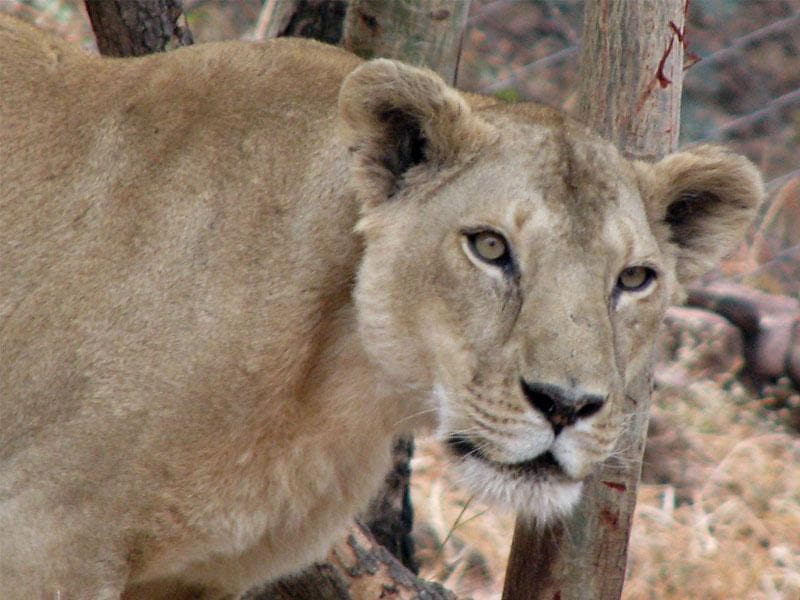
The Central Zoo Authority has given its nod to the MP government's proposal, for which 20 hectares of land has been already identified. This will be the first lion safari in the state.
In 1993, the Wildlife Institute of India had conducted a study to identify the best area for translocation of lions and they found Kuno-Palpur Wildlife Sanctuary most suitable.
In April 2013, the Supreme Court directed that lions be translocated to Kuno-Palpur from Gir sanctuary of Gujarat.
However, the Gujarat government filed a curative petition in the court against the translocation of lions to Kuno Palpur, which was turned down by the apex court in August last year.
More than half-a-year has passed since then, but the Gujarat government is yet to translocate the lions to Kuno-Palpur.
Now, the government has decided to develop a lion safari at Van Vihar National Park of Bhopal.
Confirming the developments, Van Vihar National Park director BPS Parihar told HT that they had sent a proposal to the Central Zoo Authority regarding starting a lion and tiger safari in Van Vihar.
"The Central Zoo Authority has given its approval. We have identified 20 hectares of land for lion safari and 20 hectares of land for tiger safari in Van Vihar, where visitors can see these big cats from jeeps soon," he said, adding there are seven tigers in Van Vihar.
Van Vihar National Park is spread over 445 hectares.
Parihar said unlike the other national parks like Bandhavgarh Tiger Reserve, where jeep safaris move on the park tracks with no boundary between the visitors and the tigers, here the enclosures would be fenced.
"We have decided to put two lions in 20-hectare fenced area, where people can see them roaming like they do in the national parks. In another, 20-hectare fenced area, one tiger will be kept. We can't keep more than one tiger, as they are solitary hunters and very aggressive about their territories, unlike lions, who prefer to hunt in groups," he said.
On whether the decision on lion safari was taken as Gujarat was yet to provide any lion, Parihar, however, denied that this decision had anything to do with the translocation of lions of Gujarat.
"People here also, like elsewhere, want to see a lion in a jeep safari. So, we are doing that as we have eight lions here, six of which are in enclosures," he said.