E-Paper



MP: These tribals wish to be called ‘slaves’ in free India
Tribes people in Madhya Pradesh’s Betul shackled themselves and demanded that they be declared as salves as they did not want to live under the illusion that they were living in an independent India, where people’s rights are trampled upon.


Tribes people in Madhya Pradesh’s Betul shackled themselves and demanded that they be declared as salves as they did not want to live under the illusion that they were living in an independent India, where people’s rights are trampled upon.
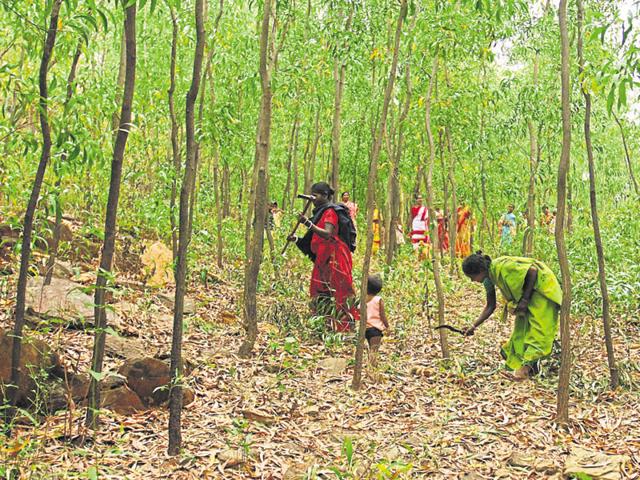
The Korku tribes people protested in front of the district collector’s office holding banners that read “ hum adivasiyon ko ghulam goshit karo (declare us, tribals, as slaves.. ).
Forest officials demolished our dwelling units and uprooted hundreds of trees we had planted, say tribals
Tribes people from Chicholi block, around 75 km from the Betul district headquarters, have been agitating since December last year, alleging that forest officials demolished 45 of their dwelling units on the land and uprooted hundreds of trees they had planted over the years.
They are demanding that they be given possession of the forest land and be granted pattas (land rights) according to the provisions of the Forest Rights Act.
Korku tribes people, believed to be originally a hunting-gathering community, which lived in the Satpura forests, are mainly found in Betul, Harda, Khandwa, Burhanpur and Chhindwara districts.
Give possession of forest land to tribals Forest Rights Act, demands activist
Rajendra Gadwal, who has been fighting for the tribes people’s rights, told HT over the Korkus have been demanding they be given the possession of the forest land where they lived for generations according to the Forest Rights Act, he said.
“But on January 2, officials went to the disputed site and removed the rubble of the 45 hutments in trucks. Officials also started constructing a fence. This angered us and we started a fresh protest.”
Tribals had encroached on reserved forest: Betul collector
Betul collector Gyaneshwar B Patil said, “Tribals had encroached upon over 100 acres of the reserved dense forest in Chicholi block in 2011. After a case had been lodged against them under Indian Forest Act, the administration cleared the encroachment.”
Patil said the district authorities are not against granting the land to the tribes people “We have to follow rules and will soon give land rights to 1,000 tribe people who have applied and submitted proof,” he said.
“If the tribes people can prove they had taken possession of the land before December 2005, they would be given pattas.”
Anurag Modi, a Betul-based rights activist said that even after the high court directed the district administration to settle the claims of the agitating tribes people within three months, the authorities did not address the issues.
Munshi Chouhan Korku, sarpanch of Peepal Barra village near the disputed forest land, told HT over phone that on January 18, the authorities detained a tribal youth from their village and harassed him for 48 hours.