
 E-Paper



Book Box: A Weekend of Crime
Crime thrillers for your summer reading list. Plus a conversation with author Nilanjana Roy.

 Prefer HTon Google


Dear Reader,
My daughter is ill. Her roommate phones me on Saturday to say her temperature has touched 104 degrees. Don’t worry, we’ve sponged her and given her paracetamol, her fever’s already coming down, she says.
I toss a few clothes and books into a bag and take a taxi to Mumbai airport. All through the flight, sandwiched in seat 5B, I read A Suspension of Mercy.
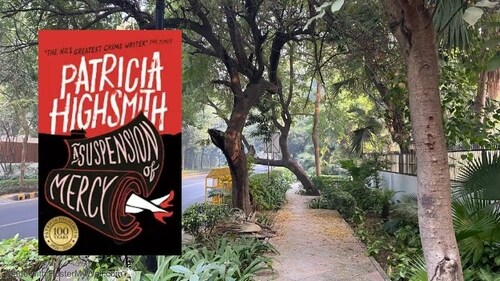
I’m in a two storeyed cottage on the outskirts of London. The couple here, artist Alicia and crime writer Sydney, are close to breaking point in their marriage. Alicia copes by going off on her own for sudden holidays and Sydney imagines murdering her as he plots practice scenes in his leather diary. As the reader, I find myself playing a pleasurable guessing game: is what he says fact or fiction?
A Suspension of Mercy has the countless comforts of a crime thriller. It baffles, bemuses and treats you to the tropes, like the character of Mrs Lilybanks, an elderly neighbour, who stays awake all hours, with binoculars for bird watching.
By the time the flight descends to Delhi, my inbox is full of messages. The doctor says it’s probably a viral. She’s underweight, she needs to eat more. It doesn’t look like malaria or dengue. If the fever hasn’t gone in two days, she should do a complete blood count test.
Outside, it’s dry and hot. My daughter's roommates have dropped her to a friend's house and I head there. I resolve to read more Patricia Highsmith. Why did I leave her behind in my teenage years? Her complex characters and her polished prose make this writer of novels like Strangers on a Train and The Talented Mr. Ripley such a treat to read.
On Sunday morning, the fever is down. We spend the day sprawling on the drawing room divans, reading crime fiction. I hand her Highsmith and she’s hooked. “It’s like Gone Girl,” she says, “only better” .
Mindful of the doctor's diktat on food and drink, I get her fruit: chopped Dussehri mangoes mixed with grapes and apple quarters. And, a glass of lemonade. My friend makes us savory pongal — rice and dal with cumin and pepper — and then settles down to read The Village of Eight Graves. “The Midland Bookstore man picked it out for me, you’ll like this,” he said. “It’s amazing how well he knows his customers,” he tells me.
After lunch, we idly contemplate leaving the patient with her Patricia Highsmith and dropping into Midland Bookstore. Just in case we run out of books. But the Delhi sun is blazingly hot and it seems wiser to stay with what we have.
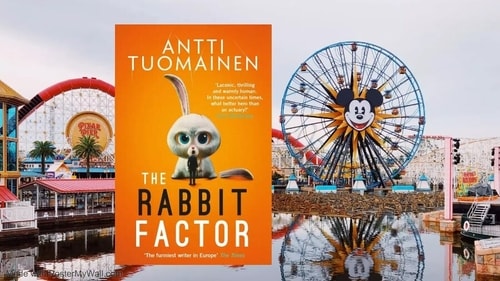
Besides, I am glued to the book I have just begun, The Rabbit Factor, a translation from Finnish. It’s full of crime, but also darkly funny and feel-good. Murderous mafia stalk our unlikely hero, a mathematician called Henri Koskinen, who has been called to action when he loses his actuary job and inherits an adventure park. I’m loving the humour and the irony. It reminds me of The Rosie Project trilogy and I’m happy this book has sequels.
Finally we step out into the Delhi evening. We buy cauliflower, curd, Mother Dairy ice cream sticks of kesar kulfi and a packet of paracetamol. When we get back, we find the crime reading convalescent has moved onto The Mill House Murders.
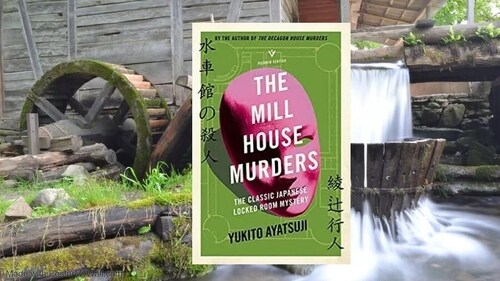
“This is the best one I have read all weekend,” she pronounces. Reading it into the night, I have to agree.
I’ve been a fan of Japanese crime ever since I discovered The Devotion of Suspect X. There's something so captivating about the spareness of the language as well as the characters like the enigmatic mathematician detective Galileo in the Keigo Higashino series or the ingenious problem-solver Kosuke Kindaichi in Seishi Yokomizo's novels.
With the The Mill House Murders, I am mesmerised. From the very first page, I'm pulled into the castle-like Mill House. Here, the main character, Fujinuma Kiichi, leads a reclusive life behind a rubber mask, haunted by a disfiguring car accident. When the book begins, two murders have already occurred. The narrative deftly switches between the past and present, drawing me deeper into the intricacies of this whodunit, teasing me with the tantalising locked room murders.
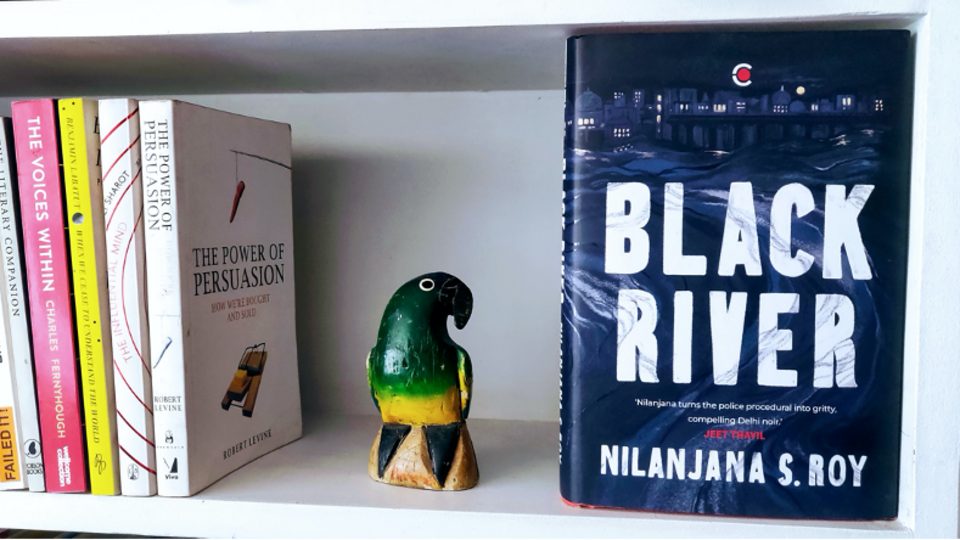
A day later I drive back to Delhi airport, dropping my daughter off at the Delhi metro. She will return to college in Haryana, to the badlands that form the backdrop to the hottest new police procedural — Black River. I ask author Nilanjana Roy about the hardest part of writing this book and also her favourite crime fiction. Here are edited excerpts of our conversation.
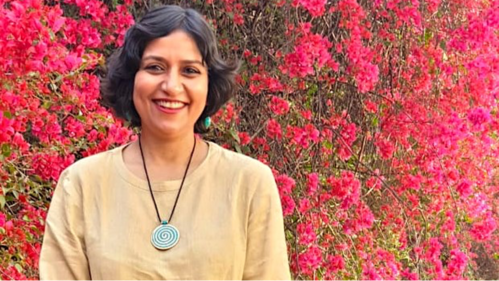
What do you look for in a good crime novel?
I’m drawn to crime fiction that explores the most frightening and complex terrain of them all — the human psyche, with its locked rooms and hidden corners.
What are some favourites in this genre?
I read a lot of Agatha Christie, Edgar Allan Poe, Ruth Rendell, Dorothy L Sayers and P D James in my teens, along with Sharadindu Bandyopadhyay’s Detective Byomkesh Bakshi series, and then found my way to Tana French, Dennis Lehane, Val McDermid, Keigo Higashino, Natsuo Kirino, Sara Paretsky, Oyinkan Braithwaite, Patricia Highsmith’s novels and Donna Tartt’s The Secret History
Noir has so much to choose from, but two that I continue to love are Rebecca, and Leesa Gazi’s Hellfire (translated from Bengali by Shabnam Nadiya). Both build an atmosphere of unbearable tension, and both haunt you in just the same way certain ghosts and irrevocable decisions haunt their young women characters.
Tell us about your childhood reading ?
My mother was a housewife who loved reading history, and when she became a lawyer, I used to read the Law of Torts and criminal case histories for fun; my father, who died two years ago, was a government officer who took me and my siblings on book-buying sprees, and loved fiction, from Milosz and Morrison to Rushdie and Vikram Seth. I became a reader in imitation of the adults, and out of a hunger for stories; I loved reading perched on the limbs of mango or champa trees, or out on the verandah, or in nooks hidden behind the drawing room curtains. Books were both familiar and objects of wonder — you could take a book anywhere, except into the shower, and a book could take you everywhere.
Everyone in my family read books — not ostentatiously, but with a kind of everyday comfort and curiosity — and my architect uncle took pity on my constant clamouring for someone to read to me, teaching me that those strange black ant-like marks on the page could transform into words and sentences. The family prized a good story, and most of my aunts, uncles and cousins were great story-tellers as well as being enthusiastic readers; books, histories, poems, and stories flowed through all of our homes. My brother and sister read as voraciously, and have passed the reading gene down to their children; our games often involved acting out pirate adventures or playing detective, Byomkesh-style, across friends’ gardens.
My earliest memories are of enclosed verandahs lined with iron bookshelves from floor to ceiling in my grandmother’s home in Calcutta, and of books in Bengali and English strewn all over my parents’ home in Delhi. Television came in much later; most of the people I knew in Calcutta read eclectically and voraciously, books, magazines, newspapers, little journals, pamphlets, Commando comics, Soviet children’s books, cheap romances, popular booklets of song lyrics, often ferrying themselves between languages.
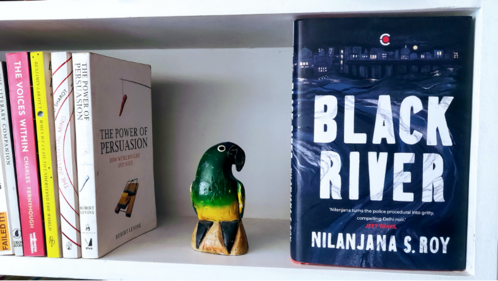
What was the toughest part of writing of Black River?
The hardest part was emotional — finding a way to write through deep grief after the illness and loss of many people I loved, including my father, in the Covid years. But the books you write often rescue you, too, and this one became my lifeline; I used to read chapters of Chand, Rabia, Ombir and Khalid’s stories to my father, and after his death, I felt that in some mysterious way, he helped me continue to the end. I read a lot of research on Delhi, but most of Black River’s world — the borders of the Yamuna, workers’ colonies at the edge of Delhi, small village near the Aravalli hills — was formed over years, through many meetings, encounters, friendships and interviews. You can walk a book into being.
Your book is so cinematic.
I didn’t consciously aim for Black River to be cinematic, but everything about the novel — the casual murder of a child, the search for an elusive justice, the unlikely but strong friendships that can form even in the harshness of a city like Delhi, the slaughterhouse, the greed for land — was so sharp and vivid in my imagination. I wrote what I saw, and what the characters wanted me to see.
What can we expect from the sequel to Black River ?
The next book isn’t a classic sequel, though a character I grew to like and respect despite his flaws — the policeman Ombir Singh — will return. It’s set partly in Delhi, but in a starkly different world. I hope I can make it work on the page as well as it works in my imagination, but you never know until you’re done.
Lastly, what are you currently reading?
I’m loving Rahul Soni’s translation of Shrikant Varma’s Magadh. In new crime fiction, I’m reading Age of Vice, Exiles, and City Under One Roof. But this month’s favourite is Arati Kumar-Rao’s Marginlands, where one of our finest chroniclers of the land roves from the Thar Desert to the Sunderban, changing our understanding of nature and natural forces as she writes.
…
That’s all the crime fiction for this week. Save these for your summer reading list, they’re the perfect picks to pack into your travel suitcases. I’d love to know some of your favourites in this genre, do send in recommendations.
And until next week, happy reading.
Sonya Dutta Choudhury is a Mumbai-based journalist and the founder of Sonya’s Book Box, a bespoke book service. Each week, she brings you specially curated books to give you an immersive understanding of people and places. If you have any reading recommendations or suggestions, write to her at sonyasbookbox@gmail.com
The views expressed are personal


