
 E-Paper



Chaitanya Tamhane: ‘Creating poetry out of the very ordinary attracts me’
The director of Court and The Disciple talks about breaking out of the arthouse bubble and exploring new directions, and about his journey so far.

 Prefer HTon Google


You said somewhere that you are on an artistic journey of your own. What is that journey?
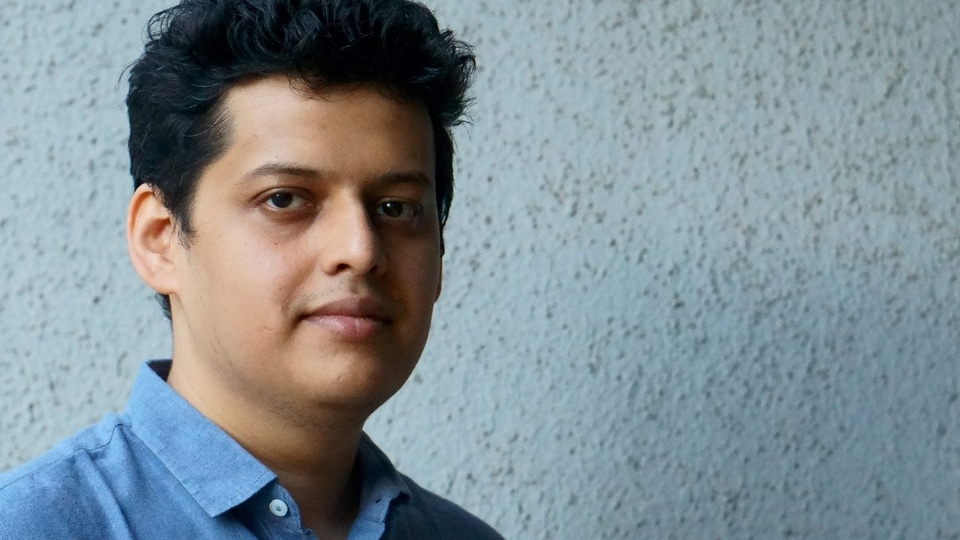
The artistic journey is, one, finding my own truth as to how authentic I can be in my expression, and two, about being pleasant because a human being is not static. We all change with our age and experiences. With every project, I try to capture my concerns and my world view and feelings at that particular time of my life. It is also about how to make my work more me. I have been working on a new script. I’ve been at it for two years and I fail every day. I haven’t written a single word yet but I am convinced that this will be more me than my last two films. On the one hand, I would like to push my imagination and explore directions that I have never explored before and on the other, I want to express my personality and my experiences and my inner world view, my fears, my vulnerabilities, my nightmares with more and more honesty. In a way, these two things may not seem to go together but that’s the idea and that’s my attempt.
Do you think cinema, for you, has to be personal?
I would never say that cinema has to be anything. I can only talk about my particular artistic goals and my pursuits. Also, it is tricky to say what is personal because the person keeps changing. I went through really dark times but what’s come out of it is much lighter, way more buoyant. The personal expression has to be of the person who I am now and not of who I was or of some narrative I made up in my head to tell myself. Also, it’s always a marriage with imagination, right? Personal storytelling does not mean that I have to only tell the story of what I have seen or lived. In a way, all fiction is autobiographical. You could be projecting that in a fantasy land or in a superhero film, but it is always coming from a certain lens. For me, the general anchor has always been truth. Not any objective truth but my truth. What I create should have some thematic resonance for me instead of just trying to impress an audience or just working with a circumstance or a situation. Even I sometimes feel immersed in situations and plots but I generally tend to work at it the other way around.
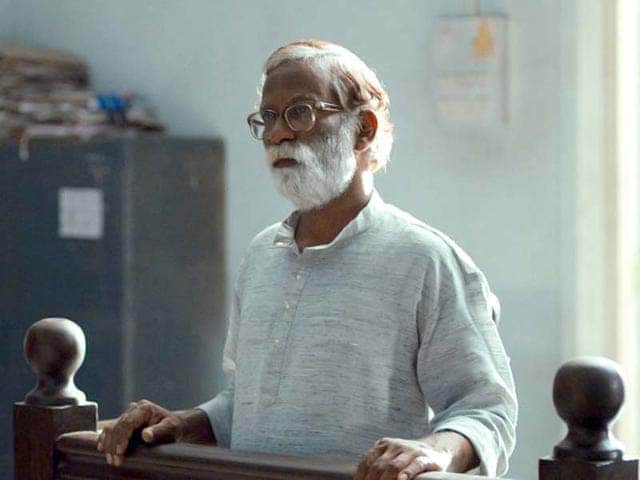
On your unusual journey in cinema, what’s the purchase that you are looking at?
The journey is the purchase. One changes as a person. The people who made my first two films or even my short film were totally different from who I am today. When you are younger, you are trying to prove a point and declare that “Hey, I exist!” In that sense, the success and the failure of your projects and the way they are received might end up influencing you and what you end up chasing. The world has changed since I started working when I was 17. There are many different mediums now and sometimes the profoundest of ideas can be condensed in a meme and you don’t have to read a thousand page novel to understand everything. Right now, one of my goals is also communication. I am trying to explore how not to be stuck in a 20th century idea of expression and how to be present in what is happening around me. It’s also about finding how to use contemporary tools and find newer expressions rather than being insular and being in a bubble considering what has worked for me in the past. Also, it is trying not to be in the arthouse bubble. I am a little bit done with that and want to explore new directions.
Can you tell me what attracted you to cinema and when?
Ever since I can remember, I have wanted to be an actor. My exposure was TV, Bollywood films and Marathi theatre. I used to watch a lot of mainstream Bollywood films as a child but I don’t remember watching any film whole. I used to only watch the comedy parts. I only wanted to laugh and experience the happy parts. I wanted to be an actor and one day, I don’t know why, I wrote this piece called the Autobiography of a Commode. I must have been about 10 years old. So writing came to me naturally. Later, I wrote a one-act play; then I wrote a full-length play and so on. The film thing, however, happened differently. Honestly, I identified myself only as a writer. The reason I directed those projects is because I didn’t see anybody else fit enough to direct them. I was working at Balaji Productions and I gave the one-act play that I had written to somebody else to direct. When I saw the play, I was devastated. We had submitted it to a competition and we also won an award for it but I thought that what I had written and what the guy made out of it were two entirely different things.
Writing is something I really hate – it’s the most dreadful, scary, time consuming process. If you ask me if I could live without directing, I think I very well can. But can I live without writing? I don’t think so. It is like one of those major forms of expressions that I understand.
Being a Bombay boy and having worked with the likes of Balaji (the production house) at an early age, how did you manage not to get lured by the fame and fortune of Bollywood?
I think it’s a matter of circumstances and luck. In my late teens, when I was at Balaji, it was a game for me. I was getting paid for what I liked doing and I was like, “Wow, this is great!” I did skirt around Bollywood in those days. In fact, I actually did work as an assistant for a few days on a project that was supposed to be a sequel to the film No Entry and I gave them some idea about the wives of all the protagonists being pregnant at the same time and they liked that idea and all of that happened.
But then, of course, there came a point when I discovered world cinema and I developed my own taste. Nobody was making me any offers to work with them anyway so I thought I’d be on my own journey. In those days, I had sent out applications to 50 advertising agencies because there was pressure to earn money, but nobody really hired me. Nobody even called me for an interview. It was a very difficult time mentally for me. So then I had made my short film which nobody paid attention to in India but was received well internationally – a pattern that I see with my work to this day. One day, Vivek (Gomber) just told me to write my own script and offered me a monthly salary of ₹15,000 to do that and that was the turning point in my life. I think Vivek should get a lot of credit for all my work. But even back then, I never really had an ambition to make it big in Bollywood. I just wanted to do good work and I wanted to do my work.
Take me through the journey of writing your breakthrough film Court.
For me, theme is more important than plot. The plot kind of happens on its own. So, in the case of Court, the main idea was observing the courtroom players outside of the court and then going into their personal lives. The idea was to set up a court case and then subvert expectations by going in a totally different direction. But I didn’t have the case for the longest time. That was the last thing that fell in place. I had a lot of stuff ready about the public prosecutor, the lawyers, the judge and his personal life – things that came to me by purely observing various court cases that I would attend during the period of my research. I was also very inspired by Bong Joon Ho, especially Memories of Murder. So I was like, “What if he made a courtroom drama? What would it be like?” That was also the time when I was trying to find my politics.
Ramu Ramanathan was a huge influence on me and has been a great mentor. He would take me to watch Gadar; he would mention Sambhaji Bhagat to me and so on. Then, I read an article by S Anand on sanitation workers. So things kept brewing and it took me a long while to find the right kind of case but fortunately I did find it. In its making, in its treatment, Court is also a manifestation of everything I was not happy with in Indian cinema. They would make a so-called subtle film and then the messaging would just be vomited in the end and everything would be spelt out. There would be some nagging exposition in the film. I said I don’t want to do that. All the Indian films I was watching were tonally inconsistent or the characters never rang true or it wasn’t the Bombay that I had seen so I tried not do things that I wasn’t happy with. Some of it also came from that place of disagreement because I was young and cocky and wanted to rebel. I know a lot of writers who would outline everything that’s going to happen in the film but I can’t really work that way. I have my scene ideas and my characters ready but a lot of times I let the film come together by itself. I observe a lot and I observe non-judgmentally.
By this, I let a subconscious form around the subject and the imagination automatically seeps in. That is the process I have tried to follow. Also, at the time I was writing Court, I was getting a salary from Vivek to write the script and I lived with my folks in a one bedroom-hall-kitchen in Andheri. There were four of us in that small little space and for some reason I wanted to write at seven in the evening when they wanted to watch TV. The computer was in the hall and I get distracted very easily so all of them had to be quiet while I was writing. I was that spoilt brat in the family and they would be thinking, what the hell is he writing! I come from an insular family; my school was next door and we were typically middle-class.
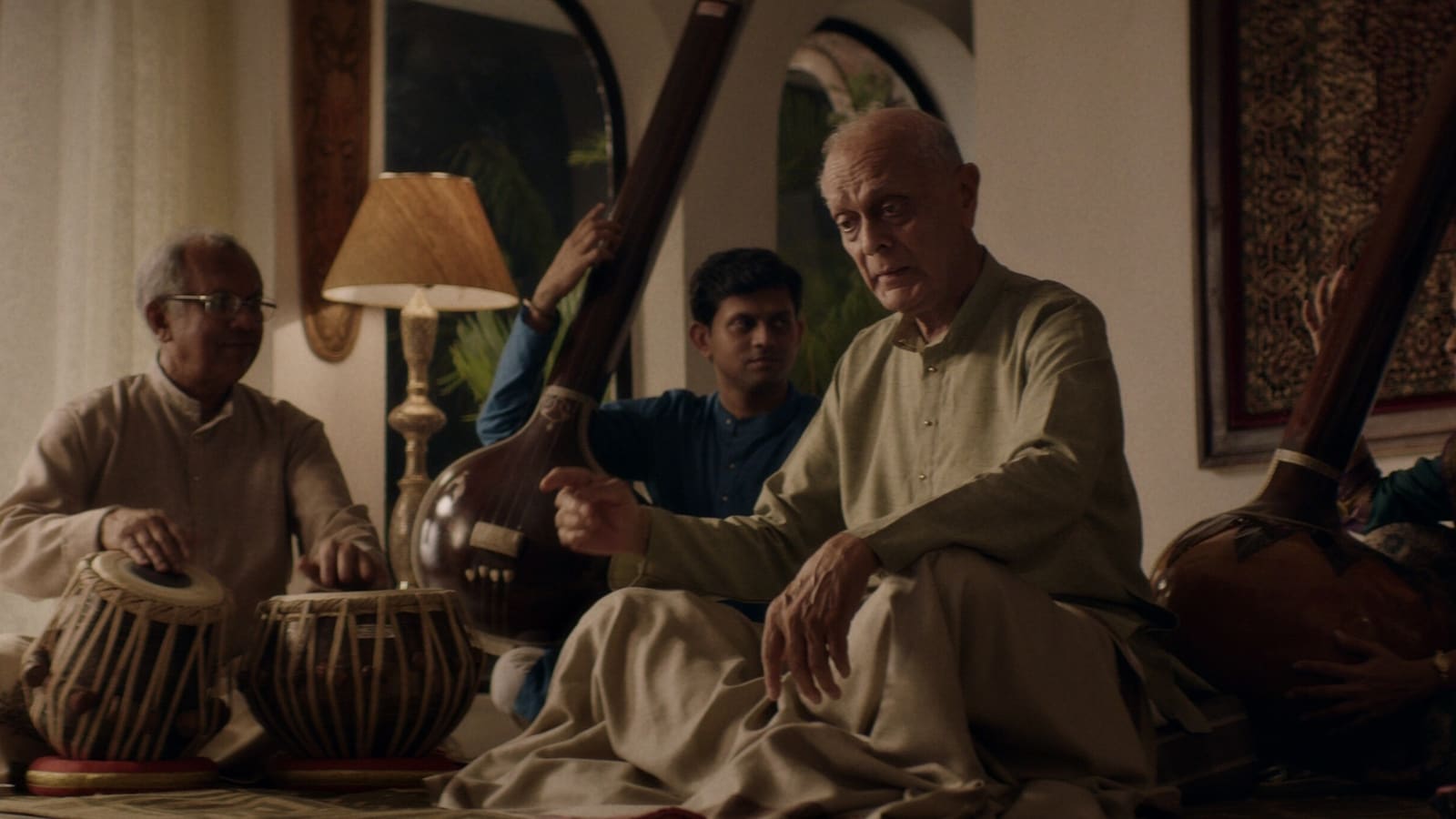
Was your next film, The Disciple, in some way, an allegory to your own artistic journey and struggles?
Quite directly it is, yes. The Disciple is a spiritual adaptation of a play I had written called Grey Elephants in Denmark, which Vivek Gomber had acted in. It was the story of magician who wanted to break away from his father’s cheesy, outdated magic and do some contemporary, crazy magic and pursue magic as an art form. But art does not love him back. I wrote it when I was 21. That concept stayed with me. It was a personal fear – what if I turn out to be an artist who just doesn’t have it in him? The Disciple is, of course, a more grownup, more mature version of that concept.
The film is also a counter to this fake, fairytale narrative where always only one person is celebrated and we are all made to feel bombarded and anxious and everybody is only looking at that one percent of successful people but nobody is looking at the 99 percent in any field who don’t really make it that big or aren’t that gifted. A part of the story came from this guy who was my granny’s neighbour. I used to spend summer vacations at her house. He lived in a one-room chawl in Mahim – Guruji’s house in The Disciple is an exact replica of that house. This guy was so serious about cricket; he had this ball hung in a sock and he would keep playing at it with his bat. He would go for the Ranji Trophy and so many tournaments. There was no other way for him; he just wanted to be a cricketer.
Next thing I know, seven years later, he was working in a bank. That journey fascinated me. Making The Disciple was also a deep philosophical exploration for me of questions like: What is success? How do we define excellence? What are the values that are important in life? How big a victim am I of this capitalist framework that we live in?
How did you end up working with the great Alfonso Cuaron and what was the experience like?
I have never really had a proper mentor in filmmaking. I knew about the existence of a program; it is probably the world’s most difficult arts program to get into. You can’t apply for it; you need to get invited for it. I always wanted to get into it and one year, they invited me to apply. I learnt that Cuaron was going to be the mentor so without thinking for a second, I applied. This was the time when Court was getting an international reception but I thought I wanted to learn more. I was lucky enough to be in the top five and Cuaron interviewed me and I got selected. It was a crazy experience. Those guys operate on a whole different level. It was brilliant to see Cuaron work on Roma because I was there for the shoot, the grade, the sound, sometimes for the edit. He and his entire team were such a wonderful bunch of people to work with and learn from. The scale, the craft that he was operating with changed me forever as a person and a filmmaker. Also, Cuaron did so much for The Disciple – he was even kind enough to present the film.
Who are your influences as a screenwriter and a filmmaker?
Right now, my influences are artists who have been authentic. The people who weave poetry in their work like Agnes Varda for instance. She is one of my Everests. Then, Abbas Kiarostami, the way he understands human emotions and the world is mind-blowing. Then, there are some graphic novels that sometimes make me feel that that is what I want to be – not literally but artistically. I saw I May Destroy You by Michaela Coel and I was blown away. Then I saw Bo Burnham’s Inside and found it brilliant. I think the nuanced expression and the way some people interpret the world fascinates me. Then, there are films that I think are Everests like Fellini’s 8 1/2 and Underground by Emir Kusturika. There are films that have blow me over like a lot of Chaplin’s work and many others. But if you ask me about the kind of work I would like to do, it is more in the zone of Taste of Cherry by Kiarostami or The Gleaners and I by Agnes Varda. It’s creating poetry out of the very ordinary, out of something very simple that attracts me.
Do you look at screenwriting and filmmaking as a profession?
No, I look at it as a hobby. In fact, I am in search of a profession. I have very seriously learnt and performed magic. And I am seriously considering becoming a travelling magician for a living.
Mihir Chitre is the author of two books of poetry, ‘School of Age’ and ‘Hyphenated’. He is the brain behind the advertising campaigns ‘#LaughAtDeath’ and ‘#HarBhashaEqual’ and has made the short film ‘Hello Brick Road’


