
 E-Paper



Daisy Rockwell: “I have always known that ghosts are among us”
The author reflects on their creative journey, intertwining personal experiences with themes of ghosts, caregiving, and cultural identity in their upcoming novel.

 Prefer HTon Google


You have translated many novels. What were the new creative highs and lows that you experienced?
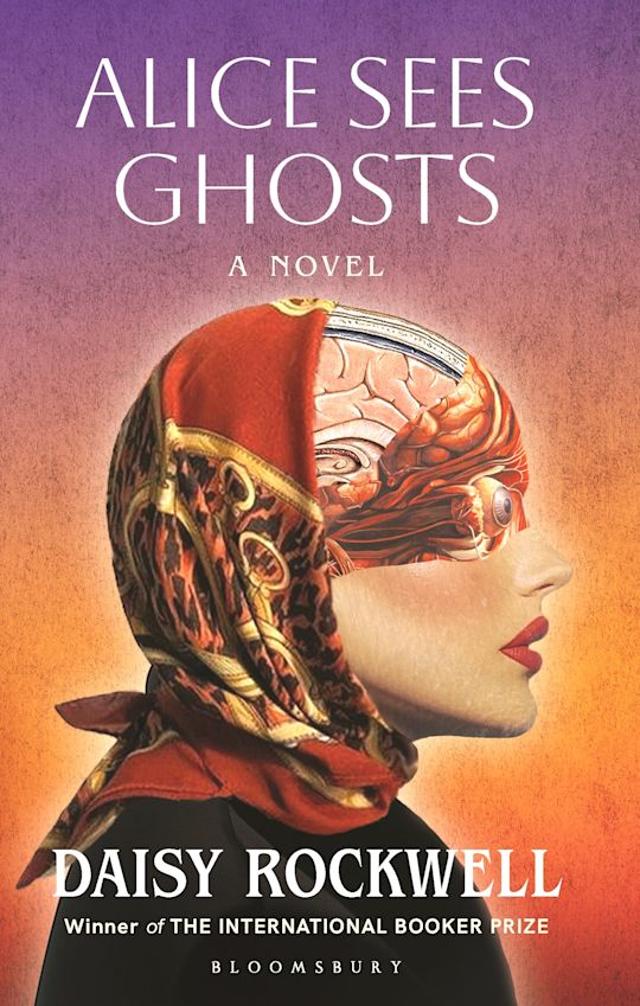
Well, I wrote the basics of the novel about 10 years ago, but I was at the same time having a lot of success with my translations and artwork, so I did not try as hard as I should have to place it. By success, what I mean is that I was able to translate something, or paint something and get it published or shown in an art exhibition. To me, that is the definition of creative success — to be able to create something and send it out in the world. When I can’t send work out into the world so easily, it seems to fester. So, I allowed this to fester, until Chirag Thakkar — my editor at Bloomsbury — said he would like to see some of my fiction writing in 2024. And I decided to take another look at Alice Sees Ghosts and spruce it up.
What differences do you see between the writer you were and the writer you are?
After translating so many books, I am an amazing editor. Well, I like to think so. Since it had been so long since I had looked at the manuscript, I could see it with a critical eye.
This novel collapses the distinction between the world of the living and the world of those who have passed away. What excited you as you bridged these worlds?
My mother brought me up to believe in ghosts, and she always behaved as though they were always among us. Her mother, who had been murdered when I was very young, had been seen haunting her old home, according to several people. My stepmother also believes in ghosts, and still speaks of parts of her house that she believes to be haunted and who she thinks is there. Thus, it was not difficult for me to bridge these worlds because I have always known that the ghosts are among us.
How did your own curiosity and beliefs about the afterlife play into exploring Alice’s relationship with her dead grandparents?
My mother always subscribed to the popular view that ghosts haunt us because they have unfinished business, and so it seemed logical for the grandfather — who was a prosaic sort of person — to be haunting with very practical concerns.
What helped you empathize with Alice’s situation as a caregiver to Clare, her mother who is mentally ill and can get violent?
My own mother, while not like Clare in many ways (as I am mostly not like Alice), was still a person with very difficult emotional problems, who was sometimes very childlike in her behaviour. That kind of care giving, of a child for a parent, is very much ingrained in my psyche.
The journey that Alice undertakes from mourning to healing is cathartic to witness. What did it do for you as you wrote and rewrote it?
I think it is important to remember that Alice is haunted by both the dead and the living. Her mother Clare, though living, is a kind of poltergeist in her behaviour. It was painful for Alice to have to balance her grief for the loss of her grandmother with the aggressions of her mother. I found the section where Clare has returned and haunts the house very difficult to write because Alice feels that her shrine has been desecrated by her own mother.
Alice’s trip to India is an important part of the novel. Why did you choose to send her to Kolkata, Muzaffarnagar and Mussoorie?
Well, those are places that I know to varying degrees — especially Mussoorie — and I felt it was important to write about places I knew well in India, to make the settings believable.
Alice is a white heiress engaged to Ronit, a brown Bengali psychiatrist in Boston. What gave you the confidence to pull off an inter racial love story that does not gloss over cultural differences yet isn’t weighed down by identity politics?
Maybe it was hubris! Of course, I know many interracial couples and some of them are able to pull it off. I think it is important that neither of them is particularly focused on identity politics per se. But Ronit is obviously more aware of these things than Alice, who is not super educated and a bit oblivious. So, he definitely carries the burden for the two of them, which is often the case with oblivious white people!
Malini and Biju, the queer characters in your novel, appear so briefly that one is left wanting more. Did you feel that fleshing out their stories would distract the reader from Alice’s quest, or are you reserving their stories for a sequel?
Initially, I had more of Biju but then it felt like a separate book, so maybe that should be a separate narrative. Interestingly, my unpublished novel has a queer protagonist. She is a Pakistani American girl named Parveen, who is a Faulkner scholar suffering deeply due to an unrequited love.
The relationship between Alice and Ronit’s mother Debashree, who lives in Kolkata, is so endearing. Why did you not give it more space to develop?
I guess, like Alice, I was too focused on the quest!
What differences do you notice in terms of how people view bigamy in the US and in India? How were you able to discuss bigamy without making it seem like a moral failing?
Well, bigamy is considered horribly shameful and also illegal in the US, but in India it seems to be more accepted, or at least unshocking. That is part of the story. But the other part is that Alice’s grandfather was essentially caught between two selves, the one who fell in love and married in India, and the one expected to marry in the aristocratic tradition of joining bloodlines and businesses. Of course, the irony is that for him, the US is the place for arranged marriages, and India is where he found a love match. Somehow, he managed to live these two lives for decades, I suppose as many bigamists do!
You refer to a number of novels by Charles Dickens in Alice Sees Ghosts. Why was he on your mind the entire time?
My father and grandfather were both obsessed with Dickens, and my father used to read him aloud to me when I was little. When I was doing my doctoral research in Allahabad, I read numerous Dickens novels, because the local English bookstore mostly had only Victorian works. Also, Dickens certainly liked to write about hauntings as well, and settling family estates.
Sleep Journeys, your translation of Pakistani poet Azra Abbas’s book-length prose poem from Urdu to English, is about to be released. What led you to translate her?
I started out translating some of her short stories about seven years ago. After I won the International Booker Prize in 2022, her son reached out to me and urged me to look at this prose poem. It is a mystical piece of writing. I was not expecting to fall in love with it as I do not think of myself as a poetry person, but I did, and I found it to be very therapeutic following the Booker mania to immerse myself in this enigmatic world.
You have also been working on a memoir, due to release next year. How does it feel to open up your private life for public consumption?
Yes, the memoir is completed. I have never had the urge to open up my private life, but I think that what motivated me in this case was a need to talk about my mother, who was an artist and who died of a brain tumor in 2017. Her life and death were extraordinary and difficult and I needed to document them when I had some distance. The memoir is called Our Friend, Art, which is a joke my father always used to make, pretending that when we spoke of art, we were speaking of a man named Art (short for Arthur), whose company we enjoyed. My parents were both artists as was my grandfather, who was very famous, and I wanted to tell the story of what it was like to grow up in the shadow of those three, using both words and images.
Chintan Girish Modi is a writer, journalist, educator and literary critic. His prose and poetry have appeared in various anthologies. He can be reached @chintanwriting on Instagram and X.


