
 E-Paper



Easterine Kire: “Joy comes naturally to me as a Naga”
The author of The Sky Husband on the influence of the oral storytelling tradition, cultural memory, and the sense of humour of her people

 Prefer HTon Google


During your closing address at The White Owl Literature and Book Fair, it seemed like you wanted to centralise the politics of joy in your life.

Joy is something that comes naturally to me as a Naga, and to my fellow Nagas.
When we were rehearsing the performance [for the closing ceremony], we were laughing hysterically because there’s so much humour in [our] language. We were discussing, what if we do this, what if we say that, and we pulled in a little bit of Nagamese, and it was just so funny.
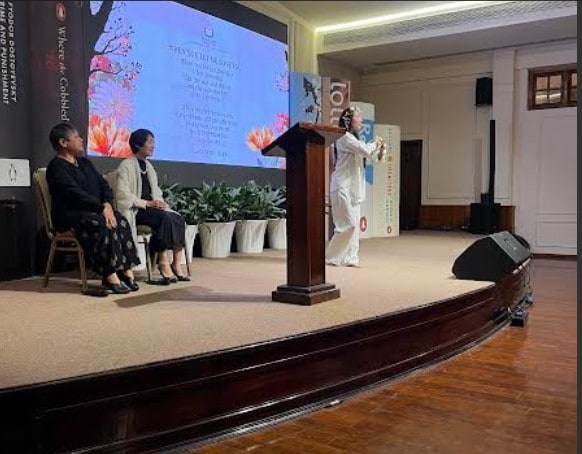
We all have a funny bone, and that’s one way of surviving. This is also a part of the world where people have seen a lot of pain. But then, someone comes along and cracks a joke, and in the middle of great pain, people can laugh without forgetting all that, which provides some relief.
How has the oral tradition shaped your stories?
As a Naga, I can tell you that — and I think it applies to all my fellow Nagas – orality is in our DNA.
I was fortunate to grow up with my grandparents, and they would tell me stories. After dinner time, one grandparent or the other would start telling stories. That’s why it was the best time of the day. That was intrinsic to any Naga household, especially back in the 1960s and ’70s when I was growing up. Therefore, it comes naturally to me and to other parents, grandparents to tell stories to our children, and at least with Naga children, they have such a love for stories.
They stop doing whatever they are doing and listen. I hope that this will stay with us, and I try to put it on paper, because it’s not just storytelling, there’s so much wisdom. It’s wisdom of the folk, the lore of the folk; this collective wisdom is what I try to put into my stories.
Even though they’re classified as fiction, there are also proverbs and sayings in them; there are examples from real life. For some stories, all these things are relevant.
Much like your other work, in your latest collection of short stories, The Sky Husband, you weave in the chequered history of Nagaland — historical and personal memory and lived experiences come alive in them. It reminded me of a fragment from Andrew Miller’s The Land in Winter: “Mind is the history of circumstance”. I felt like that’s applicable to your short story, Cherry Blossom in April where the war is a backdrop to the love story.
We were deeply affected by the Second World War. My mother was 12 years old then, and my aunt was 17. They lived it all, and they would often return to it, but all the people who had seen the war, they romanticised it as well, saying, ‘Oh, that was the best period of our lives.’ So, it’s a bit paradoxical, and Cherry Blossom… was the result of a pastor telling me one such story, and it was so fascinating to me.
[The real-life incident] happened in his village, and I was fascinated by the fact that in wartime, people could still fall in love and marry. That’s why I wrote the story
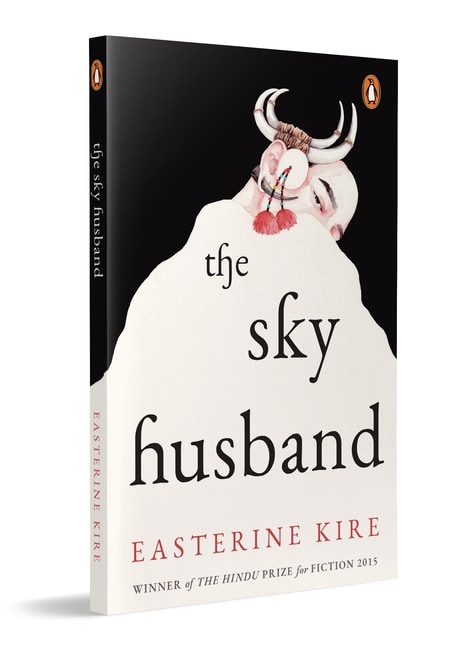
Fiction, in many ways, is cultural memory. How can the younger generation preserve memories of the past, and the legacy of Naga writers, such as yourself, in their work?
I feel it’s a burden to youngsters to tell them that they have to preserve it, because that’s not really their work. Their work is to listen. Their work is to enjoy it, because if they don’t enjoy it, they won’t find value in it.
Our job is to keep writing, as long as the inspiration is there, and make sure that the younger generation enjoy reading our works, take pride in it, then I think these traditions will go on.
If it becomes a duty, it won’t work; for sooner or later, they’ll stop enjoying it.
Saurabh Sharma (they) is a nonbinary, queer writer, essayist, and culture critic. On X: @writerly_life; Instagram: @writerlylife.


