
 E-Paper



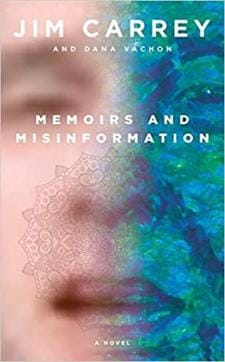
Review: Memoirs and Misinformation by Jim Carrey and Dana Vachon
A fantastical and trippy novel that lampoons Hollywood tropes.

 Prefer HTon Google


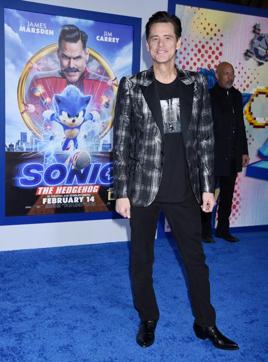
In this novel, Memoirs and Misinformation, a multimillionaire actor named Jim Carrey, who is past his prime, is slumping his way through a funk: the dread of death and oblivion, of being alone and unloved. He’s getting few movie offers, and those he considers beneath him, such as voicing an animated character for a movie based on a video game. A documentary about the destruction of Pompeii makes him burst out crying. Even ‘shamanic’ ceremonies conducted by the guru of a character called Kelsey Grammer, and heart-to-heart chats with his best friend Nic Cage, don’t help lift his mood. When a lover enters Carrey’s life and he thinks his pain is gone, that he’s filled the Renee Zellweger-shaped hole in his heart, that he’s finally found his one true love, it turns out that reality is much grimmer than his throbbing expectations. And though Carrey sees a glimmer of cinematic resurrection in the form of his friend and auteur Charlie Kaufman, and though he is willing to subsume his sense of self into the role of Mao Zedong, even that dream turns out to be vapour.
While the protagonist of the novel is called Jim Carrey, and while the story surely contains quite a few autobiographical details, conceptual layers are added to it through the use of the third-person narrative and the involvement of co-author Dana Vachon, making it as chimeric as Carrey’s onscreen persona. And because there are fantasy and science-fictional elements added, this cannot be called an autobiographical novel; this is a fantasy novel.
Carrey and the other characters in Memoirs and Misinformation are mostly in search of redemption, various forms of it such as a desire to regain fame, love or an approximation of it, success, or peace. For Carrey, redemption looks like immunity from oblivion: an Academy award that he hopes to get even if in so doing he risks losing his sense of self in a character. The authors write, “He felt, again, the old impressionist’s fear, that the throne of the self was not only empty, but not a throne at all, just a creaky barstool worn down by the weight of ten thousand asses...What would a Jim even be if Jim was ultimately just the creation of a billion strangers’ minds?” This is as good a passage as any about the nature of celebrity and the fragile sense of self. The protagonist, perhaps, struggles to tell fantasy and reality apart, a trait to which his flash-lit red-carpet past may have contributed. To call him insecure is a massive understatement.
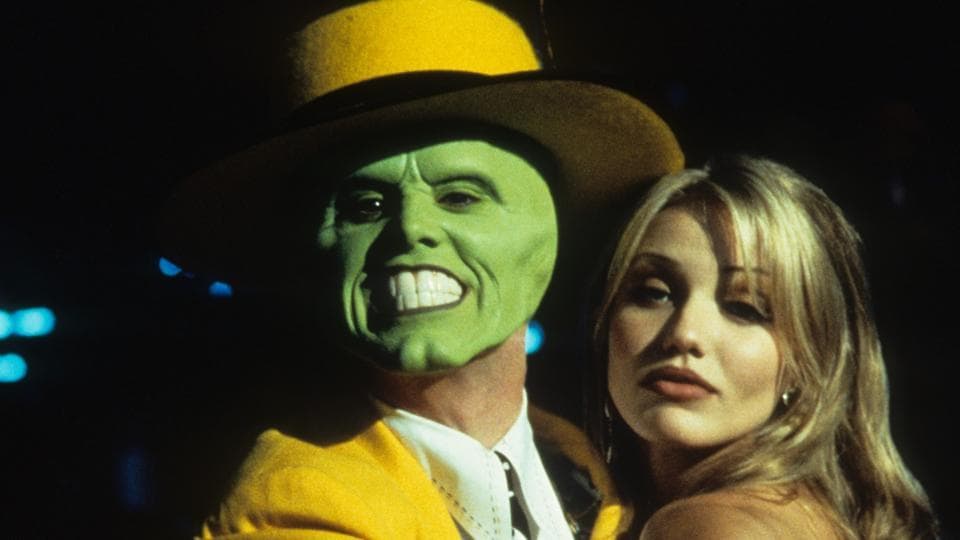
Here, the fantasy-fuelled world of showbiz, which has advanced enough to resurrect live-looking actors through 3D animation, seems as unreal as the world outside. The world outside is running out of time, is neon-speckled, dotted with buffoonish criminals running for president, mountainsides literally going up in flames, and, why not, flying saucers in the sky. It’s a setting in which anything can happen, and does, including the Rapture. This makes for a few hilarious scenes. For instance, there is a very funny scene in which Gwyneth Paltrow, Sean Penn, and Kelsey Grammer assemble a “shoulder-fired missile system” from a crate marked ‘ARMED FORCES OF ANGOLA’. The story, which tries to be a satirical send-up of the showbiz world, in its final pages becomes a lampoon of Hollywood tropes. The book is fantastical and trippy but it’s not rip-roaringly funny as you would expect any book to be that is associated with Jim Carrey, that beloved prankster we know and love from The Mask and Ace Ventura, and that surprisingly nuanced performer who took our breath away in The Truman Show and Eternal Sunshine of the Spotless Mind. Those and other films will still be his major legacy.
One of the book’s themes is of being trapped in a half-real, half-fake, and wholly unbearable reality; a kind of hallucinogenic Truman Show. There is also the hollowness of fame and material wealth, and the self-obsessed nature of the world today. A number of popular literary references are thrown in, from The War of the Worlds to The Hitchhiker’s Guide to the Galaxy.
So far so good, but for a major flaw: the novel, for the most part, doesn’t develop its scenes, it narrates them. It embraces a summarising approach as if the events in the story were being told by a commentator. This makes the book less immersive than it could have been. As narrative strategy goes, it leaves most scenes half-baked; they stream by before they land. It’s as if the writers dreaded the grim spectre of the reader’s Declining Attention Span, and sought to make the book as breezy as possible, to its own detriment. In some places, what keeps you hooked is the name-dropping of characters named after celebrities -- Katie Holmes, Kelsey Grammer, Anthony Hopkins, John Travolta. Occasionally, a well-painted scene comes along but this doesn’t happen often enough to redeem the narrative. That is why the novel left me with a feeling of poignancy. It had immense potential to be an immersive weed-trip through Hollywood, celebrity, and self obsession, which is a large chunk of today’s mass culture. In the end, it is a competently told story that could have been much more.
Suhit Kelkar is an independent journalist. He lives in Mumbai.
At Hindustan Times, we help you stay up-to-date with latest trends and products. Hindustan Times has affiliate partnership, so we may get a part of the revenue when you make a purchase.


