
 E-Paper



HT Picks; New Reads
This week’s pick of interesting reads includes a book about a historical relic that also traces the arc of Bhagat Singh’s intellectual evolution, another on how disease reshaped colonial policy, contested imperial ambition and altered everyday life in the subcontinent, and a volume of selections from Rumer Godden’s autobiographical writing

 Prefer HTon Google


Guns and philosophy
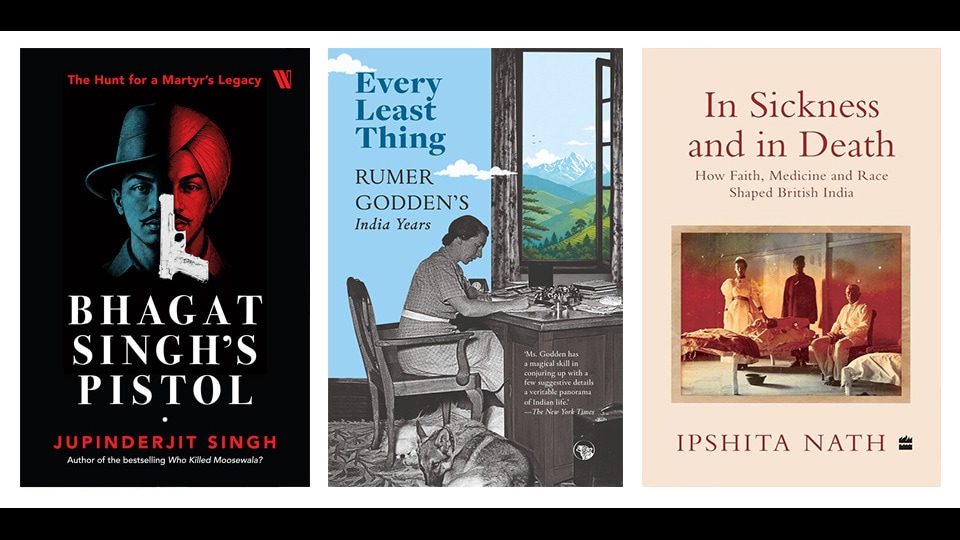

When Bhagat Singh was arrested in 1929, the pistol he carried became a crucial piece of evidence leading to his conviction for the killing of a British police officer, JP Saunders. Soon after the trial, however, the silver-grey .32 Colt went missing.
More than eight decades later, an investigative journalist chances upon a newspaper article that gets him thinking about what might have happened. Who could have spirited the pistol away? Had it been smuggled out of the country or merely misplaced? Driven by curiosity and a growing conviction that the weapon must be found and preserved, Jupinderjit Singh decides to follow the trail.
This is a book about that quest, its unexpected resolution — and much more. It traces the arc of Bhagat Singh’s intellectual evolution from an idealistic young nationalist to a revolutionary deeply influenced by global currents of socialism, anti-colonialism and rational thought. Drawing on his essays, articles, letters, prison writings and debates with contemporaries, it illuminates the philosophy that shaped the young man’s vision of a free India.
Part biography, part intellectual history and part mystery, Bhagat Singh’s Pistol is as much about a historical relic as it is about how a nation remembers its heroes.*
Disease and the fragility of colonial control
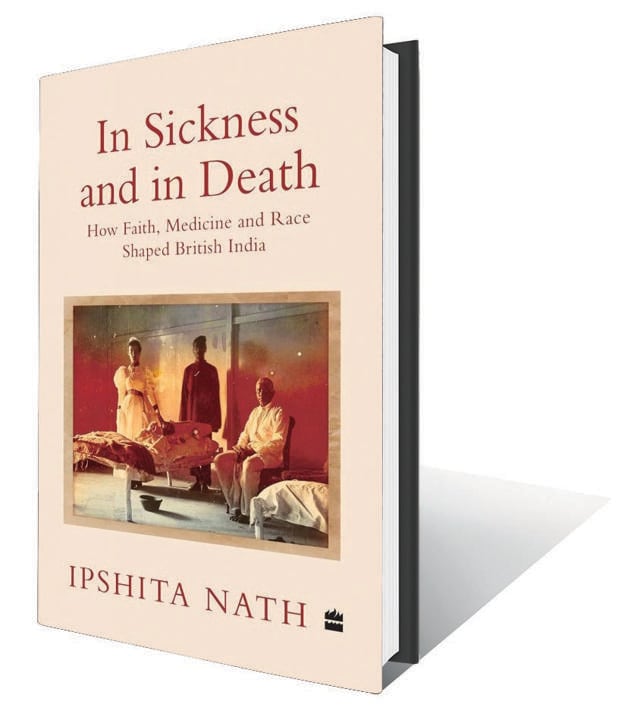
When the British first arrived in India in 1608, they knew that deadly diseases lurked in the tropical subcontinent. But what they did not foresee was how swiftly these pathogenic forces would puncture European medical hubris.
Sahibs and soldiers, armed with muskets, ledgers and scientific arrogance, soon found themselves struggling to stay alive as illness ravaged urban hubs and remote mofussils alike. Simple fevers proved fatal, and survival seemed more a matter of chance than cure.
With recurrent public health crises disrupting imperial business, straining infrastructure and draining resources, disease became a central problem of British governance. Over two centuries, the relentless toll of disease gradually exposed the fragility of colonial control and shattered the illusion of the invincibility of the white race.
Ipshita Nath’s In Sickness and in Death draws on a vast body of medical and academic research to not only examine how disease reshaped colonial policy, contested imperial ambition and altered everyday life in the subcontinent, but also show that the politics of disease-determined by fear, force and power structures-are glaringly present even today, in the post-pandemic era.*
Record of a world transformed

India is not simply the setting of Rumer Godden’s childhood. It is the landscape that shaped her imagination, her sense of home and her life as a writer.Bringing together selections from Godden’s autobiographical writing, Every Least Thing traces her journey from an unconventional childhood in Bengal to marriage, motherhood, work and the difficult beginnings of her literary career. It follows her through family homes and convent schools, dance classes and tea gardens, periods of hardship and solitude, and the years in which writing gradually became both vocation and escape.Intimate, vivid and sharply observed, these pages reveal the experiences behind some of Godden’s best-loved fiction, while also recording a world transformed by time, memory and history. They form the portrait of a woman learning to make a life on her own terms, and of a writer whose connection to India endured long after she had left it.Every Least Thing is a moving account of childhood, belonging and creative awakening, and of the country that remained central to Rumer Godden’s inner life.*
*All copy from book flap.


