
 E-Paper



HT reviewer Syed Saad Ahmed picks his favourite reads of 2021
Obsessively reading travelogues and books on natural history as a consequence of being homebound and attempting to grasp the Earth’s obtusely vast timescale

 Prefer HTon Google


The literary highlight of my year was discovering Urdu Studio, a publisher of Urdu audiobooks. Suddenly I could access many Urdu titles that I could not find earlier. Among its growing collection, the book I enjoyed the most was Ibn-e-Insha’s Duniya Gol Hai (The World is Round).
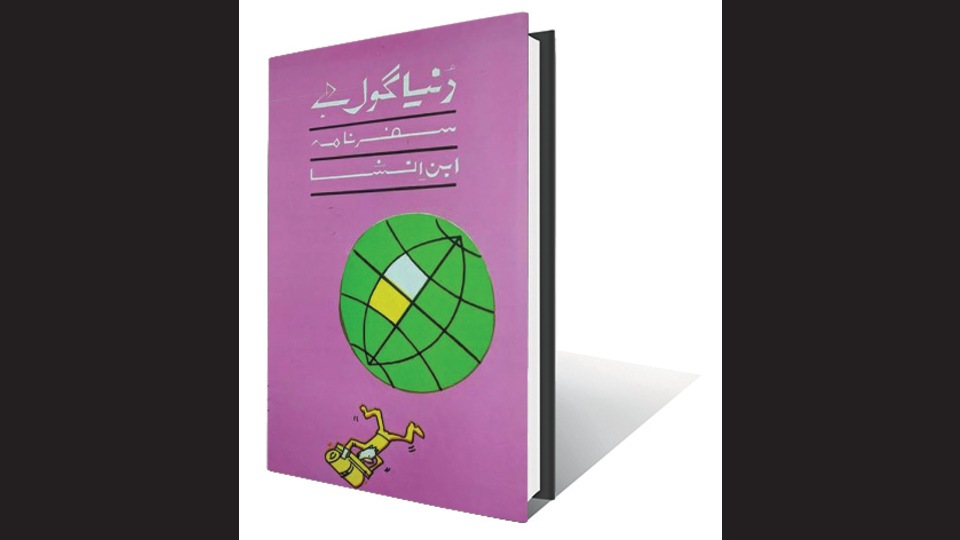
The Pakistani poet describes his travels across Southeast Asia and West Asia among other regions with deft humour and wit. Even his accounts of mundane things like getting lost and bargaining made me chuckle. While he is a largely compassionate raconteur, his jokes can be insular or insensitive at times.
The travelogue gives insights into what it was like to travel as a Pakistani in the 1960s when it was mostly people from the West who had the means to trapeze around the world. Insha writes about the South Asian communities in other countries, such as the omnipresent Sikh doormen in Singapore and the Sikh businessmen in Tehran and Kabul who conversed in Punjabi and the local tongue with equal ease. It is interesting to see what he finds noteworthy in a locale and how that compares with what contemporary writers have to say about that place.

After the pandemic, I’ve largely been reading natural history and travelogues—perhaps a consequence of being homebound. This obsession continued into 2021. Pranay Lal’s Indica: A Deep Natural History of the Indian Subcontinent was remarkably revelatory. The book is without precedent — it makes India’s geological history and evolving life forms accessible to the amateur reader. I learnt that Karnataka was once covered in glaciers, why there are sea creatures’ fossils across India, from the Trans-Himalayas to Manipur and Rajasthan, and why Madagascar’s life forms are closer to India’s than Africa’s.
Indica helped me grasp the Earth’s obtusely vast timescale of 4.6 billion years. For instance, compared to how long dinosaurs lived, humans seem like mere blips. And all life forms seem temporal when you learn that for 3 billion years, there were just single-cell organisms on Earth. The book also contextualises and makes tangible the dangers to Earth, such as climate change, biodiversity loss and the exploitation of natural resources.
I hope Pranay Lal writes more on India’s natural history and that the book inspires other writers to explore the subject. Indica has left me with a fascination for landforms and rocks that I hope to keep indulging through books and in person.
Syed Saad Ahmed is a writer and communications professional.


