
 E-Paper



‘I wish I’d followed Pablo Neruda’s advice sooner’
Isabel Allende, author of almost two dozen novels talks about the pains of displacement and her life altering meeting with Pablo Neruda


One can pick out two incidents from author Isabel Allende’s life that made her who she is, inadvertently influencing much of her writing. First, was a meeting with Nobel Laureate Pablo Neruda. In 1973, when Allende got the opportunity to interview Neruda, he famously told her, “You’re too imaginative to be a journalist. You should become an author instead.” And second, in that very year, when her uncle, the Chilean President Salvador Allende was overthrown by Augusto Pinochet in a successful military coup. Her family’s life, suddenly, was in peril because of which they were forced to flee to Venezuela. Now, the 77-year-old author, with her latest release The Long Petal of the Sea, charts the pain that displacement inflicts on innocent refugees and a blossoming love story that lies in the heart of it for “Death and love go hand-in-hand in life and in literature,” as she says. Excerpts:
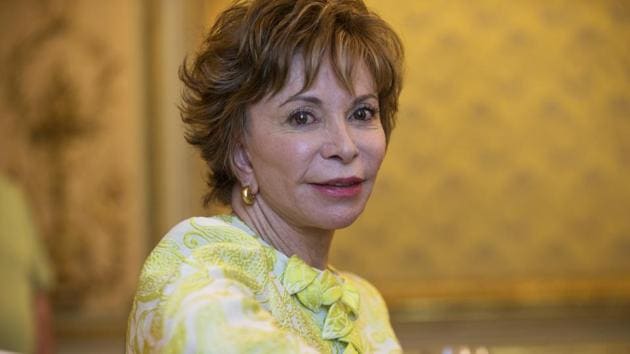
Ironically, the tag - “world’s most widely read Spanish-language author” –pits you against the great Gabriel Garcia Marquez. What do you make of that?
Writing is a very private endeavour, it requires time, silence and solitude. Stories grow in the secret chambers of the mind and the heart. Public life and success happen in the outer circles of my world and don’t affect the process of writing or my life. I live in small house with my husband and two dogs, I drive a small hybrid car, and I work at least 10 hours a day... I don’t look like celebrity at all!
A beautiful aspect of your new novel is that of love in the times of ruthless war. That’s such a universal occurrence, how did you make sure to portray the brutalities of war and yet, retain the tenderness and innocence of love?
In extreme circumstances, like war or any catastrophe, the best and the worst of people emerge. You have villains and heroes; on one hand you have violence, destruction, cowardice and cruelty and on the other you have solidarity, courage and compassion. Death and love go hand in hand in life and in literature. It was not difficult to portrayed them in the novel because I have known both.
When did you discover Pablo Neruda’s works? How deeply has his life and works influenced you?
I have read Pablo Neruda’s poetry since I was a teenager. I can’t say I have a “fascination” with his work but it has certainly accompanied me. I live and work in English (in California) but I write fiction in Spanish. Reading his poetry in my own language helps me to recover the vocabulary, the rhythm, the flavour and the imagery of my background.
Can you talk a bit about the meeting you had with him, when he advised you to become an author. Must have been like a dream to meet your idol…
I met Pablo Neruda in 1973, shortly before the military coup that toppled the government and installed a dictatorship in Chile for 17 years. At the time I was a journalist. Neruda invited me to his house – he lived a small coastal village – because apparently he liked a humorous column that I wrote regularly in a magazine. I was delighted that the Nobel Prize wanted me to interview him! But he told me that he would never be interviewed by me, I was a lousy journalist, I could not be objective, I probably lied and if I didn’t have a story I would make it up. He added that I should move to literature, where all those defects are virtues. I wish I had followed his advice sooner. It took me eight years to write my first novel.
What was the literary scene like in Chile back in your formative years?
It was rather limited when I was young, but in my twenties everything changed. I belong to the first generation of Latin American writers influenced by the great writers of the Latin American Boom, authors like Gabriel García Márquez, José Donoso, Octavio Paz, Julio Cortazar, Jorge Luis Borges, etc. Before my time, these great authors were published in their countries but their work was badly distributed. In the 1960s some publishing houses in Spain published their books and distributed in Latin America and the rest of the world. Of course, I read them all. Amazingly, they were all male. There were no feminine voices in the Boom.
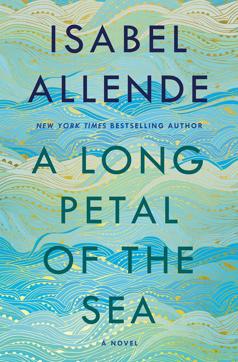
A Long Petal of the Sea is a fascinating read. How did you make sure that you portray the brutalities of war, yet, retain the tenderness and innocence of love?
In extreme circumstances, like war or any catastrophe, the best and the worst of people emerge. You have villains and heroes; on one hand you have violence, destruction, cowardice and cruelty and on the other you have solidarity, courage and compassion. Death and love go hand in hand in life and in literature. It was not difficult to portray them in the novel because I have known both.
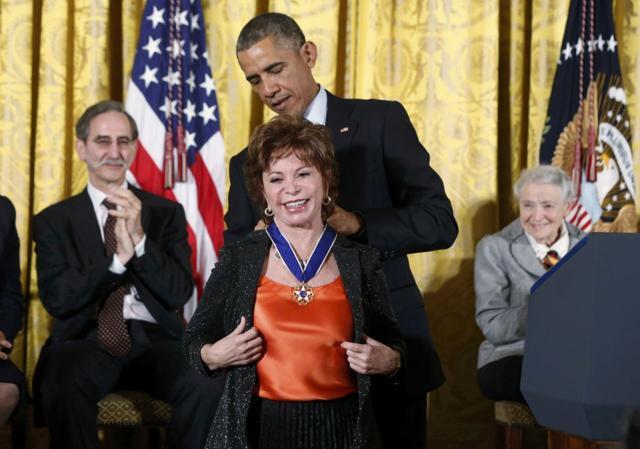
Your first book, The House of Spirits faced resistance when it was released. But you, unknowingly, might have influenced so many who’d have got interested in your work for this very reason. Have you ever met them?
I have met some people who read The House of the Spirits in Chile in the early 80s, when the book was censored. Copies of the book were smuggled into the country with a different cover and passed around. What an honour for writer that is!! But soon my novel and several others that had been censored started to be pirated or sold under the table by daring booksellers. In some parts of the United States a few of my books have been censored by evangelical parents, they don’t want them to be optional reading in high schools. Of course, curious teenagers manage to get them.
You’ve written almost two dozen books,
and your first work faced some
roadblocks before seeing the light of the day. How have all those experiences
changed you as a writer?
I submitted the manuscript of the House of the Spirits to several publishing houses in Latin America but they were not interested. When the book was published in Spain in 1982 it became an immediate success and was rapidly translated into almost all European languages. I was very lucky because most writers never get a break like the one I got. That book gave me a voice, made me a writer and paved the way for all the other books that I have written.
Have you been to India? What do you make of the country and its literary alumni?
I have been in India only once. It is such a fascinating and complex country that I would not dare to give an opinion about it.


