
 E-Paper



Lockdown Diaries: To return where we began by Namita Gokhale
We are not of the race of the immortals, we will all die, and the pandemic is a timely reminder to tidy up our lives, to live them on our own terms


As a writer, I stare all that happens around me with a spider’s eyes. I watch, I try not to judge. I seek the oblique vision, search for patterns in the wind. These days of disruption have given me the opportunity to observe myself, and others, and the ways in which we react to the unfamiliar and the unforeseen. Situations, temperaments and support systems contribute to these outcomes.

Most spiders have six to eight eyes. These can be classified as direct or indirect eyes, attenuated to different fields of vision and ways of seeing. Strangely enough, most spiders do not have good eyesight but they know how to find what they are looking for.
What does this have to do with lockdown, you ask? Why am I not talking about rainbows, blue skies, baking bread, or about the fears of contagion, the horrors of isolation?
Most writers have spider’s eyes. They watch and detect things differently. They remember and record those memes, those moments and images, that they can use to laboriously weave the silken webs of their narratives.
I watch people, and how they react to change. There are some immutables the pandemic compels us to come to terms with.
The first is our mortality, and how, as humans, we must all die, some day or the other. The ‘someday’ has suddenly got underscored – it could be tomorrow, or next week. We could lose loved ones, friends, relatives, people down the road and across the world, without the closure of having said goodbye.
The second is a realisation of our interdependence. We are all connected in so many more ways than we have previously understood or acknowledged. The pandemic has shown us the sameness of our vulnerability as a species. We are bound by neural, intuitive webs, by practical and logistical networks, by our collective human presence on this planet.
The third is the planet itself. This “pale blue dot, the only home we’ve ever known”. The realisation, sudden for some, that this earth that nurtures us, could let us go without even noticing our extinction. The lichens and algae, who are the oldest form of life, will not comment on our departure, will not even notice it. We would go the way of the dinosaur and the dodo. Trees, plants, bees and butterflies, elephants and tigers would reclaim the territory we humans had annexed in the age of the Anthropocene.
The fourth, the last, but somehow also the first, is the reminder of our mortality. We are not of the race of the immortals, we will all die, and the pandemic is a timely reminder to tidy up our lives, to live them on our own terms, keeping a momento mori imprinted in our hearts, minds and screen savers.
I’m watching my friends and those around me navigate this unpredictable and savage storm with different, often conflicted reactions. Most crave any semblance of what was once familiar amidst all that has irrevocably changed. Others seek new paths, new trajectories, even as they try to clear through all the old certainties that this nimble virus has demolished. Many seek the solace of prayer and the consolation of philosophy.
This journey, of alienation and a return to selfhood, is mirrored in the play I have recently finished writing, with my friend Dr Malashri Lal, on the tragic story of poet Michael Madhusudan Dutt. This dramatic interpretation of his chequered life mirrors the rites of passage of other dreamers and writers, “to return where we began and see the place for the first time”.
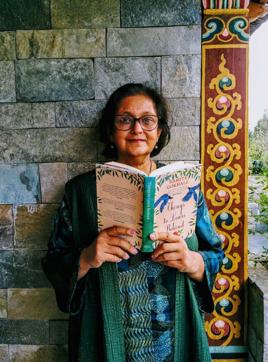
As for me, what am I searching for during these days of lockdown? I am trying to consciously go through a spiritual exercise I had last attempted 25 years ago, when I was confronted with personal tragedy and found every certainty in my life upended. In some way, my life had almost prepared me for this moment. I learnt then that if I could not look outward, my spider’s eye would know how to look inward.
And so, I am trying to take stock of myself, to assess and list out how much of my current identikit is the accumulation of habit, how much of it my core self, my deepest, most private inner space.
The title of my novel Things to Leave Behind referred both to tangible and intangible things, the situations and attitudes that we can discard, and also to the legacy of all that we have done or not done. The Ishopanishad stresses the same thought as a prayer for the dying: Krato smara, Kritam smara. Remember your actions, remember your deeds.
There’s a story here. I was in Bellagio, on a writing residency. As I was packing for my return home, I discovered that the odds and ends I had mysteriously accumulated during that short February spent by the banks of Lake Como no longer fit in my suitcase.
So I spread my belongings, clothes and socks and books and papers, and the cuckoo clock I had unwisely bought, and laid them out on the bed. Then I made out a list of non-essentials, which I captioned, ‘Things to Leave Behind’. It was at that moment that I knew what the title would be of the novel I was working on.
These too are days to make just such lists, for not all our baggage will fit in the life we are moving towards. This lockdown and the days before the uncertain dawn of day after, we have all to take stock, to make that list, that reckoning. After all, everyone has things to leave behind.
Namita Gokhale’s play (with Dr Malashri Lal) based on the life of Michael Madhusudan Dutt will be published by HarperCollins India later this year.


