
 E-Paper



My job is set up for lockdown: William Dalrymple
Author and historian William Dalrymple on his upcoming work, his book recommendations and Jaipur Literature Festival’s star-studded online series, Brave New World

 Prefer HTon Google


navneet.vyasan@htlive.com
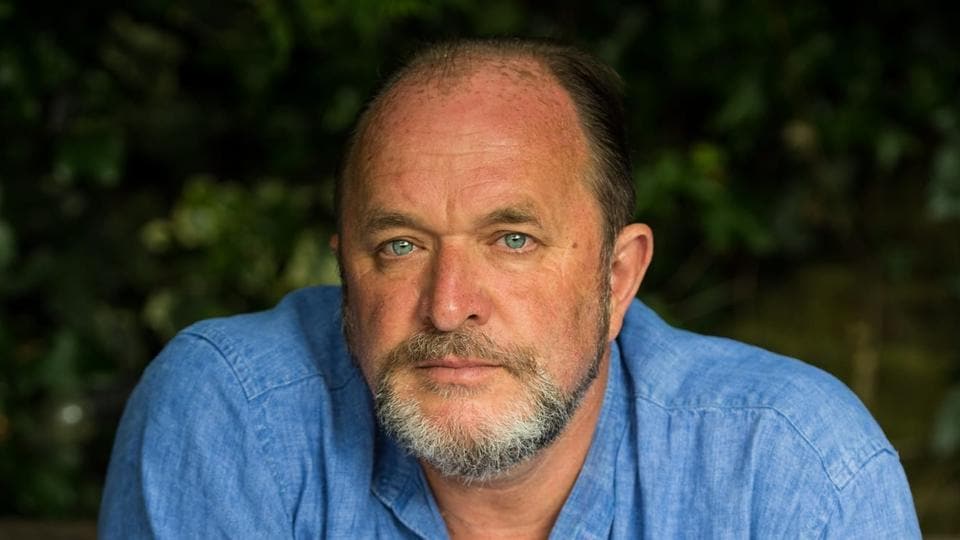
It is perhaps not surprising that historian and author William Dalrymple chose Mehrauli as the setting of his farmhouse. The historic location in Delhi exudes everything that a historian enchanted by India’s past looks for. And it is there that Dalrymple is spending his time with his wife, artist Olivia Fraser and two of their children.
“This is the fifth week today, that I have not left the gates of my house,” he says. Dalrymple is ‘pretty self-sufficient’ when it comes arranging all that one needs when one is subject to a lockdown. “We grow our own vegetables, we have our own bees which provide our honey, we have goats for milk,” he says, and we stress of ‘pretty self-sufficient’ because the only thing that he needs now, he quips, is dal. “My wife is an artist and I am a writer. My job is set up for lockdown. My two boys are both here, and my daughter is in Somerset,” he adds.
The author adds that there have been some mistakes in the way that the lockdown happened so suddenly, as the fate of the migrants was left hanging. “But, that said, the fullness and the earliness of the lockdown,” he says, “means that it hasn’t spread here the way it has in other countries. India is a vast country, there are a lot of poor people living close to each other. It could have been an apocalypse. But by acting as quickly as they’ve done, they’ve reduced the impact. Overall, I think the government moved swiftly and effectively unlike the British or the American government.”
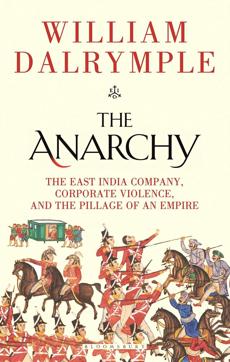
The author, last year, released his most successful and critically acclaimed work of non-fiction - Anarchy: The East India Company, Corporate Violence, and the Pillage of an Empire, which found mention in former US President Barack Obama’s favourite reads of the year.
What’s next?
Dalrymple is currently working on his next book, what he calls is probably more ambitious than Anarchy. Divided into three parts, its subject is about how Indian culture and ideas spread throughout the world with its sheer sophistication and not through conquest.
“It’s about how Indian ideas and Indian soft power spread over Asia and then to Europe in late antiquity. In much the same way as Greek ideas spread, first to Turkey, and then out to whole of Europe so that by the 18th century buildings in Scotland, Sweden and Norway were all being built in the Greek classical style. Indian ideas spread not through conquest, not through colonisation but through the sheer power of their sophistication, took over Asia. So, part one will be about how Buddhism travelled north, through modern day Pakistan and Afghanistan, into western China and then by the 700 it became the state religion of China,” he explains.
The second part is set in South India and opens with the Pallava Dynasty. “It will start in South India and the great city of Kanchipuram and the port of Mahabalipuram, because it was from that part of India that Hinduism travelled right out to South-east Asia, taking over Sri Lanka, Burma, Thailand, Laos, Cambodia, Vietnam, and Indonesia. Moreover, Sanskrit extended all the way from Kandahar which comes from the Sanskrit word Gandhara to Singapore, which is Singhapura. It also explores how Sanskrit became the language of the government and kingship and learning and civilization,” says the author.
And the third is about the Gupta ideas of astronomy and mathematics, which, by the 13th century was being used in Florence by Fibonacci. “It starts from the opening of the royal observatory of Udayagiri and how the ideas spread eventually on to Europe because by the 13th century, Fibonacci in Florence is using the decimal system, and the Indian numbering system,” Dalrymple says.
JLF’s Brave New World

Dalrymple is also busy co-ordinating the Jaipur Literature Festival — of which he is the co-director with Namita Gokhale — that has moved online with a line-up that includes notable names such as Margaret Atwood, Jhumpa Lahiri and Neil Gaiman among others, which he feels “is incredible”. Dalrymple adds, “Every one of the big authors that we most wanted, every single one, has said yes.”
“We opened with Siddhartha Mukherjee, who we haven’t had since he won the Pulitzer. We had him when he was young and unknown. And he is at the forefront of trying to find a cure for Corona. We had Peter Frankopan who had predicted it six months in advance. We got Alain de Botton. We’ve also got Margaret Atwood and Neil Gaiman, Jhumpa Lahiri and so many others,” he adds.
Dalrymple’s recommendations (in his own words)
Underland by Robert Macfarlane: It is his magnum opus, a work that has taken him nearly 10 years to complete. Though darker than his earlier books, it is as rich as anything he has ever written, blessed with the scholarship of Sebald, the stylistic felicity of Bruce Chatwin and the vocabulary and syntax of Patrick Leigh Fermor.
The Patient Assassin: A True Tale of Massacre, Revenge and the Raj by Anita Anand: It is a remarkable and brilliantly researched non-fiction thriller, that tells an extraordinary story that had never been properly told before. The Punjabi revolutionary, Udham Singh, a Sikh orphan who was radicalised by the Amritsar massacre, spent his life hunting down the man he held ultimately responsible, the former Punjab governor, Sir Michael O’Dwyer. He finally assassinated him in London at a public meeting in the early months of the second world war.
Through some remarkable research in archives around the world, Anand has reconstructed much of his life, from his early days in the rural Punjab through his radicalisation at Jallianwalla Bagh and his subsequent journey through the international Indian revolutionary underground in Nazi Germany, Bolshevik Russia, and, perhaps most surprisingly, 1920s California.
Kingdoms of Faith- A New History of Islamic Spain by Brian Catlos: It was just what I needed at a difficult time, and helped transport me away to the orange scented splendour of Islamic Spain during the Golden Age of Andalucia. I had always imagined the world of the Spanish la recoquista to be crudely binary affair, with the chain-mailed Catholic Kings crusading manfully against their sinuous, sensuous Muslim rivals. Catlos shows instead the intimate interactions that took place between the two worlds, with the Islamophile kings of Seville allying with their Moorish friends in Granada against Christian rivals, and attempting in their building projects and lifestyles to imitate the luxurious lives of their sophisticated Moorish contemporaries in the Alhambra. “Why would a Castilian King model his palaces after the styles of his infidel enemies?” asks Catlos. “For the simple reason he did not see them as such.”
Endeavour: The Ship and the Attitude that Changed the World by Peter Moore: It plunged me headlong into a very different world. The story of the humble Whitby coal collier which in the 1770s became famous as the ship which took Captain Cook on his voyages to Australia and around the South Seas. Moore is a dazzling new arrival on the scene. A witty, intelligent and hugely entertaining writer whose prose can convey with alluring immediacy “the groan of oak timbers and the straining of sailcloth”. He allows you recreate in your mind exactly what it must have been like to be on board such a voyage, but best of all are his pen-portraits of the men on board, especially the dashingly, pioneering botanist, Sir Joseph Banks working with Linnaean rigour “on the very borderlines of human knowledge.”
The Summer Isles: A Voyage of the Imagination by Philip Marsden: In Summer Isles, the brilliant English stylist, Philip Marsden boarded an old wooden sloop and plotted a course north from his home in Cornwall, up the West coast of Britain and Ireland to the Summer Isles, a small archipelago north of Scotland. It is one of the most brilliant, imaginative and alluring travel books I have read for a long, long time.


