
 E-Paper



Out of the anchoring earth: Gieve Patel (1940-2023)
Gieve Patel's recent passing is a reminder of one's own advancing years. He was known for his work as a doctor, poet, painter, and playwright.

 Prefer HTon Google


Clichéd as it may sound, Gieve Patel’s recent passing brought sadness. Besides the loss of an old acquaintance it was another chapter in a now familiar chronicle of the deaths of people one has long known, a reminder of one’s own advancing years and inevitable frailty. I cannot say, like several others quoted in various newspapers, that we were especially close or that we continued to stay in touch all this time. I hadn’t seen Gieve in years, and when I last did some years back, he unknowingly hijacked a taxi I had flagged down with some difficulty outside Mumbai’s once iconic Deepak Cinema (given his significant seniority in age, I didn’t have the heart to stop him)! Yet there was a decade or two long ago, when we frequently interacted and developed a relationship of mutual respect.
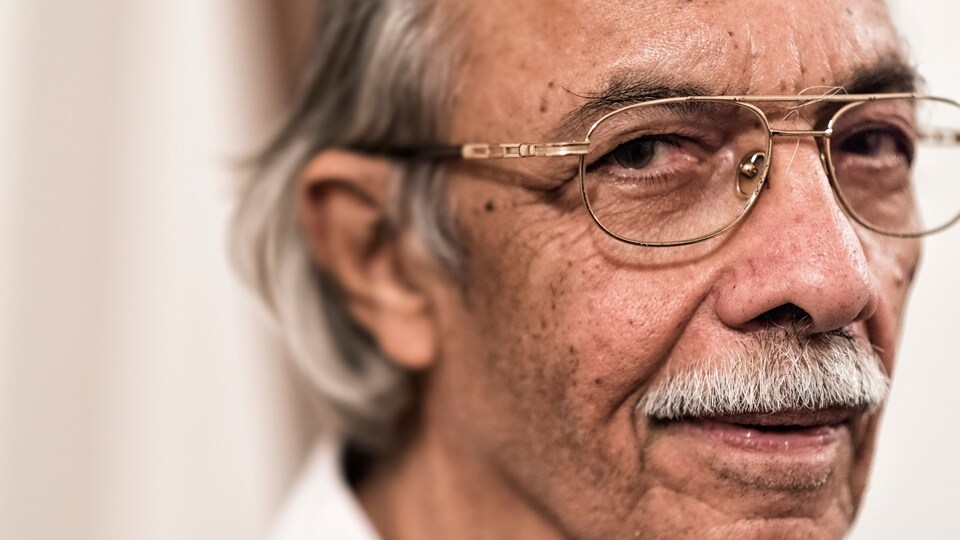
It is hard to think of Gieve without remembering the unpretentious clinic at Bombay Central where he could be found till he retired from active medical practice, attending to the humblest of patients with the same attention and commitment he brought to his creative work. Long before we met, I had heard of his multiple roles as poet, doctor, painter (“I write in the early morning, then practice (medicine), and paint in the afternoon”, he had once told an interviewer) and even playwright. I had read his poetry, seeing in it evidences of these varied roles, the painter’s eye for detail, the doctor’s need to be clinical and objective even at her or his most compassionate, and poetry whose themes derived from a grounded perspective rooted in everyday experiences. But it was when I began working on my doctoral thesis on Indian English poetry that Gieve and I spent many mornings together while I interviewed him at some length, an interview peppered with Gieve’s frequent, naughty chuckles and the self-deprecatory manner with which he often qualified his statements. If Gieve’s normal manner of talking created the sense of a mind that arrives at its conclusions with painful caution, those mornings with him revealed a side one was to see more often over the years, one which remained his most endearing quality.
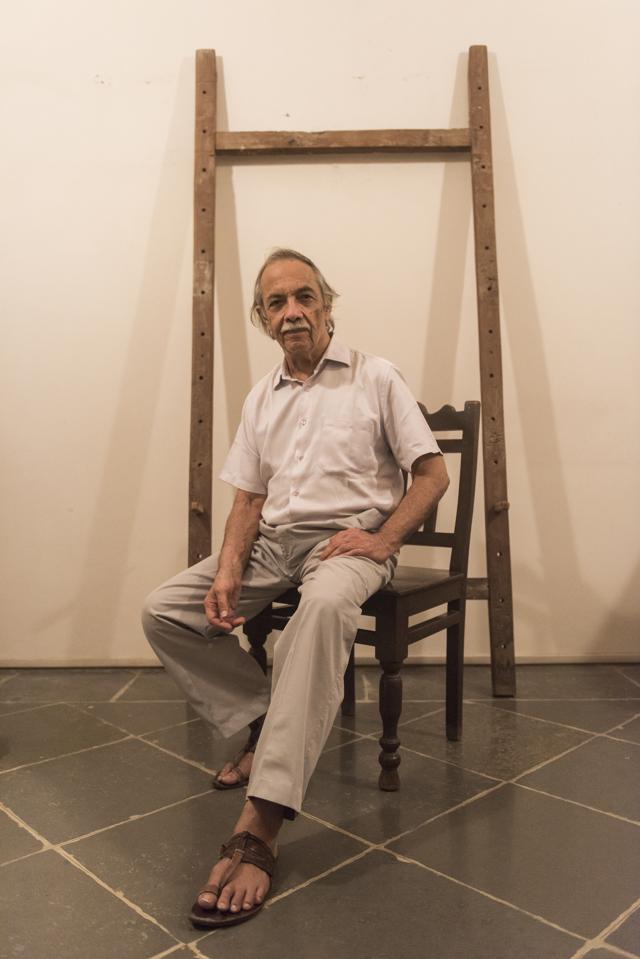
I learned of his boyhood spent in Bombay and the village of Nargol on the west coast to which he remained deeply attached and which was to feature indirectly in his plays, Mr Behram reminding one of an early poem, Grandfather, and its disdainful rejection of the peasantry as Difficult, ungrateful,/ Double-faced, unreliable. I learned with some surprise of Gieve’s being excessively withdrawn as a child. Of his teenage friendship with the “Khoja pianist” (his words) Suleman Currim who was not much older, a short phase when he was 19 and underwent psychoanalysis for about three years, his initial reluctance to enter medical school and how that changed once he began his medical practice, how he met his wife Toni, and above all the convictions which continued to motivate his creative work. I learned that it was Suleman Currim who encouraged him to write poetry, breaking up a prose piece of his into free verse, and emphasising the need to write on things real to and experienced by him. It was something also emphasized by his later mentors Ebrahim Alkazi and Nissim Ezekiel and it remained central to Gieve’s output, making his poetry accessible in a very tangible sense.
Many of his early poems focused on his profession as a doctor: Catholic Mother, Cord-Cutting, Post-Mortem, and The Difference in the Morgue. I remember that while grappling with a medical crisis in the family and futilely seeking clarity from attending physicians, I had chillingly recalled Gieve writing about the ease with which he had acquired it all: the self-importance of a busy man of medicine striding down the corridor, stethoscope round the neck, the poorly-masked impatience on being stopped and asked for assistance. Despite this frank admission, the feelings expressed in Gieve’s poetry are entirely human and not those of a detached specialist. In Catholic Mother, he is painfully conscious that her people Have more right to you now than I,/ Aunts and uncles will be closer,/But before I let you leave, pious woman,/ Your weeping soft,/ Unrebellious,/ From what perverseness/ Do I appose for you/ Your simple original trust/ Against the present horror?
A similar involvement may be seen in one of Gieve’s finest, frequently anthologized poems, On Killing A Tree. An early poem, it was what I had termed a credo-poem in some ways, its metaphor going to the heart of the poet’s sense that life is difficult and achievement elusive, its argument supported by the curiously rough, hard, almost painfully slow rhythm, the feeling of an actual physical, near-surgical process which follows on the understated “It takes much time to kill a tree” with which the poem begins: The root is to be pulled out – / Out of the anchoring earth;/ It is to be roped, tied,/ And pulled out — snapped out/ Or pulled out entirely,/ Out from the earth-cave,/ And the source of the tree exposed,/ The source, white and wet,/ The most sensitive, hidden/ For years inside the earth.
In an early interview Gieve had cautioned Indian creative artists against “being trapped by the minority culture” but Gieve himself was not always able to rise above the all-too-common trap of seeing situations in black and white. One of his most-quoted poems, The Ambiguous Fate of Gieve Patel, He Being Neither Hindu nor Muslim in India, was also one of his most unconvincing. It had situated the poet outside a simplistic binary frame of his creation, one which ignored India’s historic complexities and the diversities which many Indians born into these communities continue to value and espouse even in these troubling times. Despite such occasional lapses, Gieve’s poetry resonated disturbingly against our contemporary backdrop of unceasing violence and war, and the brutalities condoned in the name of “freedom”. Like Imtiaz Dharker, he jolted us with references to how it is the women who bear the brunt in conflicts not of their choosing: What is it between/A woman’s legs draws destruction/ To itself? Each war sees bayonets/ Stuck like flags in/ A flash of groin blood (What Is it Between?). The poem University, written shortly after the brutal massacre at Dacca University in 1970, began on a rhetorical note asking if the students at Dacca were better than our own, outlining uncomfortable reminders of higher education in the subcontinent: the “dullness” of the College corridors, the vacuity of its library, the sparrow-brained rich students and the poor “skulking/ In corners”, the professors “Stale, malodorous, with yesterday’s coats/ And neckties”. The seeming dismissal of the killings as therefore inconsequential took a sharp U-turn at the end with the plea to the dead students (“Dolls emptied into untimely graves”) to “Tell us to change our thoughts.”
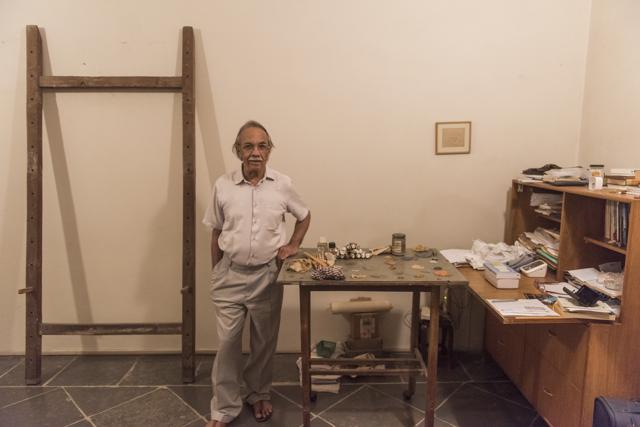
Palliative care is not a term one would have wanted to associate with Gieve and the finality the phrase invoked was startlingly reminiscent of his poem Old Man’s Death. In writing on topics such as sickness, emotional suffering, misfortune, and death, Gieve by and large remained free from clichés and stereotypes. And so in the poem Gieve was not ironic when he wrote that There may be a very small comfort/ in knowing yourself finally/ Useless –. It was a brilliant touch to suggest that the death of such a person would come as a surprise to a lifelong friend who “cannot mourn” at the ease and finality of the death. That what is left after the funeral is the unusual perception that a whole room and the changes that have taken place in it may appear to have “clarity in them”. Clarity was one of Gieve’s most visible attributes, and it is how one would want to remember him.
Vrinda Nabar is an author, critic, and a former Head, Department of English, Mumbai University. Her doctoral thesis was titled “The Making of the Indo-English Poet.”


