
 E-Paper



Report: Bhoomija Jackfruit Festival
This year’s edition of the festival of music by children saw hundreds of kids sharing learning experiences on stage and enjoying performances

 Prefer HTon Google


I always wondered why the Bhoomija Jackfruit Festival was named so. That’s until I spotted an earlier festival director, veena exponent and Carnatic musician, Jayanthi Kumaresh explaining that it alludes to the difficulty in harvesting a jackfruit pod from the green, spiky mass that the whole fruit is. And yet, how tasty is the end result!
The Bhoomija Jackfruit Festival is a festival of music by children. Every year, I see children with diverse abilities having quite a jolly time making music. This is heartening because the balance of rigour with playfulness is often missing from musical training and performance, especially in our social media and TV show infested times. Though traditionalism in training is held on to, performance opportunities are not easily passed up. One worries about the pressures that this could place on children who are musical and how it might affect their relationship with both – their musicality and the art.
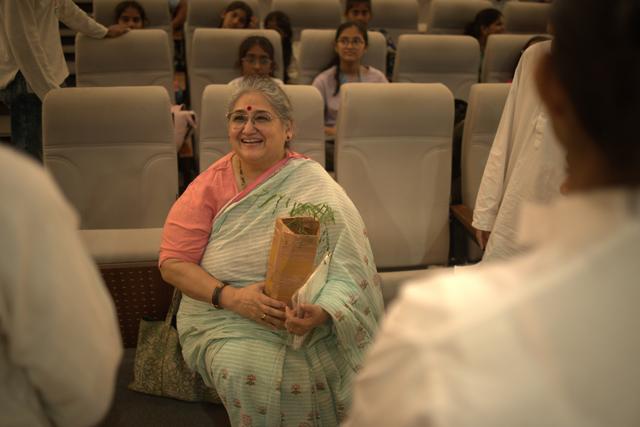
The Bhoomija Jackfruit Festival seems to gently hold space for these questions. The 2025 edition that was curated for the third time in a row by Hindustani musicians Shubha Mudgal and Aneesh Pradhan, was held between September 19 and 21 at three venues in south Bengaluru. It saw hundreds of children from different parts of the country sharing learning experiences on stage and more than 1000 children enjoying the music as actively engaged audiences.
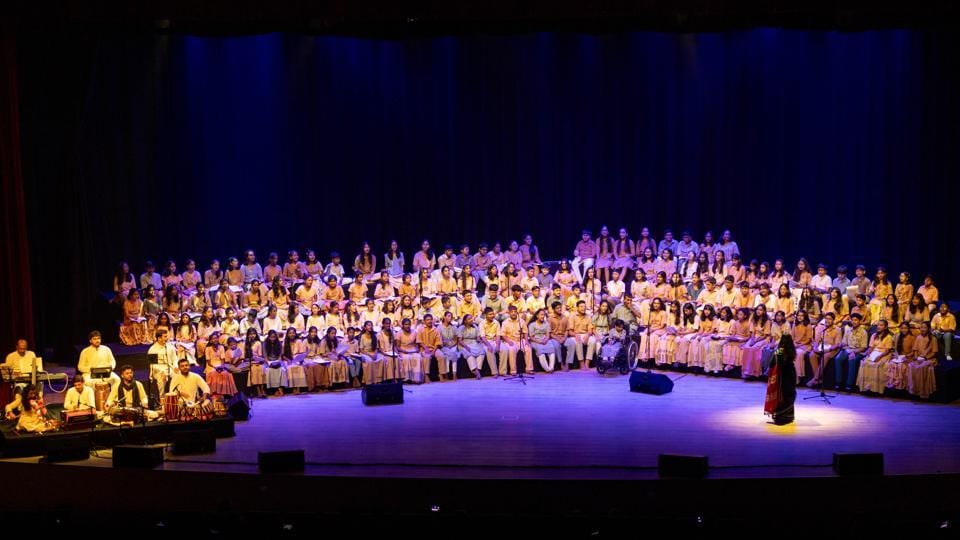
Gayathri Krishna, who heads Bhoomija Trust that produces the event, states that the festival wishes to get “youngsters to come, watch and be inspired” as much as “to showcase music by children.” She credits, not just the various festival directors and mentors but also “teachers, parents, people who travel with the children, accompanists, seasoned musicians who facilitate workshops, volunteers, caterers and more.” She adds that “unexpected twists” were brought in by Mudgal and Pradhan through programmes like Kamaal Dhammal (a 40-member folk percussion ensemble that was part of the festival two years ago) and Jackfruit Songsters 2025 – the community singing performance that brought together 150 children from pan-Indian schools on stage in the recent edition.
Jackfruit Songsters 2025 featured participants from 16 schools and songs in eight languages, including one in Asuri, an indigenous language marked endangered by UNESCO. The songs were taught by musicians and music educators from different parts of the country, some of whom also conducted them on stage. Festival director Shubha Mudgal says the process, though long-drawn, proved fruitful when so many voices and languages came together on stage. Putting out a social media post inviting schools to join the event, choosing songs with experts, collaborating with teachers from the chosen schools were just some of the tasks that preceded the rehearsals, which took place only four days before the show in Bangalore, she shares.
“Aneesh and I set about the task of identifying compositions that would be appropriate for such a group, reminding ourselves constantly that the children would be taught in their respective schools in different cities by their music teachers,” says Mudgal. Aneesh Pradhan adds that they “had tracks specifically created for certain songs that were not available as published recordings so that children would get accustomed to singing with introductory and interlude passages. The entire process went on for a few months.” Musicians like Bombay Jayashri, MD Pallavi, Shantanu Herlekar, Varijashree Venugopal, Priya Saraiya, Shatavisha Mukherjee and Shraddhanand Asur chose the songs for the concerts, they add, acknowledging the support of Ragini Pasricha and PARI network in the collaboration.
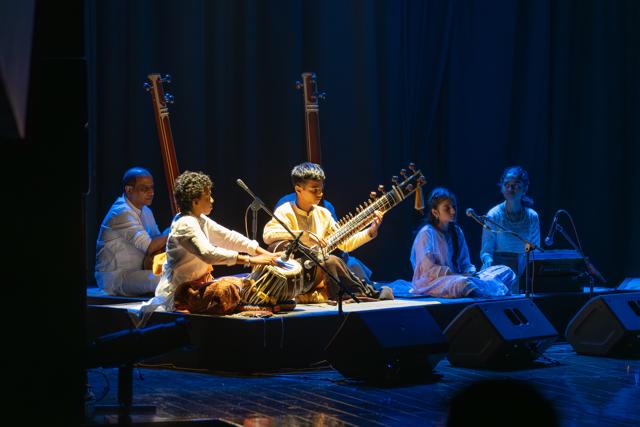
‘Musicking into the Future,’ the other concert, featured child musicians showcasing ragas and classical compositions at proficiency levels that belied their age. Shubha Mudgal clarifies that the curation aimed at getting the young artistes to listen to each other as this “opens a gateway to listening to another system or form of music” besides fostering awareness of a larger talent pool that they are a part of. Aneesh Pradhan says that while the performances may be “milestones in their careers,” its design hoped to facilitate “experiences in musicianship, teamwork, acknowledgement, and above all, humility in their journey with music.” Language though a “contentious issue in our country” became, in the festival’s context, a means “for celebration and togetherness,” he adds. For Mudgal, one of the highlights was the adaptability demonstrated by the children from Srishti Special Academy who seamlessly integrated in the 150 Jackfruit Songsters.
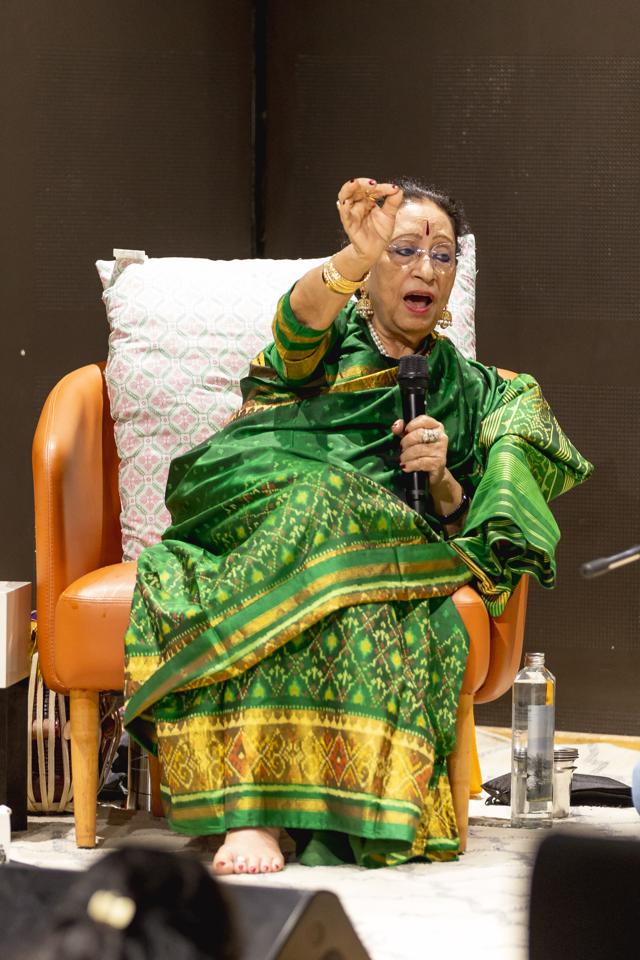
“Every year, I see participants from other cities coming to attend the workshops offered at the Bhoomija Jackfruit Festival, with some non-resident Indians planning home visits around those dates. This year’s workshop facilitators included Ranjit Barot, Begum Parween Sultana, B Jayashree, Sriranjani Santhanagopalan and Sudhir Nayak. In a very rare appearance as a workshop facilitator, veteran Hindustani musician Begum Parween Sultana, reiterated that “Riyaaz is everything. Raag comes later.” She urged participants ranging from professional singers to novices and young students to “put the world aside for two hours every day” and establish a routine of “riyaaz first, then everything else.”
Immersing the participants in a sea of ‘Sa,’ she termed the seven musical notes “the moola mantra” of music, insisting that loyalty be shown to each, which, according to her, could only happen if music students cultivated consistency in riyaaz that included yoga and breathing practices. “First, sculpt your voice. Later, you can learn even ten raags on one day,” she said. The workshop “felt like home. Local musicians and students got a glimpse of how we do riyaaz and have requested for more workshops,” she says of the experience. This could be a far flung hope for music enthusiasts to harbour because Begum Parween Sultana repeatedly said during the workshop that she finds teaching “very boring.” Or maybe not – because she still called every participant on stage to sing a bit and personally coached them at length.
In the Ranga Geethe (Theatre Songs) workshop, seasoned theatre practitioner and founder, Spandana Theatre – B Jayashree underlined the need to tune into a specific dramatic context while singing each song. That the singing is in service of the storytelling was established firmly even as she spoke of how Ranga Geethe as a form holds its own and has performances designed exclusively to showcase them. “Singing for the theatre is not about showing your musical skills but more about expressing the personality of characters and the setting in the play,” she said. Each song is written for a situation, she said, reminding participants to make eye contact with audiences while singing.
Wishing that theatre songs would be sung more, she says she has made it her life’s mission to spotlight them. “In theatre, we sing while acting. That is very difficult. Actors who can sing are not so easy to find though in our group you can find them,” she says. According to her, a good actor should “sing, move, dance and deliver dialogues while embodying the rhythm in the script. Unless an actor enjoys the music in the script, they cannot convey it to the audience.” B Jayashree and her team also shared a treasure trove of theatre songs from iconic Kannada plays like Karimayi, Lakshapathi Rajana Kathe, Sadarame and Nagamandala.
In the end, the Bhoomija Jackfruit Festival was an enjoyable experience for everyone involved regardless of their age.
(Charumathi Supraja is a writer, poet and journalist based in Bengaluru.)


