
 E-Paper


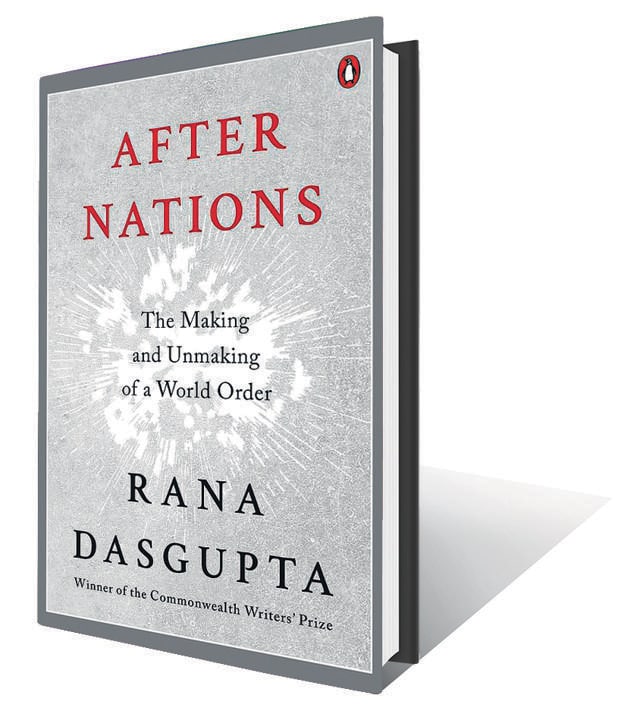
Review: After Nations by Rana Dasgupta
Tracing the rise and fall of the system of nation-states to explain its multiple contemporary failures, the author says it is time to develop a new idea of citizenship for a globalized world on the brink of ecological disaster

 Prefer HTon Google


We are all consumed by the predatory trappings of a nation-state as much as the nation-state has consumed our politics. We cannot do without a nation’s citizenship or taxes; we cannot prefer one national law to another; we cannot ignore the legal limits of its territoriality; a Mexican cannot vote in a US election, nor can a French taxpayer dispense unemployment benefit in Niger. The “monopoly of the nation state,” Rana Dasgupta reminds us in his latest non-fiction, has divested us of the “sensation of progress” replacing it with “the anxiety of futurelessness”. The system of the nation-states is in serious jeopardy.
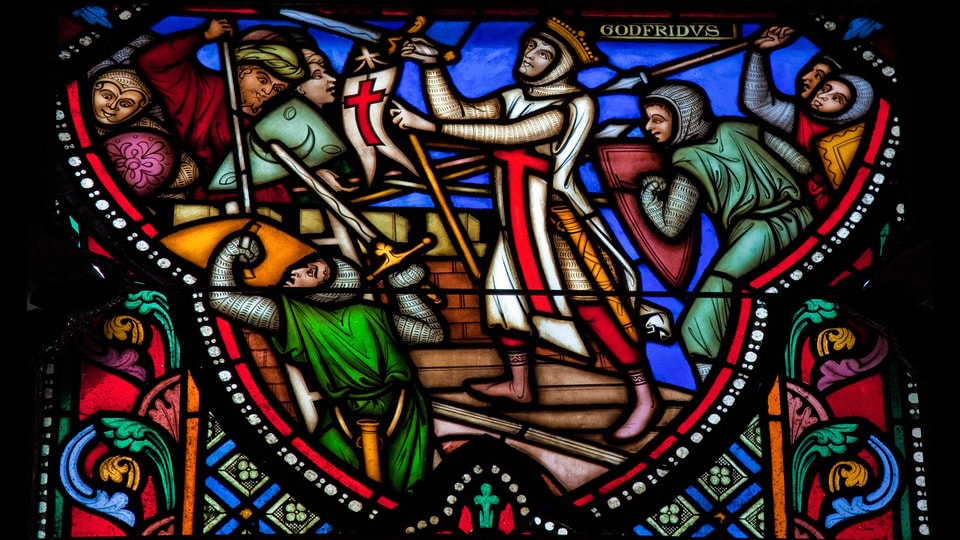
Religion and territoriality, upon which the primary edifice of a nation-state was laid, were as bloody and vengeful. The imposition of Christianity on Roman territories, for example, led to the suppression of once-paramount female deities and the “trampling of goddesses was accompanied by patriarchal consolidation in the real world”. European nations were rigidly constituted under the theological dominion of the king, and any divergence was like a cancer to the ‘body politic’. The notion that the Enlightenment, a major 17th- and 18th-century European intellectual and cultural movement that prioritised reason, empirical science, and individual liberty over blind faith, tradition, and absolute authority, was a breather and a secular break with the past is a serious misunderstanding.
Despite all the advances, the European nation was destined for self-destruction, the course of which began with the 16th-century Reformation, which, despite creating the conditions of the modern state, plunged Europe into crisis. In 1572, the attempt to unite Protestants and Catholics thorough an inter-denominational marriage ended up in the slaughtering of ten thousand Protestants in the streets of Paris; the subsequent two decades saw France in flames with Spain and the papacy funding the Catholic League, and England and the German states supporting the Huguenots, resulting in the death of some two to four million people in France. If the havoc was already not too great, the Thirty Years War (1618-48) obliterated one-tenth of the European population, double the numbers killed in the First World War.
The ‘Westphalian’ settlement of 1648 – an important signpost to inaugurate the nation-state system – weakened the transnational powers of Habsburg Spain and the Holy Roman Empire, and made large-scale conquest inside Europe far more difficult, propping national states as the decisive political actors. But religion could not be superseded, for most Enlightenment philosophers remained convinced of the “divine origin of morality” and worked within a Christian tradition. Confronted by the traumas of the seventeenth century, thinkers such as Hobbes, Locke, Rousseau and Voltaire sought not to abolish religion but to reconstruct it so that religious rivalries could never again tear the state apart. Thus, the Enlightenment never really abandoned Christianity; it renovated it, creating a dual structure in which a distant Christian God underwrote a sacralised state whose power rested on the myth of natural rights and the sovereign individual.
Liberalism – the Enlightenment’s big idea – became the unofficial religion of the modern Western state. It kicked God out of politics; religion was shoved into the private sphere, where people could chase romance, art, consumerism, and self-help instead. Looking around at industrial life, many thought it was a joke – workers drowning in booze, landscapes despoiled, souls crushed by speed and machines. Some saw straight-up decay and the imminent apocalypse. Max Nordau called it a “Dusk of Nations” that gave a lie to Christianity’s “Kingdom of Heaven” happening right here on earth through the nation-state – freedom, equality, better lives for everyone.
The pushback against liberalism was soon to follow. In their desire to unseat the new orthodoxy, the Catholic right in France, led by Charles Maurras, rose during the Dreyfus Affair and pushed hard for “state anti-Semitism” to purify the nation of Jews, Protestants, Freemasons, and foreigners. He was averse to the whole liberal package. His remedy was Catholic theocracy restoring the unity of God, king, and nation – an “integral” France ruled from above, like “the good old days”.
Another malcontent was Alexis Carrel, Nobel laureate and author of the bestseller Man, the Unknown, who dismissed democratic equality as dangerous, advocated eugenic selection of an elite, and proposed “humane” disposal of criminals and the insane in gas chambers. Impressed by Nazi measures, he returned to Vichy France, founded a Foundation for the Study of Human Problems, and helped shape policies requiring premarital examinations and sterilisation. Both Maurras and Carrel were disgraced after 1944.
A greater orthodoxy emerged from Sayyid Qutb in Egypt who, though educated under British liberalism, was repelled by its materialism, recognised in Carrel’s “barbarie” the Quranic category of jahiliyya – active blindness to God. He pointed out how Egyptian liberal nationalism, discredited by colonial humiliation and the persistence of foreign power, failed to resonate beyond a Westernised elite. His answer to liberal dualism was tawhid – the oneness of the universe under Allah – and to human sovereignty practised in idolatrous secular or nationalist states was hakimiyya, God’s exclusive sovereignty. The liberal “mortal God”, that claimed sovereignty derived from individuals rather than from the divine, not only faced rejections from Maurras’s integral nationalism, Carrel’s eugenic scientism and Qutb’s Islamist monism, but was also later challenged by a resurgence of religious bigotry and a wave of ultra-nationalism worldwide.
Dasgupta’s vast tar of history reads like a novel, presented episodically with a Gibbonian sweep. In the chapter titled Twenty-First-Century Religious War he narrates how Liberalism and Communism – twin Enlightenment offspring – began to function as state religions which endowed governments everywhere with near-divine powers and the promise of progress: the “mortal God” of the nation-state reigned supreme.
Liberalism was further challenged by the ‘Old Believers’ and ‘Puritans’ who seek to restore a lost national glory by closing borders, and often stripping suspect citizens of rights. Their leaders – Trump, Le Pen, Orbán and others – invoke imperial pasts, Catholic or Orthodox or Hindu or Ottoman glory, and virile patriarchal authority. They are characterised by their impulses to put checks on executive power, reject liberal internationalism, and treat multiculturalism as existential threat.
Dasgupta is ruthless in critiquing the antagonists responsible for the disintegration of the material foundations of liberal promises. Puritans, more radical by nature, see the nation-state itself as the original sin, and history as one long record of imperialism, slavery, patriarchy, and ecological plunder. Radical Islamism treats every existing nation-state as idolatrous blindness – epitomised by Iran’s Islamic Republic – a state that uses the privileges of statehood to wage a cosmic war against the system of states, arming proxies like Hezbollah and Hamas while pauperising its own population in pursuit of millenarian ends. With Communism gone and Liberalism relegated into a corrupt monopoly, the theological vacuum came to be filled in by sources as disparate as Iran’s 1979 revolution and Afghan jihad to American neo-charismatic churches, Latin American Pentecostalism, and Turkish Islamist parties, among others.

“The exclusive nature of national identities gives the nation-state, in fact, an inalienable genocidal core”, avers Dasgupta, clearly when empires convert into nations. The atomisation of the multi-ethnic, multi-religious Ottoman empire into the new state of Turkey led to mass slaughter and expulsion of Assyrians, Greeks and Armenians; in the course of the dissolution of the British-Indian empire in 1947 into two, and later three, new nation-states, about three million people were slaughtered.
Large technological companies, such as Facebook, X and Microsoft are now the supra-national powers rivalling states for geopolitical influence. Dasgupta calls for a digital citizenship to be crafted to provide access to a global commons. He does not mention, though, that the transnationality of AI may well drive the last nail to the idea of the nation-state.
Dasgupta anticipates a far more complex and dispersed political ecosystem in the future. “God does not float above the nation, nor is any political cause sacred,” he says. “The divinity attaches only to the planet itself”.
Prasenjit Chowdhury is a independent writer. He lives in Kolkata.


