
 E-Paper



Review: Fangs of Death by Maanas Lal and Aloke Lal
A finely told page-turner featuring the true story of the sensational Kerala snake bite murder, the book also presents the technicalities of law and forensic science

 Prefer HTon Google


In Fangs of Death, the authors Maanas Lal and Aloke Lal unravel one of the most bizarre and chilling murder cases in Indian history with surgical precision and thorough detail. Their gripping account is equal parts police procedural, legal explainer, and sobering social commentary. The story begins with Suresh, a snake wrangler and co-conspirator turning witness for the state.
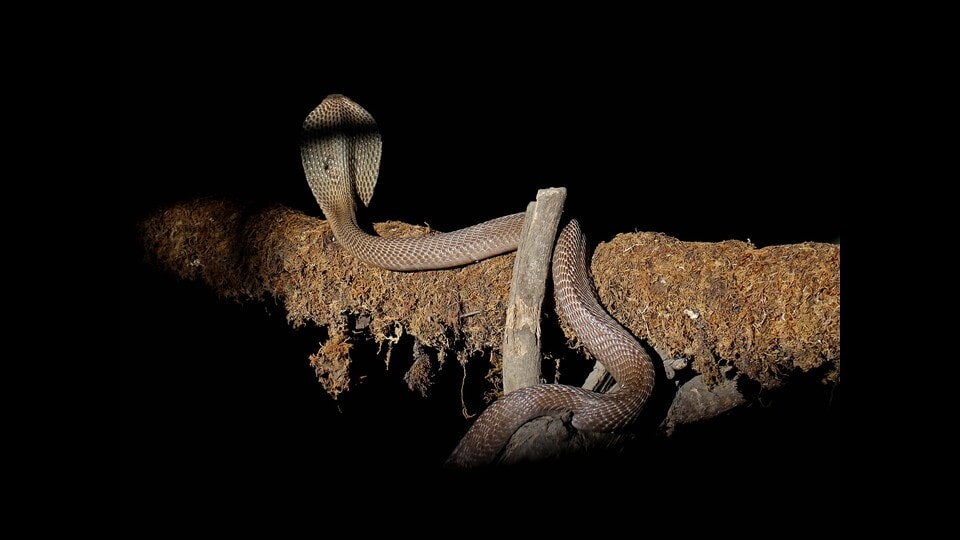
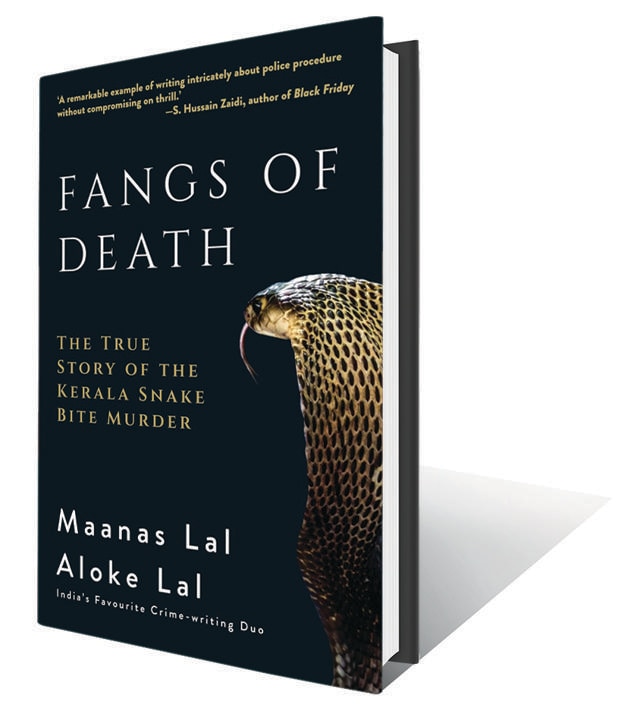
What follows is a finely told page turner featuring a moving chronicle of a differently-abled woman who falls victim to the devious mind behind one of the most horrific and ingenious murders committed in India. The authors present a true and detailed account of events including procedures used in the collection of evidence, various agencies and departments involved, interrogation techniques used by officers, and the legal aspects of building a case and going to trial.
The story begins in rural Kerala with Uthra’s parents looking for a groom for her. Her differently-abled status prompts them to go through a marriage broker and offer a significant dowry. Post the marriage, her husband, Sooraj, soon tires of her. He begins obsessing over a “perfect murder” plan to eliminate her without losing the dowry money. It is a plan that is straight out of a crime novel. Hoping to use superstition to cover his hand, he settles on a weapon mired in local history and folklore. He chooses a venomous snake to deliver the fatal death wound to his wife.
The first attempt on Uthra’s life fails, even though she suffers a close brush with death. Multiple surgeries later, she manages to recover. Sooraj, instead of being deterred by the pain that his wife has endured, is determined to try harder. His second attempt, a mere two months later, succeeds. The barely recovered Uthra is rushed to the hospital where she breathes her last with four fresh puncture wounds on her arm.
The repeated snake bites arouse the suspicion of Uthra’s family. These suspicions are further exacerbated when Sooraj, immediately upon Uthra’s death, asks for more money to look after their son. At this stage, Uthra’s family decides to involve the police. This is where the story truly begins. Sooraj’s “perfect murder” soon begins to crumble under the collective weight of the police’s investigative prowess and his own arrogance. Despite his repeated insistence that Uthra had sarpa dosha and that she was cursed, the wheels of law enforcement slide into motion. Over time, despite interrogating Sooraj and collecting clues, the conclusion of the case remains open and it is transferred to the Crime Branch. A team of crack sleuths is assigned to it under the leadership of deputy superintendent Ashokan.
A key moment in the investigation occurs when Sooraj finally succumbs to Ashokan’s carefully-used psychological interrogation tactics and confesses to planning Uthra’s murder. One would have thought that after his admission of guilt, Sooraj might have fled. But such is his confidence that he remains and is finally arrested. The investigation showcases the intricate dance of interrogation tactics, the minutiae of evidence collection, and the forensic analysis that is used. The narrative dives deep into how the Crime Branch methodically builds its case, even exhuming the snake used in the crime and employing wildlife experts and other snake wranglers to connect the dots. Despite the evidence, the prosecutor feels the case against Sooraj isn’t ironclad. That’s when the idea of turning Suresh into a witness for the state is implemented.

Interestingly, the book doesn’t shy away from the technicalities of law and forensic science. It explores topics like the criteria for murder by poison, the legal intricacies of obtaining confessions, and the application of the Indian Penal Code. These segments can be dense, occasionally bogging down the pace of the narrative with heavy jargon. While the book’s depth and details are its strength, some sections especially the commentary on the trial’s implications for the Evidence Act, judicial statistics, and first-aid protocols for snake bites could have been more succinct.

Overall, Fangs of Death is the wonderfully detailed coverage of a unique case. Lucidly written, it works quite well as a quick travel read that also presents the workings of the police machinery and the justice system in India. The authors are thorough in their research and have also provided further reading materials on the various contexts involved in the case. In a world where justice often feels elusive, Fangs of Death is a reminder of its painstaking pursuit.
Percy Bharucha is a freelance writer and illustrator. Instagram: @percybharucha


