
 E-Paper



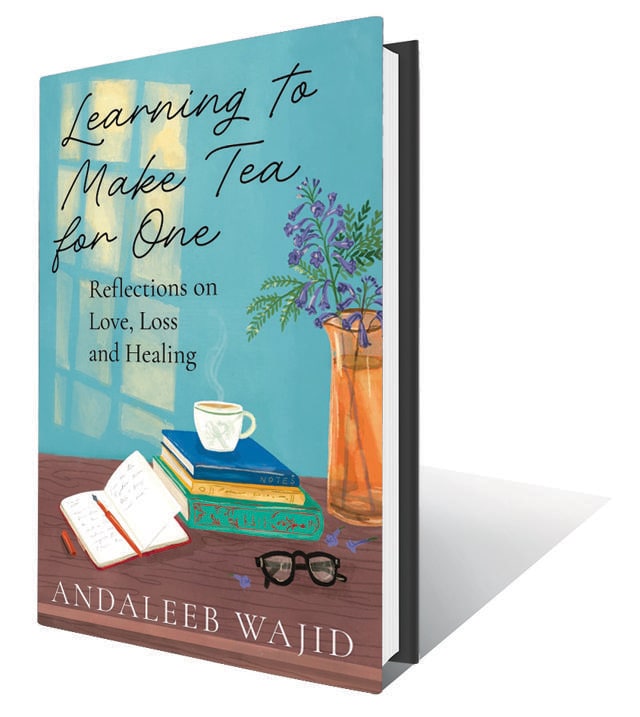
Review: Learning to Make Tea for One by Andaleeb Wajid
A deeply personal memoir about losing loved ones during the pandemic that also meditates on the author’s formative life experiences, Learning to Make Tea for One by Andaleeb Wajid is powerful, poignant and strikingly honest

 Prefer HTon Google


There are perhaps few emotions as universal, yet as little discussed, as grief. Although religions have built extensive rituals around death and mourning, they are not as preoccupied with coming to grips with grief, relegating it to the realm of the personal. While they do provide structure and direction at a time when everything seems unmoored, grief largely remains an individual struggle and many have to create anew ways to process their loss or help a grieving person.

When grief becomes a collective emotion, it can be even more incapacitating. That was the case during the summer of 2021 in India. As the Covid-19 pandemic’s deadly second wave surged across the country, almost everyone knew someone who died or was on the verge of death. Hospitals, graveyards, and crematoriums ran out of space, and bodies piled up. Amid the strict lockdown and social distancing norms, quotidian rituals and coping mechanisms, such as spending time with loved ones, often became impossible.
Like many other traumatic events affecting millions of people across India — the demonetisation of high-value rupee notes in 2016, leading to financial difficulties, or daily-wage labourers walking for hundreds of miles after the sudden imposition of a lockdown in 2020 — there seems to be a collective amnesia or, perhaps, wilful forgetting around these events.
This is understandable to some extent. Life moves on and it can be unproductive or difficult to dwell on the past. And yet, there is value in memorialising such events and ensuring a collective reckoning. These can help provide closure and reduce the chances of repeating past mistakes.
Although there have been a couple of fiction and non-fiction works about Covid-19 in India, Andaleeb Wajid’s Learning to Make Tea for One: Reflections on Love, Loss and Healing is, to my knowledge, the only book-length memoir about losing loved ones during the pandemic. While the author’s story is deeply personal and does not touch upon the misgovernance and apathy that caused immense suffering, it is nevertheless a powerful reminder of how these forces shaped people’s lives — and deaths.
In April 2021, everyone in Wajid’s house contracted Covid-19, except her younger son, Azhaan. Wajid, her mother-in-law; and her husband, Mansoor, were admitted to Covid-19 wards. While she was eventually discharged, the other two remained hospitalised for weeks, their condition slowly deteriorating. Just before her 24th wedding anniversary, Wajid’s mother-in-law died due to complications from the disease. A few days later, Mansoor passed away.
But this was not her first brush with death or illness. When she was 12, her father died suddenly after a heart attack. “For many years, my father’s death defined me,” writes Wajid. “While the tears dried up after the first few months or so after his death, the hollowness refused to be replaced by anything or anyone. I stuck to my tragedy like I meant it to embrace me and never leave me.” She also faced multiple miscarriages, including one where the doctor diagnosed that her baby had been dead in utero for more than 15 days.
LISTEN: Remembering not to forget - Andaleeb Wajid on the Books & Authors podcastThe memoir not only delves into grief but also other formative life experiences. Wajid got married in college — her father had arranged it to her cousin before his own death. Women in her family did not work as their husbands were expected to provide for them. But to cope with the multiple miscarriages, she started applying for jobs — five years after she finished college.
A memoir of this kind must have been harrowing to write. Yet, Wajid is powerful and poignant throughout. She is strikingly honest, even where it might have been difficult to talk publicly about personal matters. After a tragedy of this sort, one would give allowance to a person to indulge in self-pity or navel-gazing. Yet, Wajid is measured, not maudlin, despite the many sorrowful passages.
She also does not eulogise Mansoor or turn him into a larger-than-life persona. She wonders, “...what he would think of this entire exercise, of me writing down my experiences of what happened to us, how our family was fractured and torn apart.” Her guess? He would be “plain embarrassed”.
One of the interesting aspects Wajid highlights is the gendered nature of grief. She writes about how “men are allowed to move on and live their lives, get a fresh start, and women are just expected to live each day as it comes. To just keep surviving.” Thus, women have to “keep moving on, but not moving on too much either”. Interestingly, many of the published personal recollections of the pandemic in India have been authored by women, though the number of such works is too few to glean common threads.
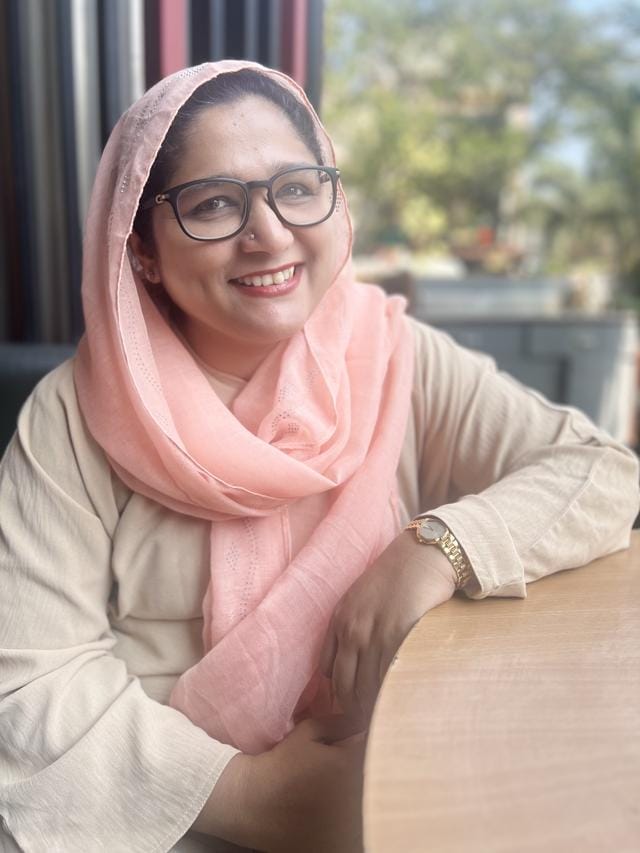
While Wajid had not set out to be an author and her writing journey was knotty, her prolificity — nearly 50 books in 15 years — is remarkable. As has been the case for many, writing became a form of therapy. “Where it had been a form of escapism before, a way to make the lives of my characters far more interesting than the life I led, it became a way for me to cope with loss,” she explains.
Her faith also helped her on her grieving journey. She describes her pilgrimage to Makkah with her sons after Mansoor’s death: “... it healed something inside me that I thought had been broken and even shattered beyond repair.” Another thing that gave her peace was crocheting.
While there might be as many ways of grieving as grievers, Wajid’s memoir is an exemplar of the most universal way — memorialising people through words, elegies, and physical markers, such as gravestones or urns. As Wajid writes, “Every time a reviewer for my books refers to me as Wajid, I feel a little lurch inside, as if they’re talking about him [her father]. And every time my family sees his name next to mine on the many books I’ve written and published, I know it feels like he lives on.”
Syed Saad Ahmed is a journalist and communications professional. In 2024, he was selected as a Boston Congress of Public Health Thought Leadership Fellow. He speaks five languages and has taught English in France.


