
 E-Paper



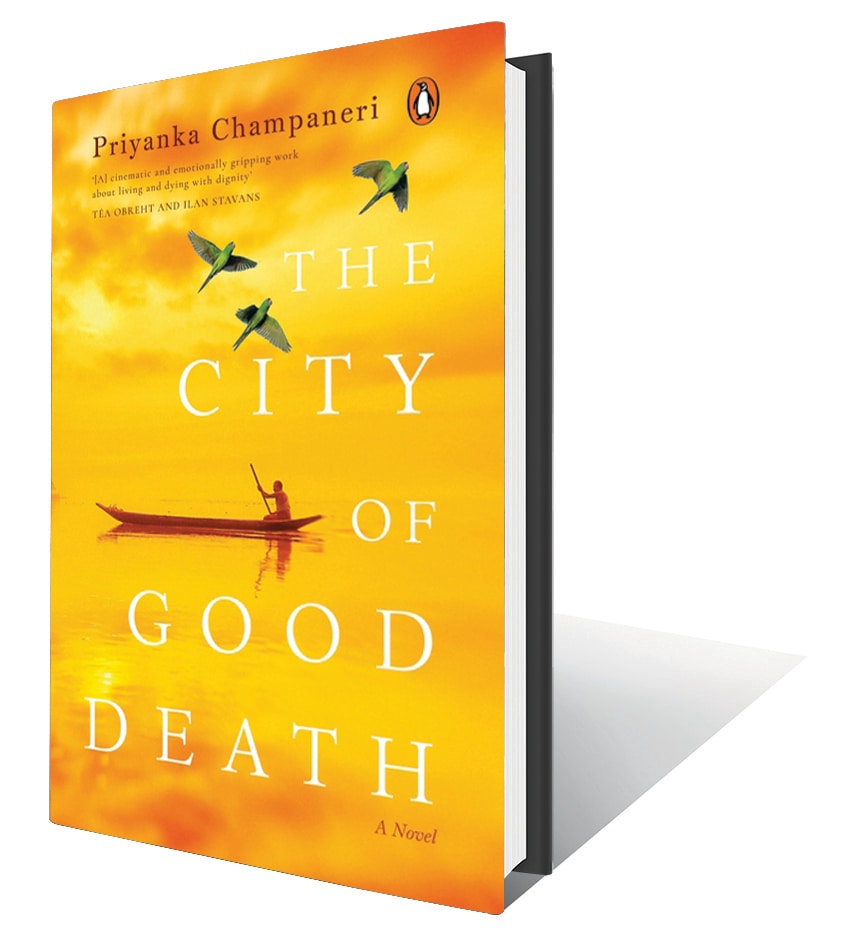
Review: The City of Good Death by Priyanka Champaneri
A saga encompassing relationships and family ties, death and the hereafter set in the bylanes and ghats of Varanasi

 Prefer HTon Google


In Varanasi, death is good business. For the ones that make their living from it, and a ticket to salvation for the ones that come there to die. For death, in one of the holiest cities in the world, promises moksha, the ultimate liberation from the tiresome cycle of birth, death and rebirth. First-time writer Priyanka Champaneri sets her expansive novel The City of Good Death in Varanasi. From the bylanes and ghats of her Kashi, emerges a saga encompassing death and the hereafter, relationships and the pain-tinged nostalgia of familial ties, set in a dated timeless zone. A creditable feat for somebody who places her story in a city she has never set foot in. Despite that, Champaneri imparts a level of authenticity to the narrative bringing alive the city and the sacred river. “Funeral pyres crowded a stone platform at the bottom of the steps, flames crackling, the surrounding men looking like cotton spindles from a distance with their shaved heads and sheer white dhotis. Chants laced the air, each word crisp and new as if emerging for the first time from the lips of red-eyed priests.”
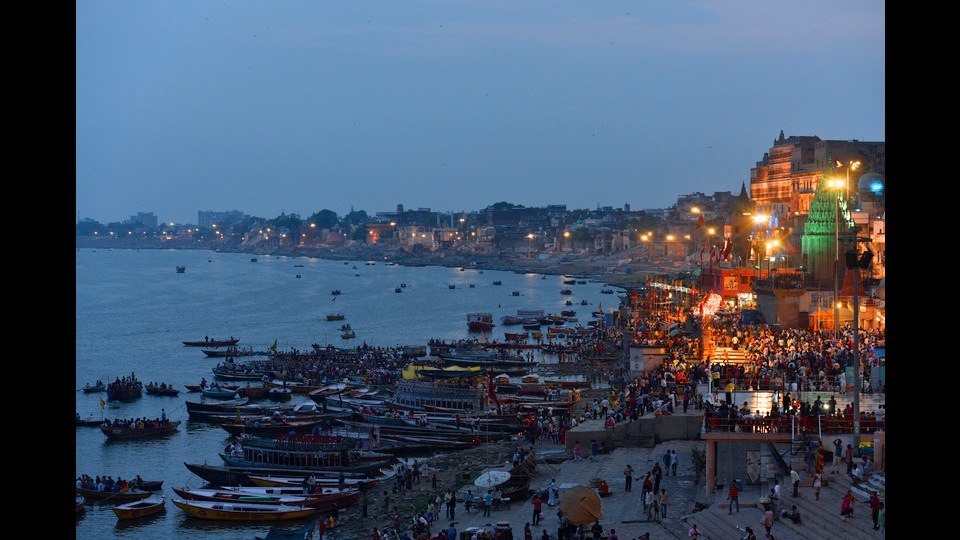
The story begins on a high note on the placid night-time waters of the Ganges. Two boatmen idling their time in the company of cheap booze and beedis stumble upon the dead body of an apparent stranger to the city of Kashi. And thereby hangs the curious tale in which mortals and spirits frequently collide. At the heart of most of the action is Shankarbhavan, a death hostel modelled on the real life Mukti Bhavan, which was also featured in a 2016 film called Mukti Bhawan or Hotel Salvation. The hostel is a place where people bring their dying relatives to breathe their final moments in a city that celebrates death, and where the minutiae of funereal rituals assume gravitas like no place else. Families are allowed a fortnight’s stay at Shankarbhavan. After that, the relatives have to leave the place, whether there is a death in the family or not. A timely demise is considered propitious, bringing deliverance to the deceased and to grieving kin alike. “the month of Shraavana was approaching… Such a death would complete the trifecta: to die a good death in the holiest city at the holiest time of the year. What a dream that was, a death that the family could return home and brag about.”
Primarily, The City of Good Death is the story of two cousins and their boundless love. At first, though, it seems to belong to one of them: Pramesh the mild-mannered, conscientious manager of the Bhawan, whose past comes to haunt his present, literally, as the narrative unfolds. The rational mind initially boggles at the presence of supernatural elements, but the setting allows for a level of suspension of disbelief about souls with unfulfilled desires lingering on seeking fulfilment. Champaneri manages to create sufficient suspense in the plot, yet the eerie atmospheric elements get a tad repetitive and are drawn out to a point where the denouement eventually weakens. The main plot is punctuated by a series of flashbacks, the whole imbued with large doses of melancholia.
There is a near parallel subplot involving more spectral action and a flesh-and-blood police officer who goes by the ironic name of Bhut Singh. He restlessly walks the streets of Kashi, carrying emotional baggage of his own. Pramesh’s family, the priests and assistant at his hostel, the doms -- caretakers of cremation grounds and funeral pyres, the homeless drunk Maharaj, who lives on the ghats and sees all, the lovelorn boatman Raman, and a couple of well-meaning neighbouring women are a few of the other constituents of this curious world.

The metaphor of Kashi is larger than the obvious one. Pramesh, the protagonist, has found, within the clamour and folds of the city, an escape from his tortured past. After all, isn’t the city all about detachment. In the creation of a new life and family and the severing of old bittersweet ties, he has found sustenance, for nearly a decade. His present is devoid of any traces of a childhood that was marred by paternal cruelty. The only moments of sanity and happiness had been the times spent with his cousin, his physical twin.
Champaneri’s writing has vim. “Tales of what had happened, what might have happened, and what didn’t happen swelled across the city, ferried from boatmen to ghaatiye, carried by rickshaw drivers and cart pullers, festering inside shops and whispered via family matriarchs, drifting to the street sweepers and even the drunks and lechers too ashamed to show themselves in the light. In the course of the telling, the truth expanded, broke into pieces, gilded itself, tripped in a puddle of filth, swabbed itself dry, and left fragments behind, until everyone in the old city knew at least some version of the story.” One wishes it had maintained its tenor. Admittedly, it does not pall entirely, but the story itself begins to sag. It could have been tighter, clipped in places, and ended about a hundred pages earlier than its stretch of 427 pages. This is an earnest debut, and can be praised for its merits. Hopefully, Priyanka Champaneri’s next book will correct the flaws.
Sonali Mujumdar is an independent journalist. She lives in Mumbai.


