
 E-Paper



Review: The End of Everything by M John Harrison
On the 2026 Booker shortlist, this is a work of speculative fiction that’s also a literary novel, a social satire, and a philosophical meditation on what it means to be human when the world that gave meaning to human behaviour is disappearing

 Prefer HTon Google


No one was certain whether the arrival of the iGhetti was an invasion or a natural catastrophe.
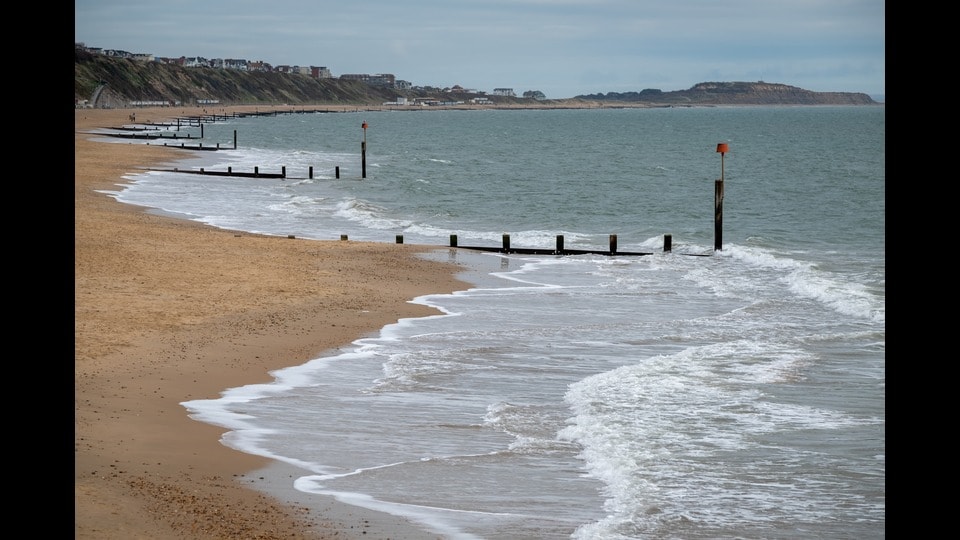
They resembled stalks of fleshy, weak rhubarb, appearing and evolving very quickly from nothing, like the tentacles which seem to bulge out of nowhere when you burn a piece of mercuric sulphocyanate. They would appear briefly on the city skyline, behind the buildings and just under the cloud base.
The sirens would go off across London, from Borough to Camden. The artillery would fire and recoil, fire and recoil. The iGhetti would pulse and grow against the lighted clouds. Then they would be gone again for another day.
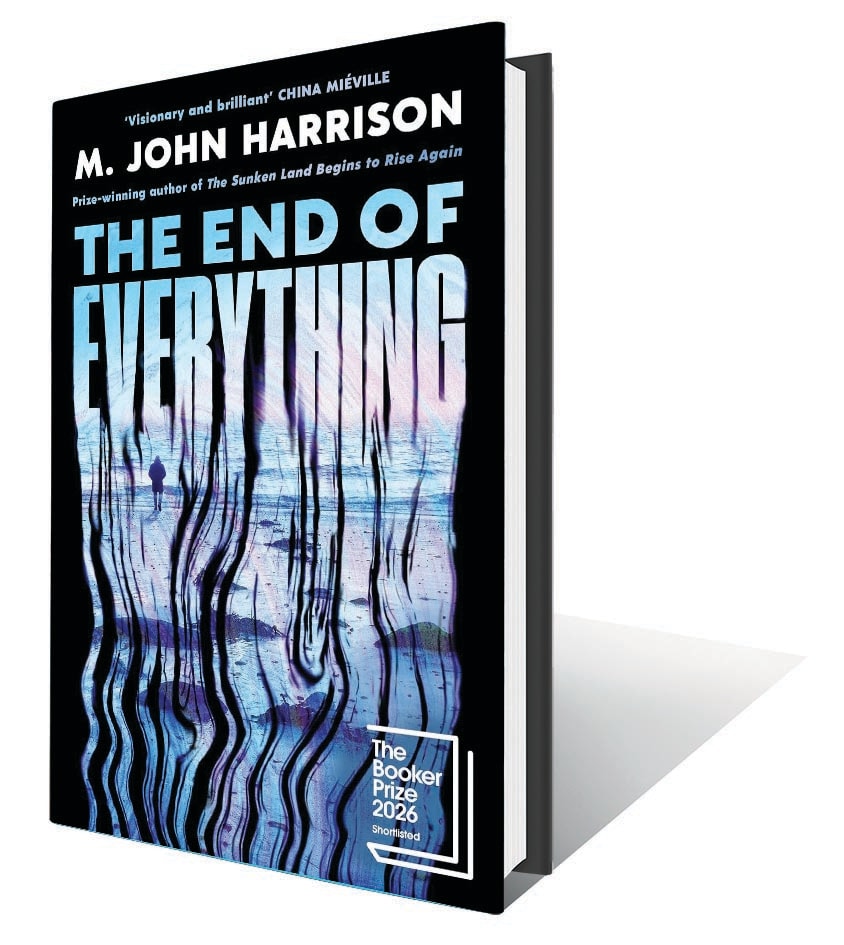
This is the near-future world M John Harrison builds in The End of Everything, which has been shortlisted for this year’s Booker Prize. London has been occupied by alien-like iGhetti; the government is barely functional and information is unreliable. Mainland Europe has become strangely inaccessible, almost as if it has been misplaced. Climate and geography have changed and people have been pushed to the edges of ordinary economic and social life.
But people still have to make a living and they still argue, travel, eat, sell things, remember and misremember. They continue to make plans in a world in which the basic assumptions behind those plans have disappeared. Harrison’s apocalypse is therefore a condition of everyday life. The end of everything, in this novel, takes the form of a prolonged adjustment to things no longer being what they were.
When the novel opens, Phillip Tennant is a beachcomber, salvaging things from the sea and selling whatever seems useful or valuable. He is waiting, like many of the people around him, for something that might interrupt the monotony of this diminished existence. He finds it in the form of an artefact, a strange humanoid-machine hybrid connected somehow to the iGhetti. It grows visibly while in his care and begins to acquire characteristics that appear increasingly human.
Phillip takes the artefact to his aunt Marnie, an older artist who has lived in the area for much longer and whose relationship with the changing landscape is more complicated than Phillip’s. Marnie eventually sets the artefact free while Phillip is away. The two then leave their homes and begin separate journeys along the coast. Phillip goes looking for the artefact and, after finding it, tries to find someone who will buy it. Marnie goes looking for Phillip and then begins looking for a way out of England, towards the fog that has replaced any reliable connection with Europe.
On the surface of it, it sounds like the beginning of a fairly conventional science-fiction plot. Harrison is interested in the expectations that come with genre, and one of the pleasures of The End of Everything is the way it repeatedly establishes those expectations only to withdraw from them. The book contains aliens, a post-apocalyptic landscape, strange technology, ecological collapse, political disintegration and something resembling a war. But it does not behave like a conventional science-fiction novel. It is also a literary novel, a social satire, and, at points, something closer to a philosophical meditation on what it means to remain human when the world that gave meaning to human behaviour is disappearing.
The book takes us through the ‘invasion’ of Britain by the iGhetti, who eventually occupy the City of London. The City becomes a kind of ghost world, its financial machinery continuing in some strange form after the people have largely disappeared. There is something almost comic about the image of London’s financial centre being reduced to an eerie monument to its former power. As Harrison writes elsewhere in the story, the City becomes a place where the old order is still visible but no longer quite alive.
With the coming of the iGhetti, the military operators of the state had regained all their sense of entitlement, while the City of London, puzzled and defeated, had relinquished the top spot in the conversation and could only huddle at the edges of its old power base
The image establishes something that becomes much more important in The End of Everything. Various explanations circulate for the iGhetti. Some associate them with dark matter, others with the banking crisis of the late 90s. Others believe they came out of the internet. None of these theories can be established as true. They nevertheless correspond to the anxieties of the world in which the characters live.
The iGhetti, though, do not have to stand for one particular thing. They can be climate change, technological acceleration, financial capitalism, political failure, Brexit, artificial intelligence or some combination of all of them. They are frightening partly because no one knows what they are.
There is no authoritative account of what happened, or scientific explanation or reassuring expert who can put events into perspective. The characters are simply living through it. The people in the novel do not need to explain their world to themselves because it is the only world they know. They have adjusted to it. The catastrophe has become ordinary.
We are used to thinking about dystopia as a society controlled by a powerful government, a dictator or some recognisable authoritarian structure. Harrison removes that structure. There is no obvious sinister government controlling everyone. There is barely a functioning governing authority at all. People are left to their own devices, and are living on the fringes and continuing with whatever routines they can preserve.
For the people in The End of Everything, the system has simply ceased to be useful to them.
This is also why the novel’s relationship with technology is more interesting than a straightforward warning about machines taking over. Phillip’s artefact is one example. It appears to be partly machine and partly humanoid. It grows and regenerates. As Phillip spends time with it, it begins to dress itself, use phrases, become conversational and seek an emotional connection with the people around it. The more human it appears, the easier it becomes to feel empathy for it. And yet it is not human.
The novel’s interest in artificial intelligence and transhumanism becomes difficult to ignore, even if one does not want to reduce the book to a commentary on AI. The artefact seems to learn by observation and adaptation. It becomes more recognisably human without necessarily becoming conscious in any conventional sense. The question then is: what does being human mean once the distinction between human and AI becomes unstable? The same instability exists at the political level as well.
Harrison has said that he began the novel in 2010 and conceived it as a disaster story in which catastrophe would unfold so slowly that its victims would resemble the proverbial frogs in the pot, failing to notice how completely their world was changing. He wanted to explore environmental degradation and cultural change, with Brexit, gentrification and the transformation of the southeastern English coast forming part of the book’s background.
That becomes particularly important when the novel moves away from the City of London and towards the seaside towns between Hastings and Margate.
In the beginning, no one really understood what had happened. There was a decade of confusion. Populations declined. Coastal towns that had depended on retirees, weekend visitors and tourism fell in on themselves. By the time people understood anything at all, the climate and geography had changed. The internet had become patchy and unreliable, and although the war with the aliens continued, no one could agree on what kind of war it was or where its boundaries lay.
The political echoes of Brexit are obvious. Marnie’s placard asking, ‘How can you misplace a continent?’ is absurd. England has become physically and psychologically detached from Europe. There is a larger irony in the idea that technology and the internet have supposedly connected the world while the people living inside this technological system become increasingly isolated from one another. The iGhetti themselves may have emerged from that supposedly connective infrastructure. The internet is no longer dependable. The only thing left is an eternal present.
This is where Harrison’s treatment of genre becomes important. He has been suspicious of the distinction between literary fiction and genre fiction for much of his career. In an interview with The Guardian, he described genre divisions as a marketing device that had got out of hand and argued that a good rule for writing in any genre was to begin with a form and then undermine its confidence in itself. Ask what the genre is afraid of, what it is trying to hide, and write that.
That position helps explain The End of Everything. Harrison knows what a science-fiction invasion story is supposed to do. He knows how an apocalypse is supposed to work. He simply refuses to give the reader the satisfaction of watching those conventions play out in a straightforward manner.

This recalls The Sunken Land Begins to Rise Again, Harrison’s 2020 Goldsmiths Prize-winning novel, where conversations similarly seem to break the ordinary rules of communication. In The End of Everything, that brokenness feels even more appropriate.
There are moments of sudden violence, but also uncomfortable humour. There are grotesque scenes beside oddly tender ones. This is close to Harrison’s idea of the Weird, which he discusses in his anti-memoir Wish I Was Here. The strange text, in his formulation, does not necessarily add up or resolve. The author is not there to guide the reader towards a single interpretation. The characters themselves may not know what they have lost or where they are.
There is a temptation, when confronted with a novel this opaque, to solve it. The concentration of the iGhetti around financial centres does make the connection to capitalism difficult to ignore. The references to the 1980s and the changing political and economic order invite thoughts of neoliberalism. The transformation of seaside towns into spaces shaped by wealth, tourism and gentrification gives the book another form of economic geography. Harrison himself describes the alien invasion as having a strand that presents alien invasion as gentrification.
The novel may be about the feeling of living through a catastrophe without ever being able to name it properly. We are accustomed to imagining the end of the world as an event. Harrison imagines it as a series of changes that people gradually accommodate until the changed world becomes normal.
Harrison has spent much of his career writing from within science fiction while resisting the boundaries imposed on it. His recognition by the literary establishment, culminating in the Goldsmiths Prize for The Sunken Land Begins to Rise Again and now his 2026 Booker recognition for The End of Everything, feels significant for precisely that reason.
In an interview from 2002, Harrison remarked on the difficulty faced by writers of speculative fiction because readers, reviewers and literary editors often seem to ask, with puzzled distaste, why they would want to write that way at all. He said he would not mind a Booker nomination. He has now gone much further.
Pranavi Sharma writes on books and culture. She lives in New Delhi.


