
 E-Paper



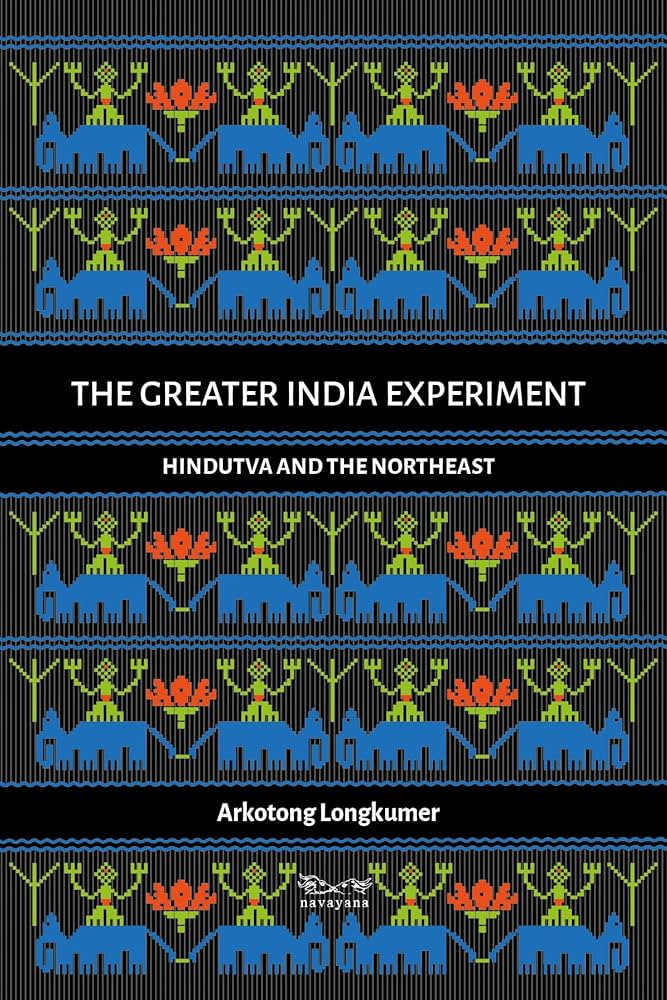
Review | The Greater India Experiment: Hindutva and the Northeast by Arkotong Longkumer
An examination of the religious and cultural churn in the Northeast and the campaign to get the tribal population to return to their “roots”

 Prefer HTon Google


Till the turn of the last century, most scholars of Indian politics did not seriously entertain the idea of Right-wing politics and ideology becoming dominant in India. Yet, that is what happened and the Right-wing takeover of Indian politics looks almost complete. Now, scholars of all shades have taken to analysing the hows and whys of this. Arkotong Longkumer’s The Greater India Experiment: Hindutva and the Northeast can be seen as a part of this scholarly effort to understand the phenomenon.
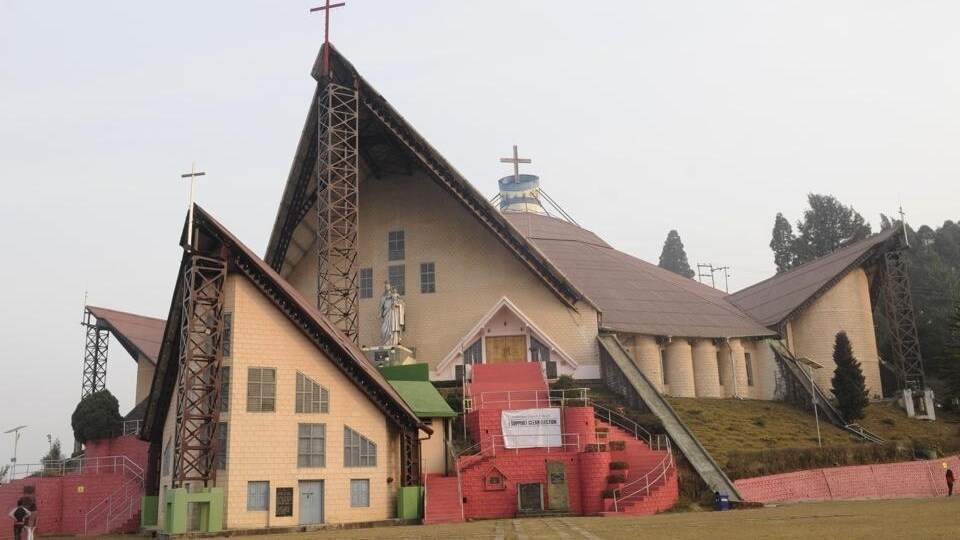
The Northeast, especially its tribal hill areas, has long been considered a barren land for Hindutva. White Christian missionaries arrived in the area in the 19th century and by the middle of the 20th century, most of what is now Nagaland, Mizoram, Meghalaya and the hill areas of Manipur had become Christianised.
The Greater India Experiment, in the words of the author, “is a forensic examination of a Hindutva laboratory that is attempting to promote a singular identity amid the blustering and fractal nature of belonging in this vast region known as the Northeast India…” (p. 14)
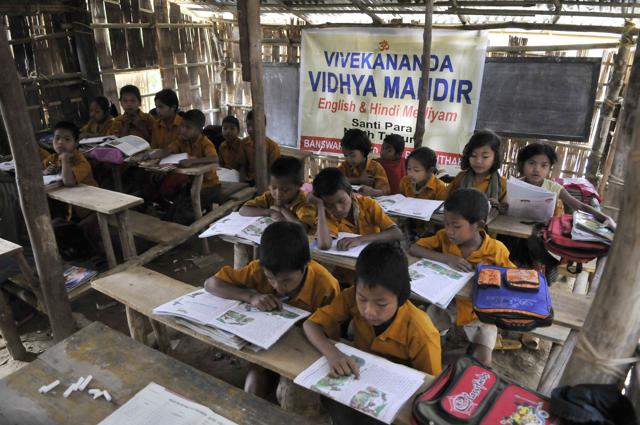
The book delves into the multiple ways in which foot soldiers of Hindutva go about pursuing their cause in the Northeast, especially Nagaland. These foot soldiers represent a cohort of Hindutva organizations ranging from Rashtriya Swayamsevak Sangh (RSS) to smaller bodies like Janajati Vikas Samiti (JVS), Vidya Bharati (VB), Sewa Bharati (SB), Vivekananda Kendra Vidyalaya (VKV) and the Vishwa Hindu Parishad (VHP). Unlike in mainland India, they go about their business here quietly, focussing on seva in the form of community service or running schools. They compromise on their vegetarianism, and partake of meat and rice beer to gain social acceptance. If the Christian missionaries of the 19th century focused on “inner conviction” of the mind, which they believed would, in time, transform outer material forms, Sangh activists focus on maintaining the material aspects of life in the belief that this will later lead to a change of heart too.
They harken back to the pre-Christian past of the tribal people and seek to find commonality between the tribes and the Hindu system in the worship of ancestors and spirits and the veneration shown to natural objects like trees, stones, rivers, the sun and the moon. They bemoan the loss of indigenous practices and faiths within tribal communities and accuse Christianity of creating a rupture between culture and religion. In their reading, Christianity halted the process of Sanskritisation – a process of the gradual absorption of local customs into dominant Hindu ones – amongst the tribals. An extension of this thought is that the tribals should now return to their roots and accept that they are actually part of the Hindu fold.
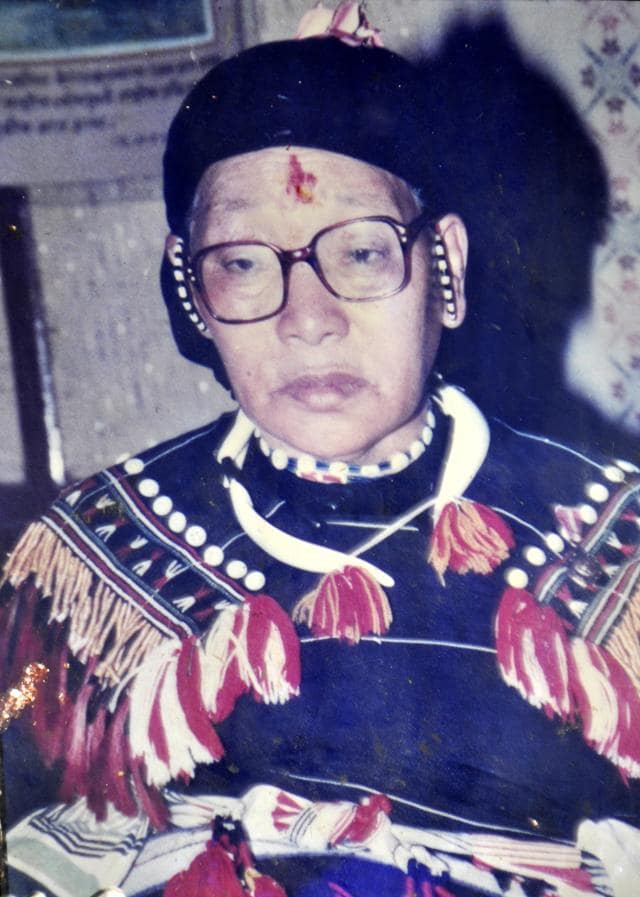
For Sangh ideologues, the figures of Jadonang and Gaidinliu represent the true spirit of the Nagas rather than those of the Christianised elites who formed the Naga Club in 1918. Jadonang and his disciple, Gaidinliu both fought against the British and were against conversions to Christianity. At the time of her surrender to the Indian authorities in 1966 – the peak of the Naga independence movement – Rani Gaidinliu emphasized that she’s both an Indian and a Naga. She’s an Indian because she took part in India’s freedom struggle; she’s a pure Naga too because she fought for the preservation of her culture and indigenous faiths against Christianity (p. 190).
Hindutva ideologues are, of course, not the only ones who take issue with the wholesale adoption of westernised Christianity by the host communities. This is an issue widely debated within Christianised tribal communities in the Northeast itself. But most people remain unrepentant about the turn to Christianity.
In his discussion of the electoral strategy of the BJP in the Northeast, Longkumer hardly considers the cultural and ideological campaigns of the party and its affiliates as an important factor. Pragmatic alliance making, the smart and technocratic management of election campaigns, dominance of the BJP in terms of campaign cash and media management, and the dire state of the opposition parties, especially the Congress, are cited as important factors leading to the BJP’s success in the Northeast. The fact that the BJP is in power at the Centre and that most of the Northeast states continually depend on the Centre for financial support makes alliances easy to negotiate and forge. The strategy seems to be to conquer the land politically so as to make way for later ideological penetration.
It is an undeniable fact, though, that the Northeast gets much more attention and priority from the present BJP government at the Centre than it did from that of the Congress in the past. The BJP’s fascination with the Northeast resembles that of a nation’s fascination with newly-conquered territory. Infrastructural spending is soaring. All the state capitals will soon be connected by rail lines and the tribal people, who had opposed such initiatives earlier, are now vying for government projects. Prime Minister Modi and his ministerial colleagues visited the region on a weekly basis. Mount Harriet, an island peak in the Andaman and Nicobar Islands was recently renamed Mount Manipur in recognition of Manipur’s resistance to the British during the Indian freedom struggle. A search is on to identify “tribal freedom fighters” – chiefs who resisted the British during colonial times – with the intention of incorporating them into the pantheon of Indian freedom fighters.
It remains to be seen how far these initiatives will help the ideological and cultural project of Hindutva in the Northeast. More than a hundred years ago, passion-filled Christian missionaries arrived in the region from foreign shores, learned the languages, invented scripts, and make disciples of headhunting tribesmen. It turned out to be a rewarding harvest. Now, a no less ambitious and no less passionate campaign to retake those lands and people, a grand project of ghar wapsi (homecoming) of the tribals to their “Hindu” roots is underway. Success is not pre-ordained, but there are striking similarities between the two campaigns in terms of determination and modus operandi.
All in all, The Greater India Experiment is a valuable and timely addition to the sparse literature on the religious and cultural churning in the Northeast. The legion of Christian leaders in the region, apart from scholars and everyone interested in the Northeast, should read this book.
Thangkhanlal Ngaihte is Assistant Professor, Department of Political Science, Churachandpur College, Manipur and a PhD candidate, Mizoram University.


