
 E-Paper



Review: Three new children’s books on the Irulas
‘Keepers of Darkness’, ‘Secret Wild Vet Kalyani’ and ‘Finding Tree’ all feature the indigenous community whose members are probably the last skilled forest scientists of the world

 Prefer HTon Google


Children’s publisher Katha recently released three new books on Irulas, a Dravidian ethnic community from Tamil Nadu and parts of Andhra Pradesh, Kerala and Karnataka.
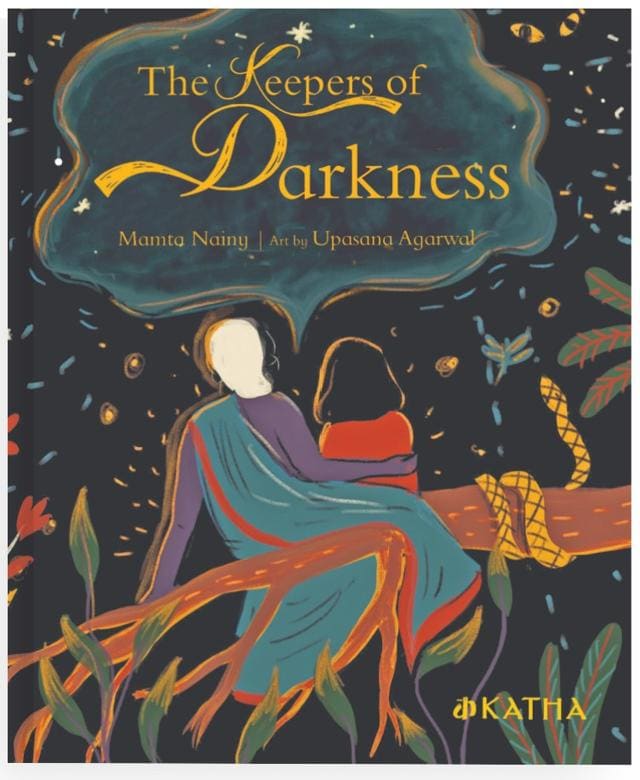
In The Keepers of Darkness, author Mamta Nainy and illustrator Upasana Agarwal introduce one of India’s oldest Adivasi communities. The word “Irula” is believed to have been derived from the Tamil word irul meaning darkness. Highlighting their indigenous wisdom and resilience, Nainy describes them as mirroring the rich silt of the forest – “deep, dark and full of life.” The Irulas are also said to have great eyesight, which is why they can easily find their way through dense forests. They trust the forest to lead them to all that they seek including honey, tamarind, prawns and fish. According to folklore, Irula men served as night guards who guided soldiers through forests during the reign of the Chola dynasty. The creatures of the dark are their friends – whether winged, crawling or slithering. Using signs like tracks, scents and droppings, they are expert at catching snakes, bats and rats.
Further, Irula vaidyars or physicians, are mostly women, who are extremely knowledgeable about local flora and fauna. They practise traditional healing systems that use more than 320 medicinal herbs, especially those useful in curing snake, rat and insect bites. They worship nature and their traditions are woven in harmony with the forests. In a sense, they protect the darkness, just like it protects them.
The authors endeavour to create awareness about the tribe, currently numbered at around 215,000, who are probably the last skilled forest scientists of the world. They also draw attention to the fact that the Irulas, guardians and champions of biodiversity, are struggling to preserve their homes as forests are being recklessly destroyed. “When a forest is uprooted, the entire Irula way of life is uprooted. As a result, many Irulas migrate to the outskirts of nearby villages, seeking employment in agriculture or construction,” they write.
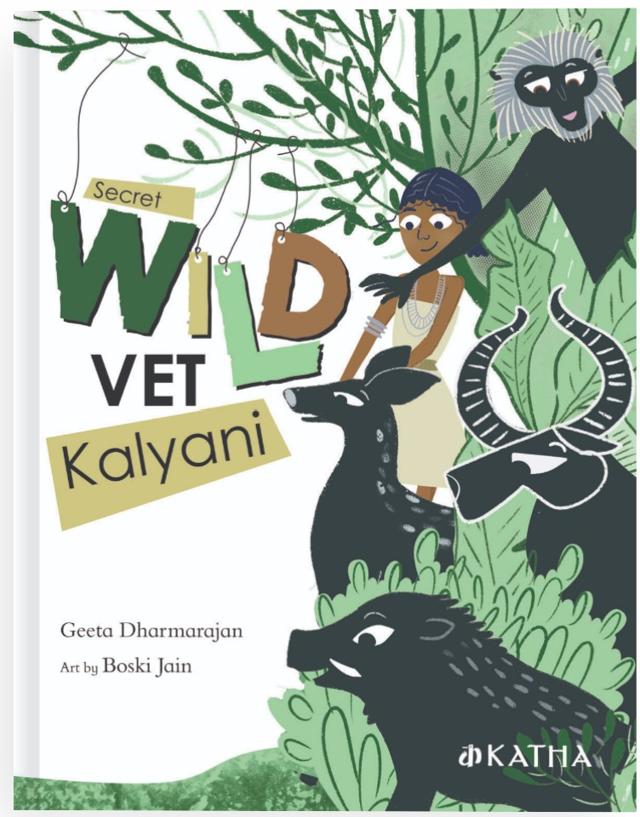
Secret Wild Vet Kalyani is a book inspired by N Kalyani, Tamil Nadu’s first woman veterinarian who graduated from Madras Veterinary College in 1952, challenging gender norms within the profession. Through a cheerful poem set in the Nilgiri hills, the author and Katha’s Founder President Geeta Dharmarajan imagines her Irular protagonist as a kind of superwoman who helps rescue animals, birds and reptiles in danger. Filled with everything from guns to ropes and jungle antics, this adventure story truly comes alive with the help of lively illustrations by designer Boski Jain.
According to the book, the DNA analysis (2018) of a skeleton from the Indus Valley Civilisation found in Rakhigarhi showed greater affinity with the Irula people than any other ethnic group in India. “A study by Yelmen et al (2019) found that the Irula were the closest likely proxy for the indigenous “AASI”, or Ancient Ancestral South Indian, one of the presumed founders and autochthonous original populations,” informs the book.
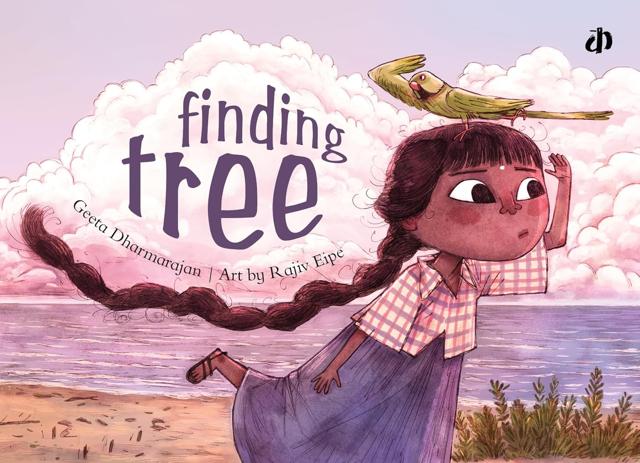
Katha’s third book about the Irulas, Finding Tree, chronicles the journey of Nachi, who is devastated when her magical friend, Tree, disappears one day. She joins Parrot to look for Emmeraja, the God of Death – a long journey through stones, thorns, forests, hills, rivers and ditches. Through imaginative visuals by animator and illustrator Rajiv Eipe, the author brings out the richness of mangrove forests, one of the world’s most biologically diverse ecosystems. With roots above the ground, they shelter not just birds, squirrels, bats, lizards, snails, snakes and insects, but also a variety of shellfish, shrimp, crabs, lobsters, sea horses, clams, scallops and oysters. Among other things, the book also talks about the endless cycle of birth and death. “Stories, child, like magic, last forever. They stay alive as long as the story-loving heart is alive,” says Paatikutti, Nachi’s grandmother, adding that all living things must die someday.
The book ends with information about these mangroves or “walking trees”, such as the fact that they can survive extreme heat and filter out the sand found in seawater as it enters their roots. About 80 percent of the world’s fish catch is dependent on mangroves, the book states. Acting as natural buffers against rising tides and storm surges, they can absorb 10 times more carbon dioxide and give off three times more oxygen than other trees. Finally, the authors also emphasise the urgent need to save them, since one percent of the world’s mangroves are wiped out annually by unsustainable agriculture and other threats.
In a world where nature itself is increasingly rare, especially in big metropolitan cities filled with gadgets and concrete, books like these are an important reminder for young readers to appreciate the knowledge of indigenous tribes like the Irulas and to conserve the dense forests they call home.
A freelance writer based in New Delhi, Neha Kirpal writes primarily on books, music, films, theatre and travel.


