
 E-Paper



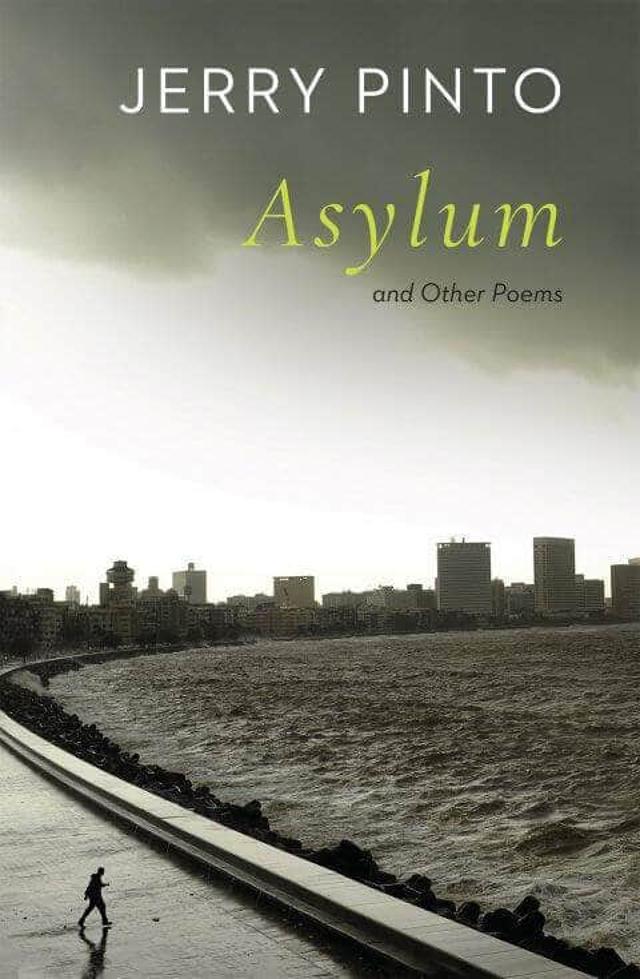
Review: Asylum and Other Poems & I Want a Poem and Other Poems by Jerry Pinto
In these two collections, Jerry Pinto stitches to his sentences his whimsy and his sorrows, his urbanity and his insight, his past and his reckoning. Here, he turns his gaze to Mumbai at its most minuscule and monumental, to his mother and her persistent traces, to his loves and their long shadows, to death and its detritus

 Prefer HTon Google



There are two Jerrys in Jerry Pinto’s poetry. One who is an utter charmer, who thrives with an audience, whose turns of phrase are designed to delight and disarm anyone listening, and who secretly loves it when he sees his sentences work their spell on others, or rues the thing he said when it hasn’t landed the way he wished. He is a people’s person, gregarious and quick-witted, both kind and winningly acerbic. The other Jerry hides behind this twin. He is vulnerable, noetic, very lonely, has loved and lost and loved again, and sees through most set-ups and charades, sometimes even his own. But he has something rare. He has that quiet place where he can repose trust, however cautiously, but also honestly and playfully, and that is the place of language. With language, he drops the act because his craft demands so. Here he is tussling with words. Here he is as much in conversation with his own times as he is with Blake or Muktabai, Shakespeare or Dickinson. Here, he stitches to his sentences his whimsy and his sorrows, his urbanity and his insight, his past and his reckoning. Here, after playing all the parts of journalist and teacher, novelist and translator, he becomes again, of sorts, the “Mahim boy” whose world keeps growing with every sentence he writes.
In a poem Today My Mother Is in the Audience from his most recent poetry collection I Want a Poem, both these Jerry personas come together. What allows them to meet is a peculiar conceit. For a writer, especially a poet, an audience is a strange thing. It is at once the partaker of the most intimate of your words and yet it is also oddly impersonal. After the smiles and nods, and handshakes and book signings, they will go home. Without you. Knowing half your secrets. Pinto short-circuits the impersonality of the audience by placing his mother in it. She is there not so much in flesh as she is in figuration. “Today my mother is in the audience,” he opens the poem, “As she never was when she lived”.
“Today, she sits in the audience and I see
Her as whole, as at her best, a mischievous
Twinkle in her eye, a twinkle that says,
‘Chhuh baba, don’t let these people see
Your pompous side.’”
The poem pauses and briefly reflects on the mother’s lively relationship to language itself. She “loved the English language…knew Burmese until her Goan cousins / Laughed her into amnesia and gave her / the gift of Konkani and some Portuguese.” As her son puts on a show, she “smiles when / A smile is called for.” At this point in the poem, Pinto does something striking. Not only has he raised the stakes of this ordinary reading event for himself by imagining his mother, long gone, as sitting somewhere in the room. What is more, he lets the audience into this imaginative contract. He tells the listener that “[s]he loves it when / You clap or laugh” (italics mine). This is a remarkable moment. In the room to which he has read his poem, he has both fished for applause (in the most charming way possible) but also, at the same time, he has allowed everyone to enter a tender, figurative space with him, which is as sacred as it is fragile, in which his mother’s apparition accompanies him, gives him courage even in her absence. “It embarrasses me, / That smile, her clear uninflected enjoyment / Of any small success. I bear it bravely / Because she is somewhere in the audience.” Briefly the sociable performer and the solitudinal poet have come together. They have found respite in each other. And his mother has been the bridge.
Along with his collection I Want a Poem which carries this poem, Pinto has also come out with a revised edition of Asylum, his debut poetry collection which was published 18 years ago. In both these books, we find Pinto turning his gaze - at once gentle and searing - to Bombay at its most minuscule and monumental, to his mother and her persistent traces, to his loves and their long shadows, to death and its detritus, and more so in his recent collection, to the self-conscious treat and tribulation of writing poetry. At times, his persona is inconsolable, clumsily attempting grace while walking away from someone he loved “And I say to myself: ‘Jerry, the world is big. / But in this corner, you have been forgotten.” This is a stunning attempt at consolation. At other times, he’s on an emotionally surer footing, a gamer in semantics, delighting in using language as much as in inventing it; in We Need More Words for Rain he writes with playful onomatopoeia “What is the word for the sound of rain? / The tickettytack on the window pane? / The thoock-thapack on the coffin lid?” But Pinto is at his most gut-wrenching when he writes of grief and how it both depletes us but also gives us a vocabulary for our common frailties. In a poem titled Grief, his concrete image and its brush with two big abstractions is deeply affecting, grief becomes “a shell, lying on a beach, / Stranded by the tide, as if out of the reach / Of grace and faith’s consoling illogic.”
Some of Pinto’s favourite lines are William Blake’s when he writes that “It is right it should be so / Man was made for Joy & Woe...Joy & Woe are woven fine / A Clothing for the soul divine / Under every grief & pine / Runs a joy with silken twine”. If indeed there are two Jerrys, one facing “[o]utside, [his] face to the sun / [to] Laugh, play, pun, work, entertain, function” and the other quieter Jerry, turning “Inside....no beliefs here, only a watchfulness. / [his] world [condensing] into an ink-stain’, then we can say with some certainty that both of them are holding this gift of twine. In the palm of their hands is both that which buoys us up but also that which sends us hurtling down, that joy which we hold onto and that woe which won’t ever leave us despite our trying. These strands are continually interlaced in Pinto’s poetry collections. Their touch is both fraying and silken. We will do well to take hold of what he’s offering.
Akhil Katyal is the author of How Many Countries Does the Indus Cross and Like Blood on the Bitten Tongue: Delhi Poems.


