
 E-Paper



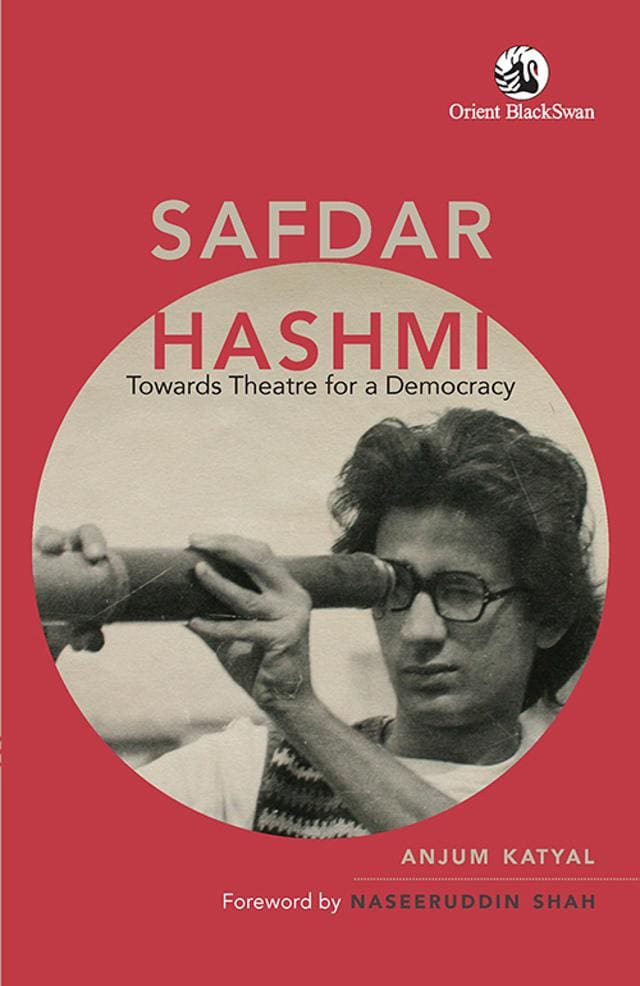
Review: Safdar Hashmi; Towards Theatre for a Democracy by Anjum Katyal
One of India’s brightest modern theatre directors, who was brutally murdered while performing a play in support of workers, Safdar Hashmi developed a people’s theatre that could be taken to the masses

 Prefer HTon Google


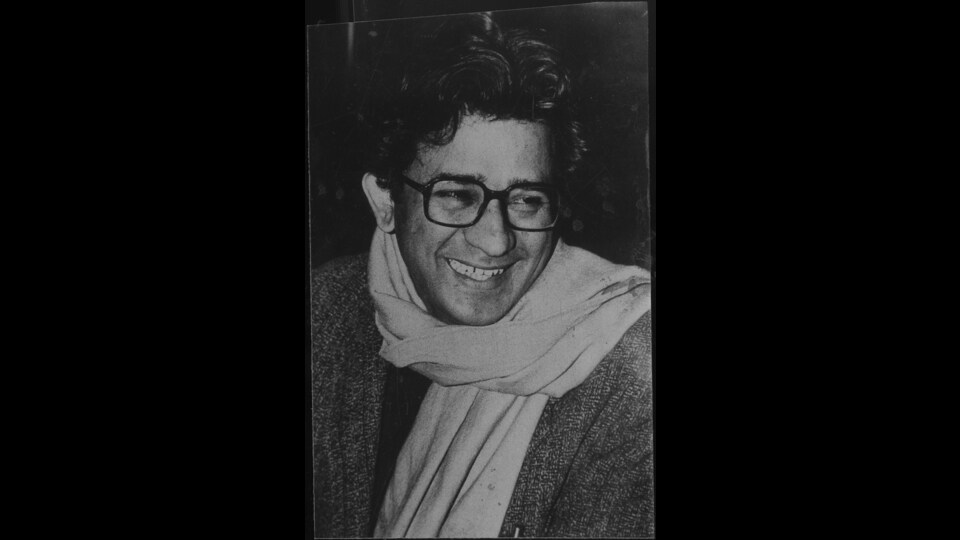
Early death invests the departed with a particular halo. Possibly because it enshrines them with longing for what they could have achieved had they lived longer, although it is impossible to imagine them in prosaic dotage. Che Guevara’s murder, Bhagat Singh’s hanging, John Lennon’s assassination robbed them of their life, no doubt, but their killings also gave them an afterlife which might not have come their way had they lived long. Safdar Hashmi (1954-1989), one of India’s brightest modern theatre directors was brutally murdered, allegedly by supporters of a political party, while he was performing a play ironically called Halla Bol, in support of workers. He was beaten on the head 20 times with an iron road. Thereby he became a more potent symbol of resistance and defiance than if he had lived long. Undeniably, he had achieved many extraordinary feats while he lived, and had already forever changed the direction and fate of street theatre in India, but his persona acquired valence far beyond his work because of the way in which he was snatched away, so cruelly, so unnecessarily, so avoidably. I have been watching his interviews and snippets of performances and songs and they make me deeply lament a death that has been part of my theatrical legacy, although my work and life have been far removed. Excerpts from his translation of a Bangla song have made me choke where he, in a sense, foretold his own passing:
Tum nahi rahe, iska gham hai par, phir bhi larte jaayenge
Your absence is heavy, but we shall not cease to strive
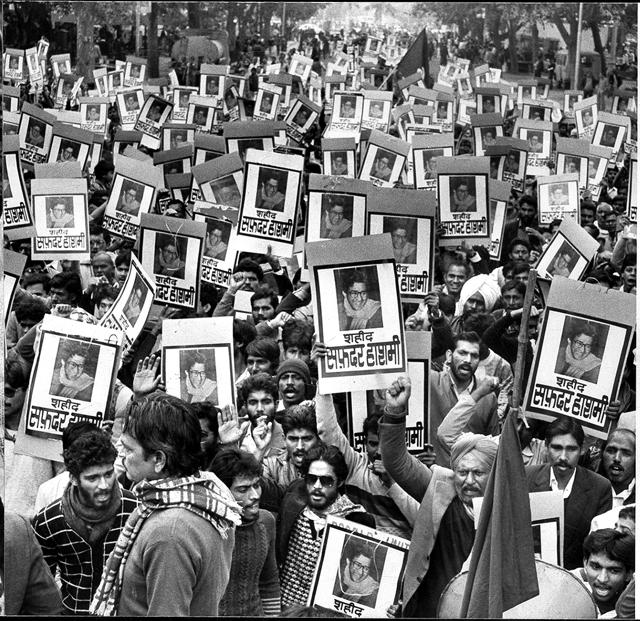
The lore around the death is stirring. Over 15,000 people marched with his funeral procession. His partner and wife Moloyashree Hashmi or Mala, perhaps the most indefatigable theatre activist in the country, led the troupe back to the site the very next day to complete the play; they toured the entire country afterwards. Satyajit Ray, Ravi Shankar, Adoor Gopalakrishnan, and Utpal Dutt joined demonstrations; Dilip Kumar stood with his picture to protest; Shabana Azmi snatched the mike at the International Film Festival and launched into a stirring diatribe, and his birthday, four months later, was spontaneously celebrated as the National Street Theatre Day with over 30,000 street performances across the country. The immediate impact was electrifying, and can enrage, and make you tear up, even today.
Every artist must choose the audience they wish to address, with the caveat that who they include must necessarily exclude, and even preclude many others. In a deeply hierarchical and unequal country like India, with a significant section without formal education, this is even more the case. If you perform or write in English, or restrict yourself to bourgeois spaces, or are committed only to the written form and its ancillaries, your orbit will perforce be limited. In theatre, if you want to speak only to the powerful you can restrict yourself to the metros, and to plush auditoria therein. But if you want to reach out to the powerless, then you must innovate. Habib Tanvir did it in theatre, John Abraham did it in cinema, the Progressive poets and writers in Urdu and Hindi did it gesturally, Hindi cinema has always done it, and Safdar did this with street theatre.
One can say, tautologically, that he was the right man at the right time for transforming the grammar and content of street theatre in India, but its ubiquity in our times owes heavily to him. He was born to an unusual political family which had roots in Jamiat ul Ulema, the clerical outfit, which opposed Muslim League and Partition and fought against British rule, but also supported the Communist Party. A peripatetic childhood, between Aligarh, where his father lived, and Delhi, where his mother, independently, unusually, pursued a career in education, provided a skein of uncommon experiences. In Aligarh, his father ran a stuttering furniture business and kept an almost open house for friends and comrades, from as far away as Punjab sometimes, where Persian and Urdu poetry resonated but where riots threatened their survival. In Delhi, his mother changed many houses, took him frequently to museums, monuments and to the then highly vibrant Bal Bhavan, which throbbed with children’s musical and theatrical shows. The upbringing early inclined Safdar to the arts. He joined St Stephen’s College in 1970 at his father’s urging, although he would have preferred Hindu College, politically more vibrant, and more diverse than the college across the road. He wore khadi kurta pajamas, which soon became the fashion, and silenced the jeering baba log in tutorials for the hallowed English Honours course.
But the times, they were a changing. Students were killing and being killed in Bengal; there were jail breaks; even St Stephen’s College was producing strikes, and walk outs, and the occasional Naxalite. Debates in the university attracted thousands, women were suddenly prominent everywhere with a new militant attitude, speaking of the female eunuch, and condemning monogamy and marriage, and Vietnam attracted demonstrators around the globe. Theatre across the country was changing shape. Bertold Brecht had been rediscovered and there was deep disenchantment with the well-oiled proscenium for the well-heeled. Badal Sircar in Bengal and, a little later, Prasanna with Samuday in Karnataka were to provide sophisticated alternatives to old-style proscenium theatre. Direct communication, breaking of the third wall, use of alternate spaces, the presentation of theatre as newspaper and political commentary, and the use of chorus, songs and non-linear narratives, which later came to characterize Safdar’s work, were in vogue. He had grown up watching myriad forms of theatre and dance, including the Garhwali Ramleela in Srinivaspuri where the family briefly lived and he had grown aware that traditionally in India theatre had gone to the people rather than the other way round.
Initially, Safdar worked with the Student Federation of India (SFI), the student wing of the CPI-M, and, despite being attracted to it, kept away from the more radical CPI ML, the party of the Naxalites, since he wanted to reach a broader section. But soon he found even SFI restrictive as he sought the broader working classes, the peasant, youth, women, et al. Films, music, plays, dance programmes incorporating original folk forms were the initial focus before he revivified the local IPTA by forcibly occupying its office in Shankar Market, Connaught Place. Although JANAM was formed in 1973 and included some very respectable Delhi theatre names such as Kavita and Vinod Nagpal, Pankaj Kapur, Attiya Bakht, and Rakesh Saksena, the initial offerings were conventional plays, albeit staged in unusual venues. Bharat Bhagya Vidhata and Bakri, a play on migrants, innovated with form by involving sutradhars, nat natis, and reliance on folk forms like nautanki, and songs with didactic messages, but it was still very much in the IPTA tradition. Yet, the attempt to stage them in bastis, and for trade unions showed Safdar’s commitment to performing for the masses. In Amroha, at a rally to support the local Communist leader, 35,000 people turned up and for 45 minutes on a makeshift stage constructed on the road, Vinod Nagpal sang to earn their silence!
Emergency found Safdar in Srinagar, where he studied Brecht and other theatre masters with greater intensity. He conducted workshops, mounted enormously successful productions against the odds, and dabbled in television. His work thrilled the local artistic community, and he learnt to work on an improvised stage without lights, mikes or make up. He wrote long letters, in Urdu presumably, to his mother, whose book on Safdar, The Fifth Flame, I really want to read in the original now. He realized he was wrong when he thought “all one had to do in a Brechtian play was to stand up and talk to the audience”. “I realized through this production that the histrionic talent of the actors has to be exploited to bring to life the episodes in the play and that there must emerge a pattern of intensely dramatic scenes interpolated with discursive dialogues between the actors and audience. The audience must first be made to empathise, and then to think… I’ve learnt a number of things about theatre in the last year… when I return to Delhi, I will be able to do quite a few things with my group… let us wait and see”
Delhi was calling. Mala was there, and able actors, and a receptive, national audience. Emergency had tested theatre directors but they had withstood it and shown enormous bravery despite attacks. By then, street theatre had taken deep root in Calcutta and, as the book under review demonstrates, actors and directors were being attacked and killed, by police and by goons. Utpal Dutt, rebel without a pause, recalled many names who, from the 1950s, had worked to popularize street plays. These included Panu Pal, and others, while Dutt himself lived in a workers’ basti for many months to perform plays there. However, it was dangerous business since,
“West Bengal has been virtually under Emergency since the overthrow of the United Front government and the rigged elections of 1972. These months were at one great scene of white terror against the theatre. About 150 theatre groups were broken up by gangsters and police action. Plays were banned, actors beaten up and hauled to court… and dragged down the streets by the police.”
Police and gangsters worked hand in hand to intimidate and even destroy theatres. Dutt’s play Barricade was attacked five times. On one occasion, goons dragged the director of an IPTA play and poured boiling water over him before burning down the rehearsal room. At Free Curzon Park theatre, Probir Dutt, a theatre enthusiast, was beaten to death. The book describes the courage and resilience of guerilla style theatre in Bengal and those who were killed for theatre then, which included Ashish Chatterjee of Theatre Unit, who died of police bullets, Dronacharya Ghosh, playwright and director, killed by police in jail, and others such as Kamalesh Sen, Bir Sen, Kajal Sakrar, Benu Datta, and Srilekha Roy, who were variously tortured and jailed and sometimes maimed for life. Add to this the actor Snehlata Reddy, who was essentially tortured to death in a Bangalore jail during the Emergency, or even earlier, the artist Nabi Abbasi, a member of the Progressive Artists Group, who was killed in police custody in Bombay in the 1950s.
Safdar returned to Delhi and found himself at a crossroads. Janam had taken big plays to the people but in the post-Emergency world it had to change tactics. It was groping for a new direction, desirous of creating a mobile, inexpensive, and effective production, when an opportunity came in the form of a worker’s protest at a chemical factory in Mohannagar, New Delhi. A senior Communist leader asked them to write a play about the worker’s basic demand for a canteen and a cycle stand. Safdar and Rakesh Saksena wrote the play virtually overnight, with rhyming texts, which described a machine and its three components, a guard, an owner and a worker, with the flowing rhythm of language resembling a machine. It was mounted in three days, was a success, and became a cult when they begged and importuned their way into an All India Trade Union Session at Talkatora Stadium, and forced a performance on more than 7000 unsuspecting workers. The play was only 12 minutes long but it was perhaps the most influential 12 minutes in the last 50 years of Indian theatre history.
In Safdar’s words: “After we sang the final song, the trade union delegates jumped over the rails. They lifted us on their shoulders. We became the heroes. People took our autographs on cigarette packets. And they invited us to come and perform during the rally the next day… at Boat Club with 160,000 workers… Thanks to tape recordings of the performance carried back by workers, within a month, Machine was being performed in many Indian languages”
Machine had over a thousand shows in the first 10 years. It was Janam’s most successful play, which heavily influenced its work, and in due course, influenced Indian street theatre immensely. The same year, they did seven other plays, including Aurat, which intersected with Om Swaha, another milestone street play about dowry deaths mounted by Anuradha Kapur, Sudesh Vaid, Maya Rao and others, and at the same time as the Nishant theatre group, were performing plays around Naxalites. This was a global moment for street theatre. Aurat has since done over 2000 shows. In the first 14 months, Janam did seven plays and about 500 shows. The impact was sensational and countrywide. Safdar toured the country and his plays were translated and performed everywhere from Assam to Kerala. He had hit upon a new style of street theatre consisting of songs, a new kind of popular language, and humour, which was a kind of “newspaper in action, to make explicit our stand on contemporary events from day to day…”
“Beyond this agitprop role, street theatre also had a larger function of taking healthy entertainment to the culturally starved people. It was a kind of brief documentary, where the impact was not only emotional but also rational, therefore a lasting one. It was not subtle or analytical, but loud and spectacular and funny.”
In the first 10 years alone, Janam did over 4,300 performances of 22 different plays in 90 cities. The energy and commitment required for this is breathtaking of course, but it was not driven by politics alone. Safdar knew the limitations of conventional theatrical performances, which, Alkazi and the National School of Drama notwithstanding, served only a minuscule section of the urban bourgeoisie and was neither a major cultural force, nor a living and popular art form. Janam transformed street theatre in India forever, and filled the need for a fully developed people’s theatre, one which was available to the masses and could be taken to them. He knew that the unwashed would never be able to come to the theatre, would never be allowed, so he decided to take theatre to the unwashed, just as Gandhi had done with the Congress party.
Safdar wrote wonderful songs, which were hummed, which were popular, which drew on folk. He had a felicity with language and composed, sometimes spontaneously, quotable dialogues. He wrote for children, and for television, he designed posters, organized workshops, led people, won their love, and withal remained loveable. But he was not just the writer-director of a new kind of theatre, he was also its chief theoretician and he had to constantly remind the theatrical community of the significance of his work. He writes:

“The circular acting area, the conditions of performance, the proximity of the actor and the spectator have all demanded a new acting style, new dramatic structures, new writing skills, a new kind of training, a new use of music, verse and chorus, and a new method of theatre management. Even the audience-performer relationship in street theatre is something unique and new”
By 1998, a decade of intensive work had, however, left Janam a little jaded. Safdar himself was excited about television, and was writing and producing programmes for Doordarshan. He also wished to return to the proscenium and collaborated with Habib Tanvir to adapt a Premchand story called Moteram Ka Satyagraha. He felt that Janam had become isolated from the mainstream theatre community and he wanted to reconnect with it, and thereby revivify both. He was desirous too of establishing a repertory where 10 or 12 professional actors would do nothing but theatre, near a working class area, so that the people there could watch classics from around the world like Tolstoy, Gorky, Chekhov and Shakespeare at a nominal cost, like at Ninasam in Karnataka.
Apart from being the driving force behind this enormous body of work, Safdar was charismatic, democratic to the core, respectful of all, the cynosure of every gathering. When you hear him speak you know there is no cant, that he is not after personal glory, that he is transparent, that he understands the profundity that simplicity requires. He was undoubtedly a product of his times. One could say also that he was the right man at the right time, but, apart from his gifts as a writer-director-producer, he was also blessed by temperament to do the work he did. He could write moving songs and stirring dialogues, but he wanted to rationally engage people so that they had tools of struggle, and solidarity. If street theatre is so universal in India today, it is because Safdar transformed it from being a purely political propaganda tool to entertainment that could play a spiritual role for the masses. It could motivate people to become stronger in their resistance. All the rest of us, content with wooing and wowing audiences in air-conditioned auditoria, as Naseeruddin Shah writes in his moving and candid foreword, were shown down by him. His martyrdom, in the act, for the cause, has left the rest of us permanently consigned to the second class. After Safdar, we will never be good enough, never noble enough. We need more books, more plays, more films on Safdar Hashmi. We shall be permanently indebted to him, and we shall long for him forever.
Mahmood Farooqui is known for reviving Dastangoi, the lost Art of Urdu storytelling.


