
 E-Paper



Review: The Moment of the Banyan by Armin Wandrewala
A novel about the Parsi community, that provides a wealth of detail about traditional jewellery, food, nataks, calendars and death rituals, this is also the story of its women and their agency

 Prefer HTon Google


The Moment of the Banyan is a novel that attempts the impossible: the cataloguing of an entire culture, religion and tradition in a nuanced fashion even as it tells a story that’s engaging and unique. Still, the author Armin Wandrewala does a fine job of using a large cast of characters in a novel with many births, marriages and life events to provide a picture of Parsi history and the community’s way of life, and that of its Iranian Zorastrian counterparts.
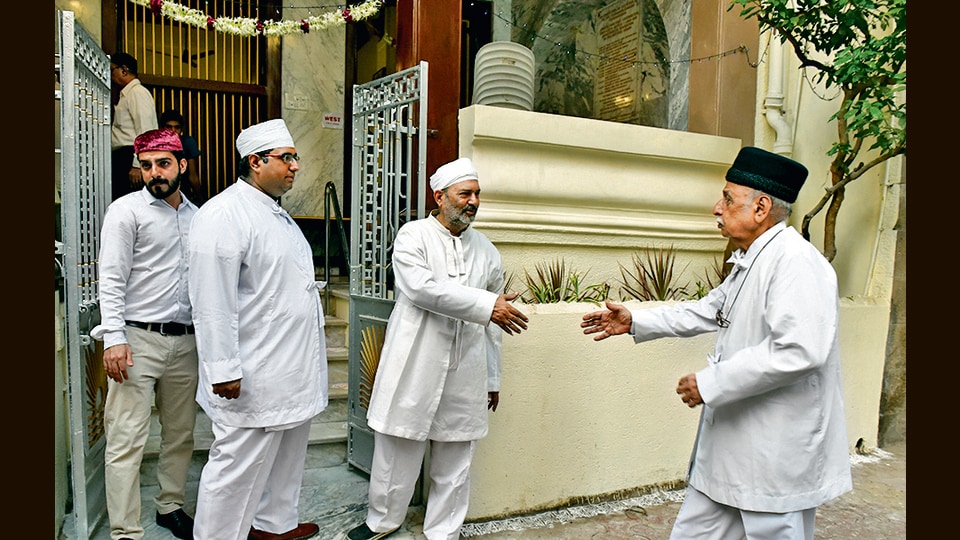

This is a fine novel on its own but Wandrewala is especially unsurpassed in her attention to the attire, jewellery, food, nataks (plays), calendars and roj system, and death rituals, which are the essence of the Indian Parsi tradition. The reader learns of the many systems that sustain a people including inheritance, language, fire temples, prayers, legitimacy, laws, politics, hypocrisies, gossip, scandals, professions, faith, and more.
The author employs a non-linear structure moving back and forth in time across the city of Bombay, which is just being built, and the towns of Gujarat including Navsari and the fictional Lanskui, allowing her to blend historical fact into the story of a fictional family. The transitions from the agrarian way of life, and from small Gujarati villages to the posh lanes of South Bombay are handled seamlessly. Going into minute detail, Wandrewala also captures pastoral traditions and customs of homes explaining why they are the way they are and the significance of their elements.
The Moment of the Banyan is as much a story of this small community as it is one about its women and their agency. Alamai, the grand matriarch of the Readymoney family, must contend with the early death of her husband and raise their seven children alone. Over time, grief over the loss is pushed aside as she focuses on caring for everyone even as, true to the Parsi familial system, boatloads of relatives step in to help her. There are several waves of moving, settling in, educating, and marrying off children as they transition from Gujarat to Bombay.
For this reviewer, also a Parsi, it was refreshing to see Alamai’s nationalist tendencies given that the community is often viewed as having been sympathetic to the colonialists. That nationalism is juxtaposed ironically with her preference for light skin and eye colour as markers of beauty. Almitra, one of the central characters, presents the conflicts that Indian Parsi girls still contend with. The community’s outlook is generally liberal in all matters except when it comes to its own traditions, such as the orthodoxy surrounding menstruation. As with many Indian communities, strictly adhering to these customs is equated with love and respect for elders. A complex individual, Almitra’s emotional arc keeps the reader invested. However, at times, Wandrewala gets a bit carried away and devotes several paragraphs to her mercurial and untamable spirit.
Despite these occasional misadventures, The Moment of the Banyan stands out for its objectivity. This is not a book devoted to the virtuous Parsi. It does not attempt to proselytize, defend or rebel against some of the more ancient and more obdurate practices. Several characters follow these customs while several others rebel against controversial tenets of the faith, such as not allowing a widowed mother to participate in the marriage ceremonies of their child. The author also rather courageously comments on the incessant gossip of Parsi colonies, the community’s collective hypocrisy and racism, and the privilege afforded to those in power to whom the same taboos and rules don’t apply. This is seen in the willingness to take back prominent business leaders into the fold despite their transgressions.
The novel is full of esoteric details such as the origin of the surname Sethna and of infamous Parsi cuss words, the story of the walking mango tree at Sanjan, facts about the Meherji Rana Library, the grades of fire temples, the community dharamshalas, and the Goti Nu Adarian at Surat. A practising lawyer, Wandrewala’s legal acumen shines through in her commentary on Parsi inheritance, marriage and initiation laws including the Vansda Navjotes and on landmark cases such as Davar and Beaman, which guide views on conversion and eligibility for community benefits.

While this work of fiction succeeds in showing how love and kinship act as salves to the bitterness of loss, it also shows characters who make uncomfortable choices as their ethical standards clash with religious injunctions such as the no organ transplant rule.
The Moment of the Banyan ends with an enquiry into grand questions such as, “Who is a Parsi?” and the ramifications of the answers to those questions on the choices that characters must make. The solutions that the narrative throws up reveal a shrewd understanding of human behaviour, character, and morality.
The decision to avoid having a glossary so readers don’t have to keep turning back and forth is somewhat undermined by the size of the Readymoney family that necessitates constant references to the family tree to keep track of characters. At nearly 500 pages, this is a huge novel; but don’t let that deter you. Engaging, informative, rooted in historical fact and objective in its portrayal of Parsis, it is an excellent read. For those looking for an entry point into the Parsi way of life and for a catalogue of the culture, a better option would be hard to find.
Percy Bharucha is an independent writer and illustrator.


