
 E-Paper



Writer Perumal Murugan is back from the dead

 Prefer HTon Google


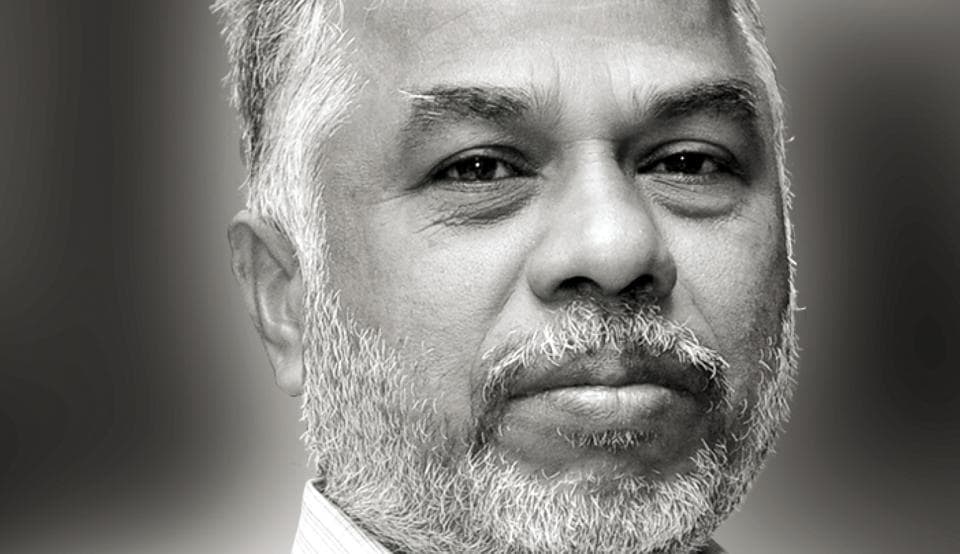
This author declared himself dead after a major controversy two years ago. But now, Perumal Murugan is back in almost frenzied action
What are you working on at present? “This,” says the writer, with a wry smile, referring to our interaction. “Giving interviews, attending literary festivals.”
The low-profile and unassuming Perumal Murugan has seen his quiet life as a writer and professor of Tamil become a tumult since 2014, when his novel, Madhorubagan, became the subject of controversy when various groups protested against its portrayal of traditions practised at the Ardhanareeswarar Temple in Tiruchengode, Murugan’s home town.
Embittered and possibly defeated by the vitriolic nature of the objections, Murugan declared in a Facebook post in early 2015 that ‘Perumal Murugan the writer is dead…’ even as the matter was in court. In July last year, the Madras High Court said in its ruling that ‘The author Perumal Murugan should not be under fear. He should be able to write and advance the canvas of his writings.’
Murugan had once described his state during his non-writing phase as that of a ‘walking corpse’. But now he wishes not to look back at that painful episode. “I prefer not to think about it or speak of it,” he says.
Writing’s return
He is happy, though, to discuss the first writing that signaled his return to his metier. It was a poem titled Aayiramaayiram, that later became part of a collection called Kozhayin Paadalgal or A Coward’s Songs. As poet and novelist, Murugan relishes both the spontaneity of the former and the discipline that the latter demands. “A poem is sparked off by a word, an image or a single thought,” he says, “And must be penned down immediately or you could lose the moment, it cannot be planned. A novel, in contrast, requires a definite plan and structure, besides time and physical effort.”
Other than six novels, including the controversial Madhorubagan (translated into English as the award-winning One Part Woman), Nizhal Mutram (Current Show) and Koolamadari (Seasons of the Palm), Murugan has also written four collections of short stories. A collection of 10 stories, translated by N Kalyan Raman, is being published by Juggernaut.
“It began as an initiative to have my stories available on an app. I guess the response was encouraging enough for them to be brought out as a book,” says the writer. He works closely with his translators, helping them understand the nuances contained in his stories that are rooted in his beloved Thiruchengode and which contain the smell of the earth, the flavour of Kongunad cooking and the figures of speech that make regional literature so captivating for the reader.
Caste no bar
Murugan is looking forward also to the publication of the English translation of a collection of essays he compiled. Well-known writer and researcher Ambai is translating the anthology to be called Caste and I. The works sprang from an informal monthly literary forum, Koodu, which Murugan hosted on the terrace of his Namakkal home.
“My students, visiting writers, anyone who was interested in reading and writing could attend. We reviewed books, shared new writing and had lively discussions about all things literary,” Murugan says. After 50 meetings of Koodu, it was decided to mark the milestone with a publication. The theme they chose was caste.
“Contributors had to share in an honest, no-holds-barred fashion their experiences of caste dynamics, as victims, perpetrators or mere observers. It is a phenomenon that permeates the most important realms of our lives, from birth and death to love and marriage, and even the seemingly less significant aspects like where we can rent a home, for instance.”
Coming from the small village of Kootapalli in Tiruchengode, Murugan has been a keen observer of the social system in this region as also the individual’s response to these dynamics. Reviewers praised his etching of Ponna, the central character in Madhorubagan. She is a woman stigmatised for being unable to bear a child who attends a temple festival where childless women could pair with a stranger and get pregnant. His empathy and understanding of Ponna’s position in society and in her marriage was much lauded, stemming as it did from a male perspective.
“Isn’t all writing a transmigration of sorts, a process of inhabiting another body and mind?” asks Murugan, using the Tamil term ‘koodu vittu koodu paaidhal’. “I have been seeing what a burden childlessness places on couples, particularly women, in our society. So much so, it’s now become big business. That is where Madhorubagan emerged from. The temple ritual simply served as a key for me to take the story of Ponna and her husband Kali forward.”
Through the travails of this couple, Murugan also explores the condition of marriage. “It is not a democratic institution,” he says. “The man always has and continues to have a wider space in which to function, the woman is constantly constrained. As a writer I feel the compulsion to dwell on these issues with the optimism that something will give, slowly, but eventually.”
Beyond the everyday
Perumal Murugan has been writing for 30-plus years now. His first literary effort was as a little boy when he sent a poem titled Poonam Nalla Poonai to the Tiruchirappalli radio station and it was accepted for broadcast.
“Radio was the only window to the literary world then,” he says. His first published work as a mature writer was a short story that appeared in the highly respected
Kanayaazhi magazine in 1988. He has been writing his poems, short stories and novels steadily since then. He reads constantly, too: Tamil writers and the Tamil translations of writing in other Indian languages.
“Literature serves two purposes,” he says. “It allows us to live other lives and break free of the everyday existence. I think even travel doesn’t quite allow us that. The other reason why we read is to gain other perspectives, to appreciate other ways of living, of thinking, other credos. Without that we are narrow-minded, seeing things in black and white.”
It is the experience of those on the fringes, those who dare to break convention that becomes a good story, he believes. “There is always room for the unconventional and it’s something we must accept,” he says.
With the bitter controversy behind him Murugan has many more stories to tell. To bring them to fruition, he has to find time in-between his full-time career as a professor at the Government Arts College in Aathur.
“I often dream of quitting teaching to devote all my time to writing,” he says, wistfully. “But the reality is that it’s nearly impossible to meet your commitments being a full-time writer.” If his dream materialises, Indian literature will be richer.
Author Bio: The author is a Bengaluru-based senior writer who specialises in food, travel and lifestyle writing. She has edited several major mainstream publications in the past.
From HT Brunch, November 19, 2017
Follow us on twitter.com/HTBrunch
Connect with us on facebook.com/hindustantimesbrunch


