
 E-Paper



Sitharaman aims to revive pandemic-hit economy, raise spending on key sectors
Experts expect Sitharaman to alleviate the economic destruction caused by the coronavirus pandemic and lay a blueprint to bring back the world's fastest-growing major economy on track.

 Prefer HTon Google


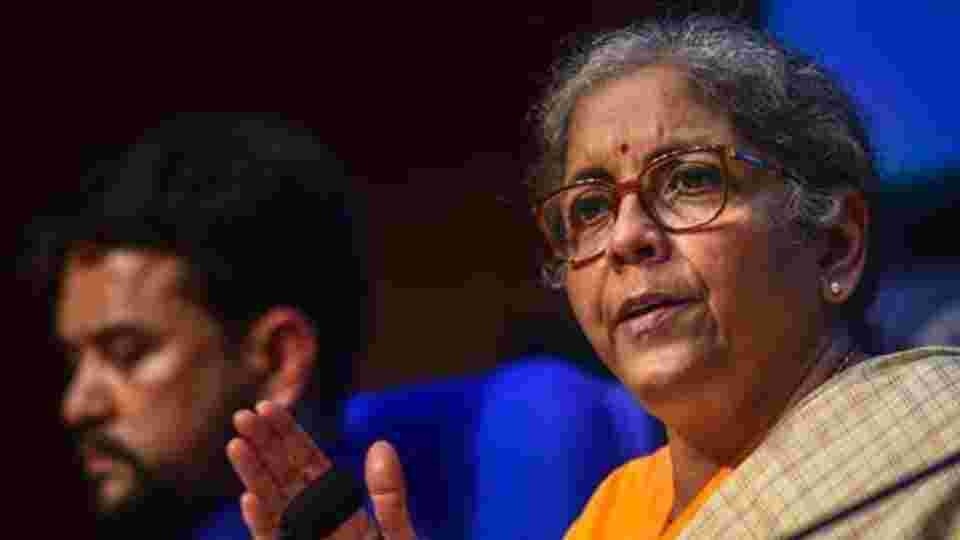
Union finance minister Nirmala Sitharaman has promised to deliver a budget on Monday, which she has said will be "like never before”, as she will look to boost economic growth by raising spending on sectors like healthcare and infrastructure amid the coronavirus pandemic. The budget, the ninth under the NDA government, is also widely expected to focus on increasing spending on creation of jobs and rural development, generous allocations for development schemes, handing more money to the common man and easing rules to attract foreign investments.
Also read | Budget will be an extension of economic relief: PM Modi
Experts expect Sitharaman to alleviate the economic destruction caused by the coronavirus pandemic and lay a blueprint to bring back the world's fastest-growing major economy on track. The pandemic hit the Indian economy when it was already witnessing a slowdown—the gross domestic product (GDP) growth touched an 11-year low of 4% in 2019-20. Economic activities came to a grinding halt as the government imposed a lockdown to curb the spread of coronavirus in March last year causing a sharp contraction in the GDP in two successive quarters of FY21 and in turn pushed the economy into a recessionary phase. The government announced a number of policy measures under Aatmanirbhar Bharat package, which included grant, equity and liquidity measures by the Centre, state governments and the Reserve Bank of India (RBI), to support the economy.
Also read | From fiscal deficit to tax slabs: Key figures to watch out for in Union Budget
Sitharaman could double healthcare spending in the next fiscal year with the aim of raising expenditure in the sector to 4% of gross domestic output in the coming four years, as the country looks to fix shortcomings exposed by the pandemic. She could also increase a health tax from the current 1% of income and corporate tax to fund the new programme. India launched the world’s largest vaccination programme on January 16.
The government may aim to raise $40 billion from the privatisation of a whole host of companies in the energy, mining and banking and selling minority stake of large companies such as Life Insurance Corp (LIC), Bharat Petroleum (BPCL), Air India and Shipping Corporation of India (SCI).
Also read: Announce a fiscal boost | HT Editorial
Market borrowings are expected to remain elevated and external deficit financing would increase. Higher capital expenditure outlay for National Infrastructure Pipeline (NIP) programme and making recently introduced Production-Linked Incentive (PLI) scheme more attractive to lure foreign manufacturers to boost domestic manufacturing are among other top expectations from the budget.
The government is also expected to pay more attention to the establishment of a bad bank to clean up bank balance sheets, presenting finer contours of the PLI scheme for boosting manufacturing for the 10 sectors announced earlier and resources likely to be made available. Offering sops to reinvigorate household consumption demand via tax incentives for spending and higher deductions on housing loans are also being eyed. Experts say the introduction of a Covid cess that is expected to be levied on high-income individuals.
The government is also considering hiking import duties by 5%-10% on more than 50 items including smartphones, electronic components and appliances. The move to increase import duties is part of Prime Minister Narendra Modi's Aatmanirbhar Bharat campaign, which aims to promote and support domestic manufacturing.
Sitharaman may announce a dedicated development financial institution to facilitate the financing of greenfield infrastructure projects. This will be in line with the government’s ambitious target of building infrastructure worth 1.02 trillion in the country.
Corporates and industry chambers expect Sitharaman to unveil some tax relief measures for pandemic-hit sectors such as real estate, aviation, tourism and autos. Analysts have also said that the government would also have to consider providing tax relief to small businesses and consumers to boost consumer sentiment and revive economic growth, news agency Reuters reported.
It cited government officials familiar with the developments that India is likely to increase allocations toward its annual food subsidy spending by 4%-6% in the budget for the fiscal year beginning April 1 to cover the cost of running the world's biggest food welfare programme.
The Indian Chamber of Commerce (ICC) has said that the budget will come as an economic vaccine for the pandemic-hit economy and steer India with the much-needed stimulus to boost demand, consumer confidence and at the same time boost the purchasing power of the people. Incentives to industries like textiles, apparel, leather, food processing, construction and retail are expected, it added.
Also read | RBI likely to maintain status quo on interest rate, say experts
Arun Singh, the global chief economist at Dun and Bradstreet, has said the government has a difficult task of manoeuvring the nascent recovery of the economy and managing the fiscal burden, which is expected to remain high not only for the current year but also for the subsequent years.
"Globally, governments are facing massive policy and operational challenges and are adopting unconventional measures to revive their economy. A big bang package of reforms is thus on the anvil,” Singh told PTI. "In the current scenario, it would be impossible not only for India but for countries globally to shoulder the pandemic without fiscal destabilisation in the short to medium term."
(With agency inputs)


