
 E-Paper



Relief for home owners, hiring push in Stimulus 3
Sitharaman said that including Rs 2,65,080 crore package announced Thursday, the quantum of total stimulus announced by India is Rs 29,87,641 crore.

 Prefer HTon Google


In relief to home buyers, the government on Thursday doubled the tax exemption limit on price differential between the circle rate and the agreement value to 20%, a key component of the new Rs 2.65 lakh crore economic stimulus package that also includes easy working capital to loans to 26 sectors hit by the Covid-19 pandemic, and incentives to companies to hire more people.
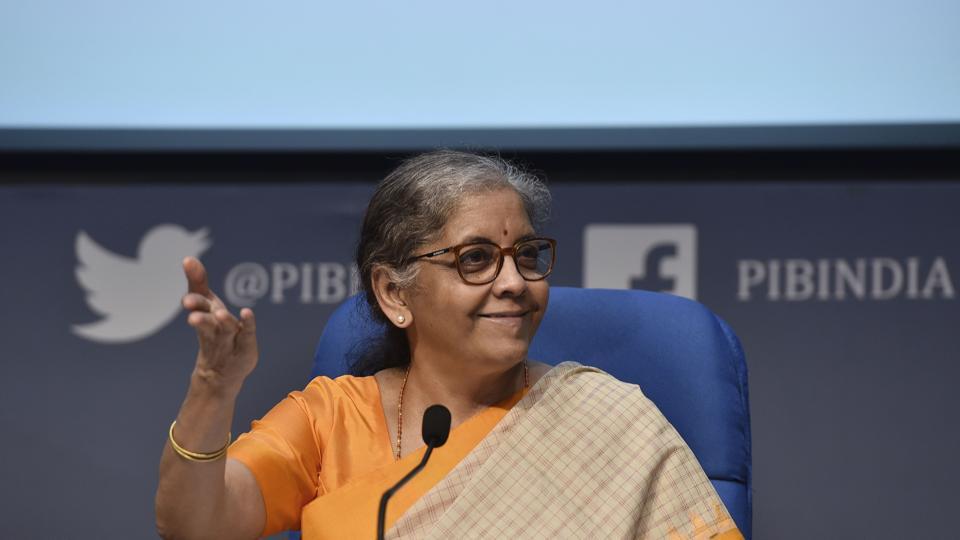
Finance minister Nirmala Sitharaman announced 12 measures under the third tranche of the government’s efforts to boost the economy, Aatmanirbhar Bharat Abhiyan (self-reliant India initiative) 3.0. This includes the Rs 1.46 lakh crore production-linked incentive (PLI) for 10 sectors that was announced on Wednesday.
WATCH | Nirmala Sitharaman announces fresh stimulus steps: Key Highlights
Sitharaman said that including the Rs 2,65,080 crore package announced Thursday, the quantum of total stimulus announced by India is Rs 29,87,641 crore, including the monetary measures taken by the Reserve Bank of India (RBI) – or around 15% of the gross domestic product (GDP). Minus the RBI’s monetary measures, the size of the stimulus is 9% of the GDP, she added.
The finance minister also pointed to recent indicators on the economy’s revival, including the composite Purchase Managers Index that came in at 58.9 in October, and credit carting firm Moody’s assessment that the Indian economy would shrink by 8.9% in calendar year 2020, better than its previous estimate of a 9.6% decline. To be sure, the Reserve Bank of India’s (RBI) Nowcast report projected that the Indian economy could have contract 8.6% in the next three months ended September.
Among the announcements on Thursday, the one on employment generation involves the government paying out both the employee and employer contributions of employees hired on or after October 1, 2020, for a period of two years under certain conditions (the monthly salary should be less than Rs 15,000 and the company should have up to 1,000 employees). For companies with more than 1,000 employees, the government will pay out the employee contribution only. The scheme, Aatmanirbhar Bharat Rozgar Yojana, is aimed at incentivising job creation.
Speaking about the income-tax (I-T) relief to home buyers and developers, Sitharaman said: “There are quite a lot of [unsold] inventories we are told in the real estate sector... at the moment what is prevailing is the differential between the circle rate and the agreement value... you get relief. Now, what we have decided is to increase the differential between from 10% to 20% for the period from the date of this announcement to 30 June 2021 for only primary sale... and the necessary amendment in the I-T Act will be done in the due course.”
The finance minister said the decision on the price differential for homes will help to clear unsold inventories.
Naveen Wadhwa, DGM at Taxmann, said a 5% limit was first introduced in the 2018 budget, which was subsequently increased to 10% by the Finance Act, 2020. “This limit has now been increased to 20% for only primary sale of residential units of value up to Rs 2 crore. This will bring relief for developers who have sold residential units at less than stamp duty value. However, it will not provide any relief in case of sale of commercial property or to the re-sellers of the residential units.”
Niranjan Hiranandani, national president of the National Real Estate Development Council (Naredco) said, “Although it is a significant relief to the sector, the cap of Rs 2 crore will exclude many projects in metros. And commercial properties should have been included in its ambit.”
The finance minister said this is a major relief for the middle class “which wants to buy when the housing sector is going through a supply side boom... but had no incentive to buy. Now we provide incentives in the form of income-tax relief.”
Speaking about the second version of the Emergency Credit Line Guarantee Scheme (ECLGS 2.0) Sitharaman said, “We are launching credit guarantee support to all the stressed sectors. This [is] part of what was recognised by the Kamath Committee, which looked at various sectors which are stressed as a result of pandemic.”
Although, the details of 26 sectors were not immediately announced, the stressed sectors identified by the committee include construction, real estate, cement, power, steel, roads, logistics, shipping, retail, textile, consumer durables, pharmaceuticals, chemicals, gems and jewellery, auto component, mining, hospitality, tourism and aviation. “A formal notification to name the 26 sectors will be issued soon,” a finance ministry official said requesting anonymity.
The scheme will provide additional loan up to 20% of the outstanding credit with a tenor of five years, including one year moratorium on principal repayment. This scheme will be available till March 31, 2021, Sitharaman added.
ECLGS is one of the key components of the Rs 20 lakh crore economic stimulus package under the Atmanirbhar Bharat Abhiyan launched in mid-May, which offered additional working capital finance of 20% of the outstanding credit as of February 29, in the form of a term loan to MSMEs and professionals. The scheme offers an easy additional working capital loan at a concessional rate of interest to an existing borrower who is not a defaulter.
The government has been taking various measures to boost an economy battered by the pandemic and a 68-day hard lockdown through April and May to check the spread of deadly Coronavirus (Covid-19) pandemic. The Indian economy saw a record 23.9% contraction in the first quarter of the current financial year.
Between March 26 and May 17, the government unveiled the first stimulus-cum-relief measures worth Rs 20.97 lakh crore. On October 12, she announced a second package of Rs 73,000 crore, focusing on stimulating demand. The finance minister said measures announced on Thursday are in continuation with the two stimulus packages already announced and targeted to create more job opportunities.
The third stimulus package provides for an additional outlay of Rs 10,000 crore to boost rural employment under the PM Garib Kalyan Rozgar Yojana, Rs 18,000 crore additional outlay for urban housing under the PM Awaas Yojana (PMAY), Rs 65,000 crore fertilizer subsidy to provide the input to farmers in the upcoming crop season and Rs 3,000 crore to boost project exports through EXIM Bank.
In order to provide boost to infrastructure financing, the government also announced Rs 6,000 crore equity investment in debt platform of National Investment and Infrastructure Fund (NIIF). This will help NIIF to provide a debt of Rs 1.1 lakh crore for infrastructure projects by 2025, the finance minister said.
She said that the package also includes Rs 10,200 crore additional budget stimulus for capital and industrial expenditure on domestic defence equipment, industrial infrastructure and green energy. The other component of the package is Rs 900 crore fund to the Department of Biotechnology for research and development of an Indian Covid vaccine, she said.
Uday Kotak, president, Confederation of Indian Industry (CII) thanked the government for extending ECLGS for the 26 stressed sectors identified by the Kamath committee and the health care sector.
“This will help the sectors, which employ a large number of people, tide over the cash crunch and working capital issues, in the wake of low demand,” he said.
“Designed on the lines of a similar scheme existing for the MSMEs, ECLGS 2.0 will provide 100% guaranteed collateral free additional credit, thus helping provide interim liquidity support to these sectors, till demand recovers,” he added.


