
 E-Paper



Vistara’s fleet growth plan stays on track
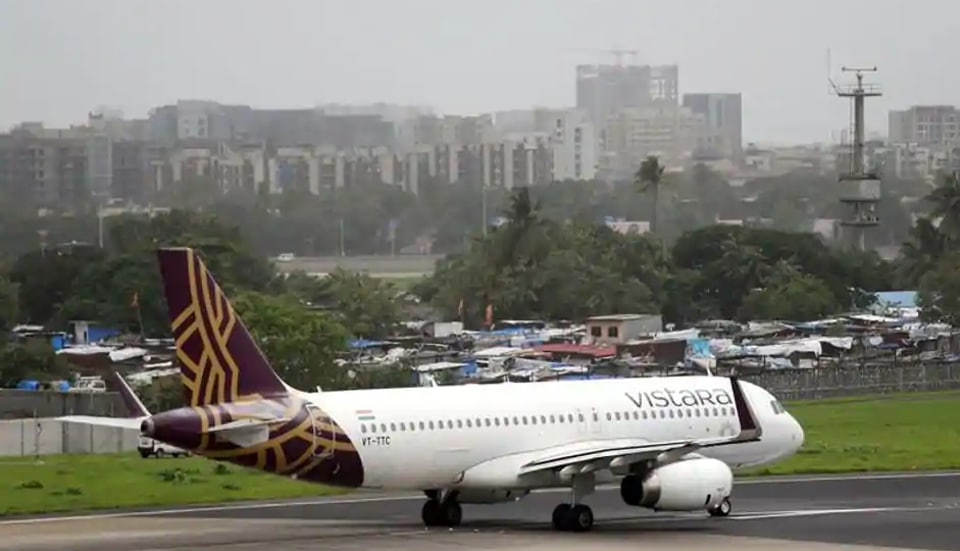
Vistara currently has a fleet of 45 aircraft comprising 35 Airbus A320, two Airbus A321neo, six Boeing B737-800NG, and two Boeing 787-9 Dreamliner planes.

 Prefer HTon Google


Vistara, the full-service airline venture of Tata Sons Ltd and Singapore Airlines Ltd, will keep its fleet expansion plan unchanged as it expects air travel demand to rebound from the pandemic-related disruptions that have roiled the industry.
The expansion will see Vistara, run by Tata SIA Airlines Ltd, add six Boeing Co.’s 787 wide-bodied planes by March 2022, chief commercial officer Vinod Kannan said in an interview. The airline plans to add 25 aircraft by 2023.
“We are pursuing opportunities to add other long-haul routes to our network to operate flights as part of travel bubble agreements for now. Our fleet expansion plan remains on track. By 2023, we expect to have a fleet size of close to 70 aircraft,” Kannan said.
Vistara currently has a fleet of 45 aircraft comprising 35 Airbus A320, two Airbus A321neo, six Boeing B737-800NG, and two Boeing 787-9 Dreamliner planes.
The airline currently operates flights to more than 30 destinations within India, and to overseas destinations such as Dubai, Dhaka and Doha. It has temporarily suspended flights to London to comply with a government directive.
The pandemic has led the Indian government to continue a ban on international flights which currently runs through 31 January. However, dedicated cargo flights and those specifically allowed under bilateral air bubble pacts will continue to operate. A bilateral air bubble is a mechanism to resume flights between India and other nations with preconditions during the pandemic.
India has bilateral agreements with as many as 23 countries, including France, Germany, Japan, Bangladesh, Qatar, the United Arab Emirates and the US. The agreement with the UK stands suspended till 7 January to prevent the spread of a new strain of the coronavirus that is considered to be more infectious.
“The temporary ban on flights to the UK is surely another blow to the global aviation industry, given the importance of the UK-bound routes for any major airline, but the reasoning behind the move is understandable,” Kannan said.
Kannan said air travel within India is reviving as a growing number of people are now confident of flying.
“We have been gradually mounting flights in our domestic network, and we are already operating at more than 70% of our pre-covid capacity. While we may be prepared to operate at 100% capacity, deployment continues to remain regulated by the government and depends on multiple factors, most important being passenger demand,” he said.
However, business travel, which typically brings in higher revenue to airlines, is yet to pick up due to travel restrictions and fear of the pandemic.
“The passenger traffic we see right now is a mix of people returning to their homes or to their cities of occupation, VFR (visiting friends and relatives) and business travel by SME owners, young entrepreneurs, etc. As organizations increasingly embrace remote working, there might be a short-to-medium-term effect on demand for business travel,” Kannan added.
Vistara currently operates about 140-150 daily flights, or 70% of its capacity, which it plans to scale up to 80% in the coming weeks.
“The demand for domestic travel has been progressively picking up in the last few months owing to the festive season and holidays. Today, people are more confident of flying than they were earlier this year, and therefore, it may be safe to say that domestic air travel has entered a phase of recovery,” Kannan said.


