
 E-Paper



Remittances to India to decline by 5%, says World Bank
India, the world’s largest remittance recipient in 2015, may see a drop of 5% this year, the World Bank said citing weak economic growth in remittances-source countries and cyclic low oil prices.


India, the world’s largest remittance recipient in 2015, may see a drop of 5% this year, the World Bank said citing weak economic growth in remittances-source countries and cyclic low oil prices.
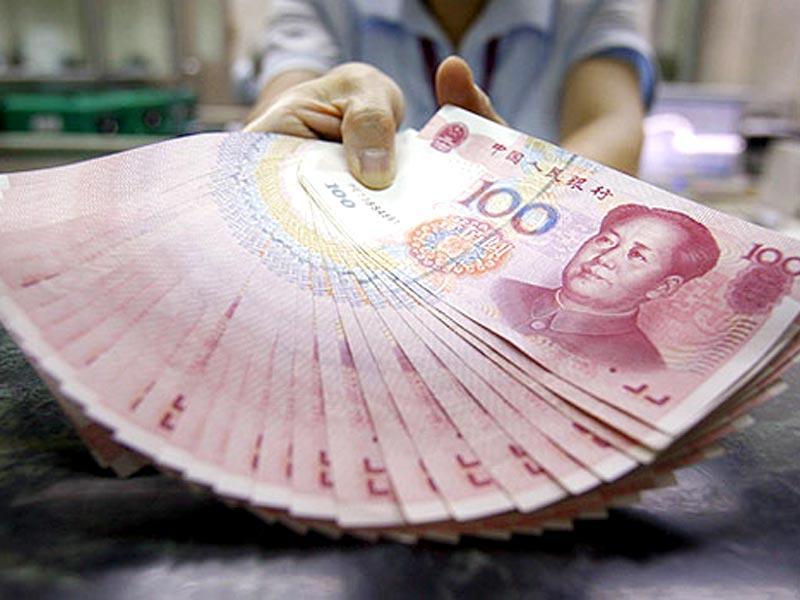
The country is expected to receive remittances of $65.5 billion (₹4.4 lakh crore) this year— it received $69 billion in 2015.
Despite the drop, however, India is likely to top the list of countries that receive foreign remittances, marginally ahead of China at $65.2 billion (Rs 4.36 lakh crore). Pakistan, which is at number five, is estimated to receive $20.3 billion (Rs1.36 lakh crore) in 2016.
“In 2016, remittance flows are expected to decline by 5% in India and 3.5% in Bangladesh, whereas they are expected to grow by 5.1% in Pakistan and 1.6% in Sri Lanka,” the World Bank said in a latest report on remittances.
The World Bank said remittances to South Asia is expected to decline by 2.3% in 2016, following a 1.6% decline in 2015.
Remittances from the gulf cooperation council (GCC) countries continued to decline due to lower oil prices and labour market ‘nationalisation’ policies in Saudi Arabia. GCC is an alliance of six Middle Eastern countries — Saudi Arabia, Kuwait, the United Arab Emirates, Qatar, Bahrain and Oman.
It said against a backdrop of tepid global growth, remittance flows to low and middle income countries (LMICs) seem to have entered a “new normal” of slow growth.


