
 E-Paper



Akasa: On Terra Firma
Three years after it took to the skies, India’s youngest airline is on firmer ground even as it chases the elusive break even

 Prefer HTon Google


To say that the Indian aviation market is undergoing a transformative churn is an understatement. Every player in the sector is undergoing a metamorphosis.
While Air India is running a little behind schedule in its proposed phase of taking a leadership position (expected between April, 2024 and March, 2027), IndiGo is shedding its original skin to emerge as a full-service international player on a global stage. Air India’s low fare wing (the merged entity that has emerged from Air India Express and AirAsia India) is rejigging and transforming itself into a full- blown Indigo in its original avatar while SpiceJet is struggling to stay afloat in a market full of uncertainties.
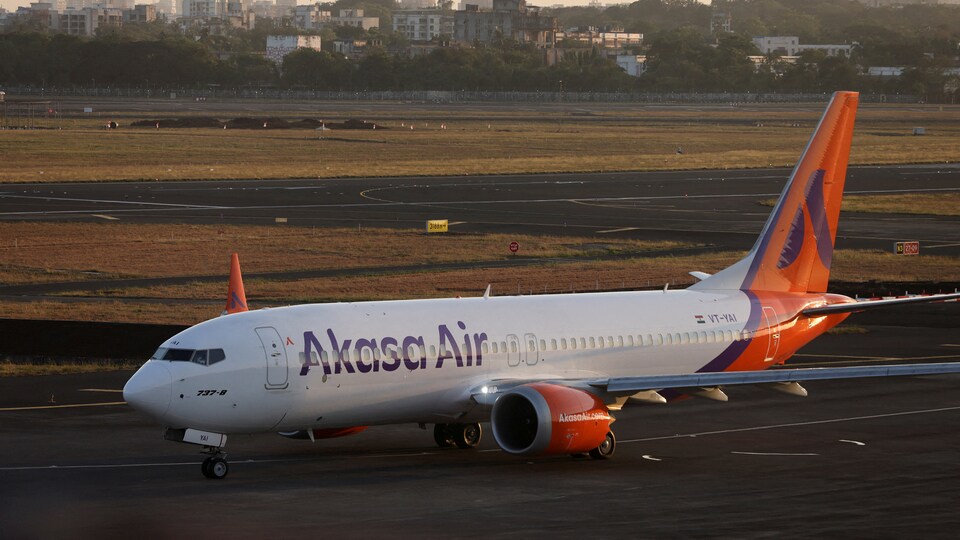
It is therefore of some consolation to the sector that at least one player is an outlier: Akasa, the airline that surprised most by the timing of its launch in August 2022 - when the rest of the players were yet to emerge from the shadows of the 2020 global pandemic. It was in the midst of the 2020 pandemic and armed with many learnings after his two stints with Indian carriers - Jet Airways and Go First, Vinay Dube, the CEO of Akasa Airlines, began to write a business case of what would become Akasa in the future. The airline’s official founding day was in November 2020, smack in the middle of one of the biggest crisis faced by airlines globally.
At the time of writing this piece, the airline was awaiting final clearances to accept fresh funding and new board members. The amount or the names of investors have not been disclosed yet. Reports say the investment could be around US $100 million from a few new and long-term investors, of which a Rs 300 crore investment is expected from Premji Invest, Claypond Capital (Ranjan Pai’s family office) and 360 ONE Asset.
Further funds infusion will come in through a doubling of the initial investment made by the original owners Jhunjhuwalas through the family trust while keeping their holding below 51%.
The good, the weak and the uncertain: Here’s a look at Akasa’s opportunities and challenges.
The Good: On Firmer Ground
Akasa took flight in an industry that had witnessed a spate of bad news including the grounding of Jet Airways in 2019, amid a battering of the entire industry because of the pandemic. As a result, the Rakesh Jhunjhunwala-funded Akasa Air grabbed attention even before it took flight amid questions about its progress and future.
If the founders hold a rear-view mirror before them, they would be justified to wonder whether this is the same market they entered. From the time of inception of the airline to now, a lot has changed both on the ground and in the air. One of its primary funders with deep pockets, the late Rakesh Jhunjhunwala passed and was no longer available to support it; one of its direct rivals Go First declared bankruptcy and ceased operations while another rival SpiceJet curtailed them. A third rival AirAsia India has since merged with Air India Express.
Besides these, the Indian market has shed the gloom cast by the pandemic and Indians are traveling with a vengeance. Oil prices - one of the biggest party poopers - have been giving airlines a breather and the rupee is standing its ground to some extent. The future is looking rosier than the past has proved to be. To the airline’s advantage and credit, the fact that it started without any of the pandemic baggage afflicting others helped it set the fastest pace of growth in a highly competitive scenario.
But a lot of what has gone right for Akasa in the last three years is also of its own making. In an era of low aircraft availability, it has over 200 aircraft on order, a 75- B737 Max aircraft order in October 2021 followed by a 150 aircraft order in January 2020. Not only does it enjoy the cushion of its big order, its aircraft induction has been on track, swift and consistent, with its total fleet at nearly 30 in three years, no mean achievement since it makes it one of the first airlines globally to achieve this milestone. Compare for instance Akasa’s 20 planes in its first year with IndiGo’s 12. Other airlines in India like Go First and AirAsia India took so long to reach the same milestones that it renders a comparison superfluous. Aircraft utilisation, an important metric, too has climbed from 11 to 12 hours, according to people aware of the matter, although still behind IndiGo’s 14 (with a far bigger fleet) and lower than desirable. Airline founder and CEO Vinay Dube however maintained that it was the “best in class”.
Moreover, the airline’s route selection, if not ideal, has been better than most. It has not spread itself too thin with its 29 aircraft flying over 900 weekly flights with 22 domestic destinations and five international ones. It has taken a leaf out of IndiGo’s book by getting into a market, increasing frequencies to get to number two or three in this aspect and connecting the dots within the network rather than opening new stations.
Several players in India’s aviation landscape have made a hash of this aspect in the past, failing to understand the nuts and bolts of a network strategy despite having experience. The airline’s frequencies on some of the major routes (Mumbai-Delhi and Delhi-Bengaluru) however remain quite low, which industry insiders argue is a weak spot but is justified by the airline on the grounds that slots are not easily available.
Akasa also offers a no-frills, efficient service on board with clean and new aircraft. Its on-time performance has been good and the passenger load factors which were expectedly low in the first couple of months have picked up enough for it not to have to discount its fares.
The casual dress for crew (sneakers as opposed to heels, to make their life more comfortable) resonates well with the younger fliers, with many choosing Akasa as the more “hip, with it” airline than the comparatively stodgy Air India.
Many other parametres seem to be in its favour. The airline has been consistently reporting high loads with its latest numbers at 92-93% in April, having overtaken SpiceJet and Indigo, which are both in their mid -80s. Cancellations are amongst the lowest as are complaints. A quick comparison with closest rival SpiceJet on two parametres is quite revealing. Data from the Directorate General of Civil Aviation (DGCA) on passengers affected due to cancellations in April is 42 for Akasa against 4709 for SpiceJet. Further, a total of 8386 Akasa passengers were affected by delays beyond two hours in the month compared with SpiceJet’s 23189.
The airline has also done well on its on-time performance, despite having a small fleet in the beginning (deployment of alternate aircraft is harder with a smaller fleet). Now with almost 30 aircraft, the airline’s on-time performance at the 6 metros at 77.5% is second to IndiGo’s 80% but higher than Air India’s 74% and far higher than SpiceJet’s 60%.
Again, taking a leaf out of IndiGo’s books, the management of the airline has kept a low profile and focussed on getting the business in order unlike several players where the founders have been more focused on publicity. Keeping its head down has helped Akasa command a bigger market share today than SpiceJet, an airline that has been around since 2005, as per the latest data.
Another aspect of the business that Dube highlighted as a strength is its distributed ownership with no one investor enjoying majority control and hence its strong board-run character, a matter of concern in many of the airline players in the past and some even today. Coupled with its team, which primarily comprises airline professionals with plenty of collective experience, he thinks they are set for a long and successful innings in a market that can easily support three IndiGos.
The Not So Good
But the question the industry is asking is that if the loads are high and if the environment is as favourable as it has been (closure of Go First, whittling down of SpiceJet, low oil prices, stronger rupee and robust traffic) where players like Indigo are making huge profits (FY 2025 profit for the airline was over Rs 7,000 crore and FY 2026 is expected to be higher still) and even Air India claims to have made a small operating profit (FY25), why is Akasa making losses as high as it is. Losses in the airline remain high at Rs 1,670 crore for FY 2024, with a revenue of just over Rs 3,100 crore.
Dube argued that losses are in line with their expectations and that the foundational year of any airline is dedicated to investing in its people, fleet, training, operating infrastructure and network and hence no airline registers profits in these years.
While this may be true to an extent, it remains a fact that market leader IndiGo was profitable just after its first two years of operation. A former AirAsia India source says that back in 2019, after the demise of Jet Airways and when the overall environment was quite favourable, the airline did pull off operational profits in a few quarters. This despite all the bloopers the airline had made in its initial years and having a smaller fleet than what Akasa has at present.
“If the airline is not able to break even and turn in a small profit in this environment, it needs to look keenly at what it is not doing right,” said a former CFO of SpiceJet. Moreover, he pointed out that it takes very little for losses to add up quickly as there is perhaps no sector as susceptible to every kind of externality and many variables remain out of the airlines’ control.
A second red flag raised by sector analysts and experts is something they have raised since the start : that the airline seems top heavy. Again, while comparisons with IndiGo might not be completely fair, they are cited as the market leader started with a very lean team and remained so till it went public.
An Increasingly Uncertain World
But there’s no denying the fact that from a passenger point of view, Akasa’s survival and well-being is far more significant today than when it launched since the total numbers of players have shrunk and all the negative repercussions of a duopoly stare the flying public in its face.
The future nonetheless remains full of uncertainties and depends almost entirely on the players own handling, as Dube agreed, adding that as the past has also shown us the fate of airlines in India is primarily in their own hands and very little to do with government actions or policy.
Industry sources argue that while currently Akasa is considered “too small to matter” but one of the worries in the future could be predatory pricing and other hurtful business tactics which any small fish in a big pond can expect. “Competition in the form of a minor irritant is often welcomed by the biggies. We will have to see what happens when Akasa reaches a sizable number of planes for the bigger players to notice it,” said a former DGCA official. He pointed out that competition can be aggressive even for talent within the industry and that Akasa had already “shot itself in the foot once” when it decided to take its own pilots to court in 2023.
Although Akasa seems to have weathered its 2023 storm with crew, it has to make sure it doesn’t ruffle any more feathers. While Dube maintained that they are well positioned with regard to their future crew requirements, the airline’s ability to attract and retain talent with the formidable duopoly of Tatas and IndiGo remains under cloud. Airline industry sources said that the airline has struggled to attract and recruit commanders and crew from almost the word go but after IndiGo started rehiring and Tata’s have started luring crew, their struggle deepened. It has however set up its own learning academies in Gurugram and Bengaluru, where it trains 750 employees every month.
So even as the Akasa team buckles up and looks ahead to its next phase, being nimble, displaying maturity in handling crew and passengers and keeping its ears and eyes open will hold it in good stead.
Anjuli Bhargava writes about governance, infrastructure and the social sector. The views expressed are personal.


