
 E-Paper



Noida, Gurugram function like ‘first-world economies’: Raghuram Rajan
Recently, the ex-RBI governor appeared on a podcast hosted by YouTuber Akash Banerjee on the latter's ‘The Deshbhakt’ channel.

 Prefer HTon Google


People living in northern Indian cities such as Noida and Gurugram operate like ‘one would in a first-world economy,’ former Reserve Bank of India (RBI) governor Raghuram Rajan has opined.
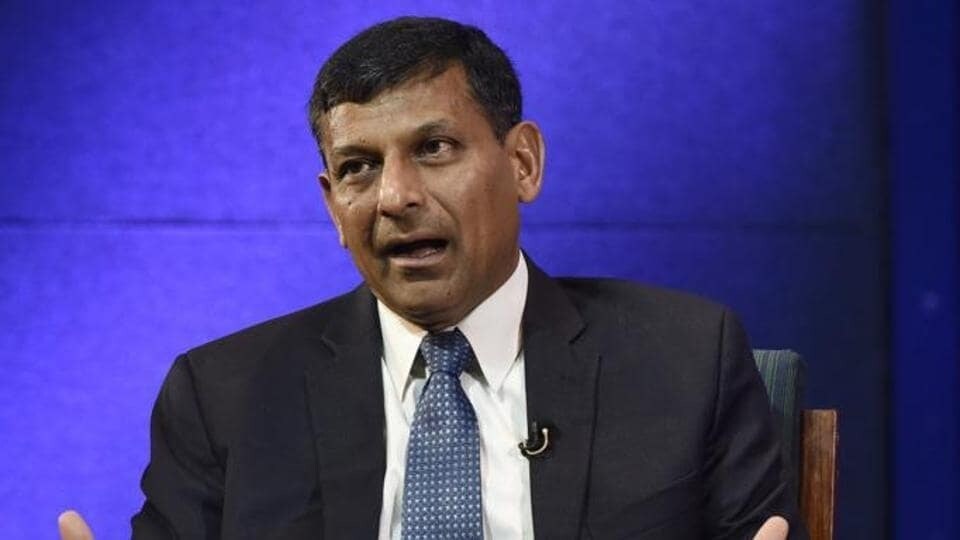
Rajan, who was the RBI's 23rd governor, holding the coveted post from September 2013 to September 2016, said so on YouTuber Akash Banerjee's ‘The Deshbhakt’ channel, on a podcast titled ‘Raghuram Rajan’s Economic Roadmap & Warning for India.'
‘Parts of the Indian economy are first-world’
There, the central bank's ex-governor was asked to share his insights on the country's economic progress, and the challenges ahead.
In response, he pointed to economic activities in cities such as Noida and Gurugram. “Parts of the Indian economy are first-world. People in Noida and Gurgaon are essentially operating in a first-world economy,” he said.
Both Noida, which is in Uttar Pradesh, and Haryana's Gurugram (the city was renamed in 2016 but is still popular by its old name, i.e., Gurgaon) are satellite cities of Delhi, and, along with it, as well as few other nearby places, constitute the National Capital Region (NCR). The two cities are IT, industrial, and financial hubs despite their relatively small populations.
What is a ‘first-world economy’?
Generally, these are countries that are highly industrialised and have advanced economies. Sometimes, these are also called ‘developed’ or ‘industrialised’ countries. Currently, India, is the world's fifth-largest economy (behind the US, China, Japan, and Germany, respectively) and is set to rise to third by 2030, leapfrogging Japan and Germany.
What else did Rajan talk about?
Meanwhile, on the podcast – you can watch it here – Rajan also touched upon topics like Unified Payments Interface (UPI), the November 2016 demonetisation, India's journey to a developed economy by 2047, and more.
“Great success. Success has many fathers. I want to claim a little bit of parenthood. It started during my time at the RBI, now we are at 10 billion transactions a month,” he said on UPI.


