
 E-Paper



Ford’s Answer to Cheap Chinese EVs Starts With a $30,000 Electric Pickup
A $2 billion investment in a Louisville plant supports efficient manufacturing as employment is projected to fall by 600.


 Prefer HTon Google


LOUISVILLE, Ky.—Ford Motor says it has an answer to the cheap Chinese electric vehicles that are gobbling up market share around the world, and it starts with a $30,000 electric pickup.
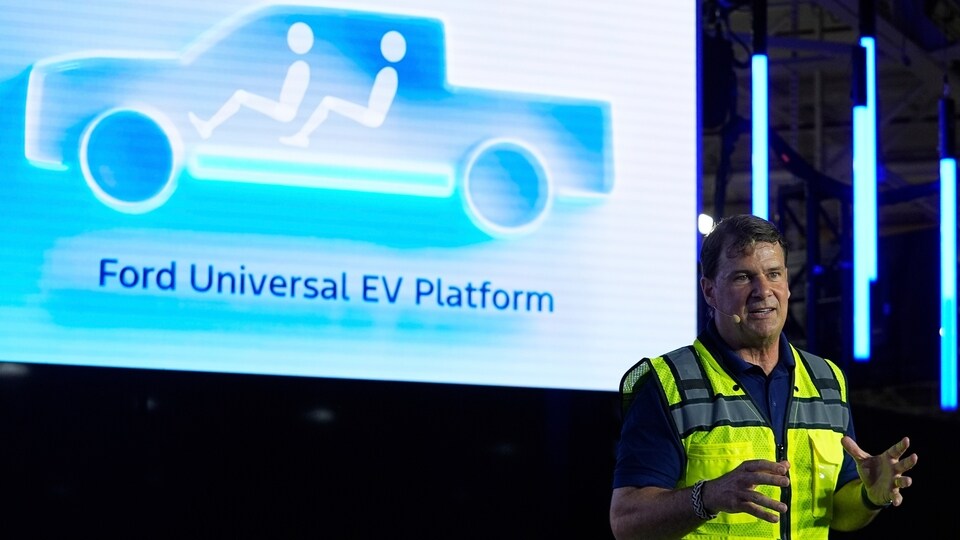
The automaker said Monday that it would spend $2 billion to overhaul a Louisville, Ky., factory to build a new line of affordable, high-tech EVs. It aims to launch the pickup in 2027.
The EV strategy was three years and billions of dollars in the making. Ford says its new EVs will be designed with fewer parts, lighter materials and a manufacturing process overhauled for efficiency. Ford’s EV business lost $5 billion in 2024, with executives predicting a bigger loss this year.
“This is a bold and difficult undertaking to compete with the best in the world,” said Doug Field, a former Tesla and Apple executive Ford hired in 2021 to lead its technical transformation.
EV sales have stalled in the U.S., but automakers say the vehicles are still the industry’s future. Americans want EVs that are smaller and affordable but also fun to drive and stuffed with technology, executives have said.
Chinese automakers such as BYD have mastered this model. Their American rivals haven’t.
Ford says its new EVs will be made with 20% fewer parts. A wiring harness used in the new pickup, for instance, will be 4,000 feet shorter and 10 kilograms lighter than the one used in the company’s first electric SUVs.
They will be built differently as well. Large single-piece aluminum unicastings replace dozens of smaller parts. Instead of one long factory conveyor, three parallel, separate lines will run concurrently and then come together. Workstations will be more ergonomic.
Ford says the process will be 15% faster even with additional insourcing and quality improvement measures that typically add time. The factory will initially employ 2,200 hourly workers, about 600 fewer than are working there now, churning out soon-to-be-discontinued gas-powered SUVs. Ford executives said there will be potential for growth at the site.
The pickup will be powered by batteries made with lithium iron phosphate, which are about 35% cheaper to make than their nickel- and cobalt-based alternatives. The battery pack will serve as the vehicle’s floor, a setup that saves space and makes for a quieter ride, Ford said. The company didn’t disclose the vehicle’s anticipated driving range.
The new EV platform can be used for a range of vehicle types and sizes, as well as battery chemistries, executives said.
Ford and rival General Motors have been racing to build their own lithium iron phosphate, or LFP, batteries. Ford is spending $3 billion to develop the batteries at a Michigan factory and aims to have them ready by next year.
Ford’s move comes at tough times for EVs in the U.S., as automakers scale back or avoid the segment altogether.
Consumer interest has waned in the last couple of years after a burst of enthusiasm, and Congress and the Trump administration are quickly dismantling tailpipe-emissions and fuel-economy rules that long underpinned the production and sale of the vehicles. A federal tax credit of up to $7,500 for new and leased EVs is ending in September, worsening the end-of-year sales outlook.
Tesla, long the industry EV leader, is struggling with a steep slide in global sales and this year fell behind BYD in European sales for the first time. The company this spring released a refreshed version of its top-selling Model Y midsize SUV and a pared-down version of its pricey Cybertruck as well as minor updates to Model S and Model X.
Yet the rapid rise of Chinese EV makers and growing global demand is keeping pressure on U.S. carmakers to invest in the technology.
China’s BYD and its counterparts are undercutting the competition on price with a low-cost supply base, cheap labor and lean designs, while offering slick digital features and moving aggressively into Europe, the Middle East and other Asian markets.
Where Ford’s Mach-E, an electric take on its Mustang muscle car, has a 320-mile range and starts at about $40,000, BYD’s comparable Sea Lion 07 goes 379 miles on a single charge and starts around $26,000.
Steep tariffs and regulatory hurdles have so far kept Chinese brands out of the U.S., but they are proliferating quickly in Mexico and Latin America.
Along with the Mach-E, Ford’s initial strategy hinged on making large electric SUVs and pickups. The company found that the huge batteries needed for these trucks are too expensive.
On Friday, Ford said it would further delay launches of a new, large electric pickup and an electric commercial van. The pickup had been slated for late 2027 and the van for next year; both are now due in 2028, the company said. The company last year scrapped plans for an electric, three-row SUV.
GM has also scaled back EV plans and is looking to smaller models. Instead of building electric pickups at a Orion, Mich., factory, it will build gasoline-powered ones. Meanwhile, it is bringing back the small Chevrolet Bolt EV.
U.S. EV sales were essentially flat in the first half of 2025, a dramatic reversal from double-digit gains earlier this decade. Sales picked up in July as carbuyers looked to cash in on the credit before it expires.
Write to Sharon Terlep at sharon.terlep@wsj.com


