
 E-Paper



Chandigarh’s Dadumajra waste plant can perform at 40% capacity at best: IIT Roorkee
IIT experts suggest setting up a new waste processing plant at the existing site.

 Prefer HTon Google


Recommending setting up of a new “modern” waste processing plant at the existing site in Dadumajra, Indian Institute of Technology Roorkee in its report has stated that even after the existing machinery is repaired, the plant can at best run at only 40% of its total capacity.
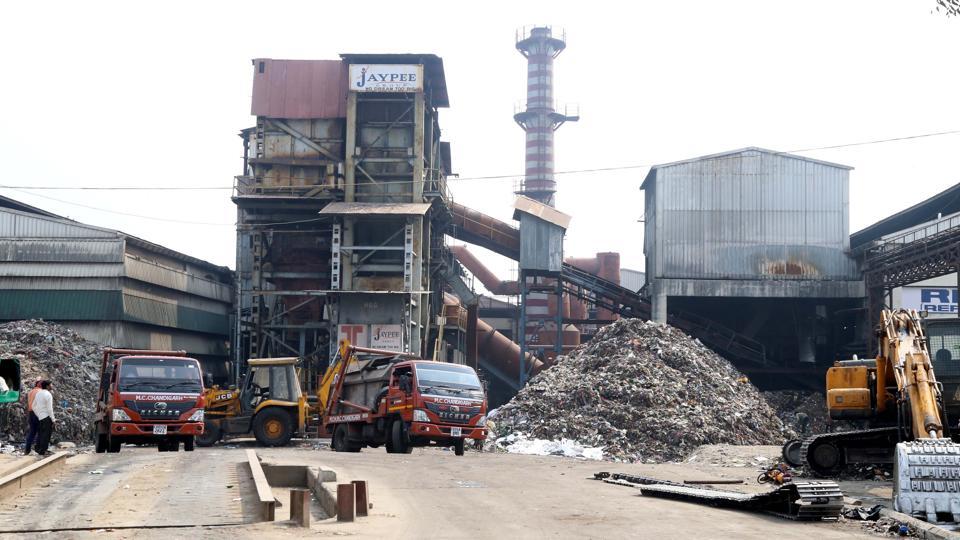
Department of civil engineering, IIT Roorkee, in its “Status Report of 500 TPD Solid Waste Processing Plant, Chandigarh” has stated, “The best way is to set up a new modern 500 TPD (tonnes per day) plant for dry and wet waste treatment in the given plot. For the wet waste stream – biological treatment will be required to meet Solid Waste Management Rules (SWM) 2016 rules.”
On the working of the existing plant, which was recently taken over by the municipal corporation (MC), IIT experts state that it is currently working at only 10% of its capacity.
The plant was constructed in 2008 as per the Municipal Solid Waste 2000 (MSW) guidelines. “All machines are already 12 years old, which is practically the life of such machines. Primary and secondary shredders are not in working condition,” states the report.
In a best case scenario for the existing plant, the report states, “For dry waste or mixed wastes, even after repairs/maintenance of existing machinery, shredder, trommels, etc., the existing plant will at best handle 60 to 65 TPD. Hence, if the corporation expects the plant to treat 200 TPD (40% of 500 TPD), additional new equipment will be required.”
Terminating Jaypee Group’s contract, the MC General House on March 4 had approved a detailed revival plan that included getting the plant examined from IIT Roorkee.
After MC took over the plant in June, it requested IIT Roorkee to visit the plant and suggest measures for improving its capacity and effectiveness.
Notably, earlier National Institute of Technical Teachers Training and Research had also recommended, “complete replacement of the machinery to process MSW with new technology is required”.
Poor solid waste management has been among the primary causes for Chandigarh’s poor performance in the annual Swachh Survekshan this year (rank 16) as well as in 2019 (rank 20).
BOX
FINDINGS IN THE REPORT
The plant is processing around 30 tonne per day waste – only 10 % of the design capacity
The plant is designed only for processing source-segregated dry waste
Housekeeping and regular cleaning, as well as painting, is not up to the mark
Storm water management is poor
No record of air emissions, compost quality and calorific value of refuse-derived fuel (RDF)
RECOMMENDATIONS
By strict enforcement of segregated waste collection rules, the capacity can be increased to 20-40 %
Keep the unprocessed waste in the shed
Final RDF should be stored in a covered area with regular tests
Routine operation and maintenance logbooks, and repair schedule should be maintained for all machines
Conduct regular stack monitoring for air pollutants of incinerators
After incorporating these suggestions, conduct an analysis of all machines in coordination with the manufacturers and IIT
But, the best way is to set up a new modern 500 TPD plant for dry and wet waste treatment in compliance with SWB 2016 guidelines.


