E-Paper



How a Bengaluru woman saved ₹2,000 in just one week by switching to buses
By switching to public transport for a week, a Bengaluru woman documented her savings of nearly ₹2,000.

 Prefer HTon Google


Bengaluru’s rising cab fares and traffic congestion have pushed many residents to explore public transport, and one city woman’s experience is now going viral.
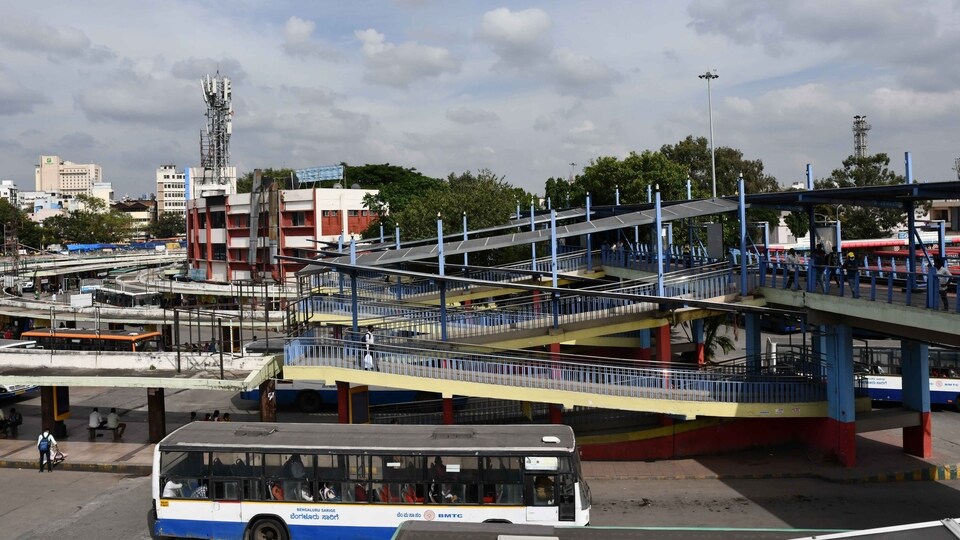
By relying solely on BMTC buses and metro trains for her daily commute and outings between August 18 and 22, she managed to save nearly ₹2,000 in just one week.
The woman, who documented her week-long bus experiment on social media, said she not only figured out routes and timings for her daily office commute but also tested buses for three non-work trips across the city.
(Also read: Canadian man’s viral video gets Bengaluru to fix Domlur–Indiranagar footpath in a week: ‘Made my year’)
Read her full post here:
On her first outing, from Sarjapur to meet friends at Big Brewsky in Yeshwanthpur, she boarded a crowded 342F and then switched to the metro from Majestic. The journey took 2 hours and 20 minutes, costing just ₹40, compared to the ₹750 she would have spent on a cab for roughly the same travel time.
Her second trip, from Sarjapur to 1Shanthiroad Studio/Gallery, was even more cost-effective. A direct 342A bus dropped her at Shantinagar TTMC, followed by a short walk. The journey lasted 1.5 hours at zero cost (bus rides were free), whereas a cab would have taken 1 hour 10 minutes and cost ₹430.
The third experiment was a fitness trip, from Sarjapur to a gym in Indiranagar. She took a 342 bus to Koramangala Water Tank, switched to another bus at Domlur, and reached her destination in 1 hour 18 minutes. The trip cost nothing, compared to ₹290 for an auto ride that would have taken around the same time.
By the end of the week, she calculated her total savings at nearly ₹2,000, without having consciously planned to cut costs. “Switching to buses felt sneaky but effective,” she noted, adding that her experience showed how viable Bengaluru’s public transport can be if used smartly.
She added that her positive experience came partly from traveling during off-peak hours, which meant cleaner buses, shorter waits of 5–10 minutes (except once for 25 minutes), and usually finding a seat. The women’s section made her feel safe, and she used travel time to read, listen to music, or solve crosswords, finishing nearly four books in two weeks.
While bus stops were dusty and her backpack had to be lighter for convenience, she said walking between stops kept her active. Unlike the stress of driving, buses gave her more peace of mind, and she hopes it will also leave her with more energy over time.
(Also read: Viral 1948 vs 2025 photo of Bengaluru’s Cubbon Park sparks debate: ‘Is the city’s lung greener now?’)