
 E-Paper



2K FIRs, 3K arrests in drug trafficking cases so far in 2025: Home secy
Home additional chief secretary (ACS) Sumita Misra said the government also strengthened interstate coordination leading to 293 interstate arrests in commercial quantity cases, a major step in dismantling cross-border trafficking networks.

 Prefer HTon Google


Haryana’s law enforcement agencies registered 2,161 first information reports and arrested 3,629 persons in the first seven months of 2025 during a drive to combat drug trafficking in the state.
Stating this on Wednesday, home additional chief secretary (ACS) Sumita Misra said the government also strengthened interstate coordination leading to 293 interstate arrests in commercial quantity cases, a major step in dismantling cross-border trafficking networks.
“The state also struck hard at the financial backbone of drug offenders, with property attachments rising sharply from ₹ ₹23.41 lakh in 2024 to ₹1.31 crore in 2025. Preventive policing strategies also proved highly effective, with preventive detentions jumping from eight to 42 cases,” the ACS said.
Misra said that joint raids should be conducted to dismantle the supply chain of drugs being transported into Haryana by the smugglers.
The ACS said the Haryana State Narcotics Control Bureau (HSNCB) has conducted 698 anti-drug awareness programmes across the state, successfully reaching more than 1.15 lakh participants from diverse communities. Youth engagement through sports has emerged as a cornerstone of the campaign, with the Drug-Free Village programme covering 4,270 villages and engaging nearly 2.8 lakh youngsters in constructive sporting activities.
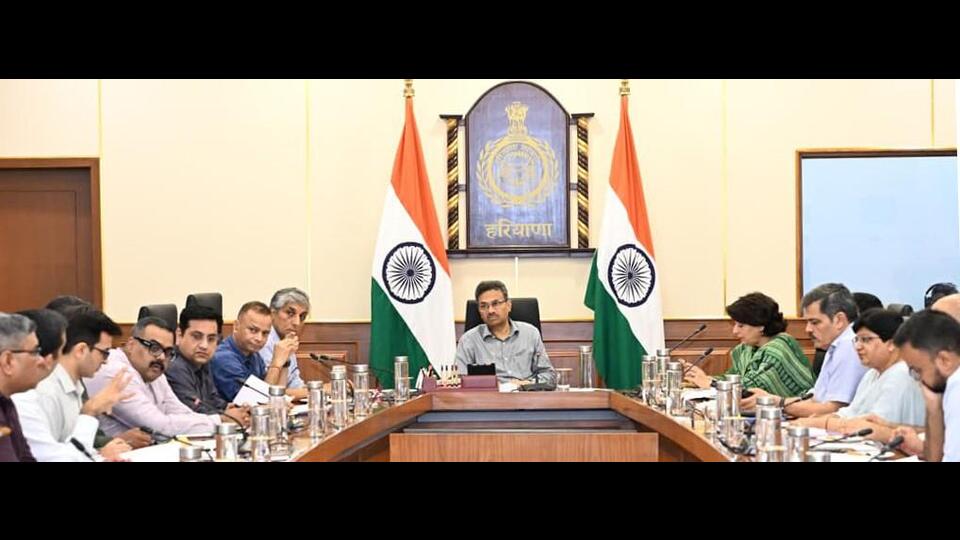
Chief secretary Anurag Rastogi who chaired a State Narco Coordination (NCORD) meeting Wednesday said that the state has significantly intensified its campaign against drug trafficking and substance abuse through a comprehensive strategy combining strict enforcement, widespread awareness programmes, and enhanced rehabilitation measures.
The meeting also reviewed several systemic reforms and strategic initiatives forming the backbone of the anti-drug campaign. These included the rollout of centralised pharmaceutical supply chain monitoring systems to prevent misuse of prescription medicines, systematic inspection of de-addiction centres in all districts to ensure compliance with prescribed standards, and significant upgrades in forensic laboratories with advanced equipment for synthetic drug detection.


