E-Paper



Chandigarh: Day on, cab drivers, passengers find a way around ban
The UT had already suspended the licences of Ola and inDrive – in June and August respectively, leaving all four major app-based aggregators without valid licences to operate in the city

 Prefer HTon Google


A day after the state transport authority suspended the aggregator licences of Uber and Rapido for six months, both platforms continued to accept bookings on Wednesday, with several cab and bike-taxi drivers coming up with novel ways to circumvent the ban even as authorities took to challaning the offenders.
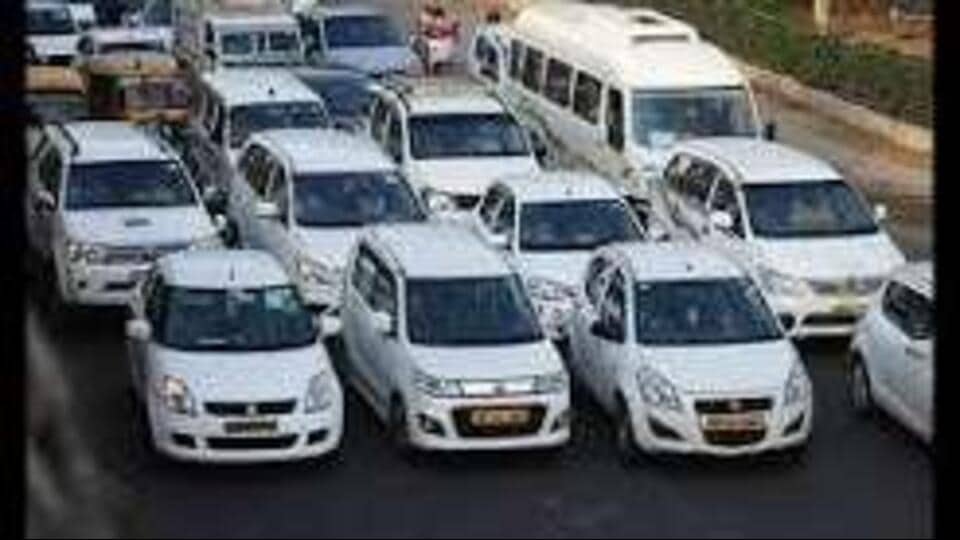
The UT had already suspended the licences of Ola and inDrive – in June and August respectively, leaving all four major app-based aggregators without valid licences to operate in the city. According to a rough estimate, Chandigarh has nearly 1 lakh daily cab users who use ride-hailing services to get to work, college, airport, railway station and other regular travel.
While most commuters said they were able to freely book cabs and bike taxis through these apps, including for journeys within Chandigarh and between Chandigarh, Mohali and Panchkula, a few reported cancellations, rejected bookings and drivers asking them to cancel app-based rides and travel privately, amid concerns over challans and vehicle impounding.
According to information, most of the challans issued against the drivers were by STA team members who had themselves booked the rides, posing as customers, to identify the violators. A few bike-taxi riders were also booked, it was learnt.
This HT reporter was able to book two Uber rides, right outside the new UT secretariat building in Sector 9. Both rides were available within about two minutes of the requests being made.
STA secretary Nitish Singla, who signed the licence suspension orders for the four firms, warned drivers that accepting bookings through these platforms could invite challans and their vehicles could also be impounded. “Even if the rides originate and end in Panchkula or Mohali, it will be considered a violation if the vehicle passes through Chandigarh,” he said. To be sure, the two satellite towns haven’t suspended the licences of these ride-hailing services.
Singla said even commuters availing these services will be considered violators but stopped short of detailing the action that could be taken against them.
Source of livelihood snatched?
Drivers, meanwhile, said they have little choice but to continue using the platforms. “My livelihood depends on driving. I have a car loan, fuel expenses and a family to support. If these apps are suspended, how will we get customers? How are we supposed to earn?” said a cab driver.
Another driver said aggregator apps are the most convenient way to get customers. “We cannot sit at one place and wait for passengers. The apps connect us with customers. If there is a booking, we go and pick up the passenger. This is how we earn every day,” he said.
On enquiring about the Bharat Taxi app, the only alternative left for drivers and passengers in the city now, a driver, Rattan, said, “If I am already paying for four cab booking apps, why would I enroll for a new one, especially when most passengers don’t even know of it?”
Why are the apps still functioning?
So why are apps continuing to function despite the suspension? “The STA can only stop and penalise vehicles operating illegally within Chandigarh but the power to disable the aggregator’s app or geo block it, can only be done at the central level,” said Singla. Geo-blocking refers to restricting access to a digital service based on the user’s geographical location. In this case, such a measure could potentially prevent an app from accepting or facilitating bookings originating within Chandigarh.
Uncertainty, jitters, increased travel time
Aman, who uses Rapido for his daily office commute, said he now has to keep alternative transport options ready. “Earlier, I could book a ride without thinking twice. Now, if Chandigarh falls on the route, there is no guarantee the driver will accept it,” he said.
Shivani, another commuter, said the uncertainty was adding to her travel time. “Sometimes the booking goes through, sometimes it gets rejected. We cannot plan our commute properly,” she said.
Some passengers revealed that wary drivers, after accepting their bookings, had requested them to cancel the ride on the app and continue the journey privately. In some instances, commuters were allegedly told to claim that they had hired the cab directly if the vehicle was stopped for checking.
What led to the suspension?
The main bone of contention is the aggregators’ alleged failure to comply with the Motor Vehicles Aggregators Rules, 2025, which lays down guidelines for fares, driver verification, onboarding, insurance etc. Drivers allege that these aggregators have imposed subscription and prepaid-recharge models, in violation of the rules. Further, these app-based service providers don’t have local offices. The ones that have offices were found vacant with no staff during STA inspections. According to the STA, the aggregators were served notices and given adequate time to comply with the regulations but they failed, which led to their licence suspension.
How long will these services be suspended:
Ola: December 2026.
InDrive: February 2027.
Uber: March 2027.
Rapido: March 2027