
 E-Paper



Chandigarh tricity: Third wave 86% less deadly than second
Even as caseload was 28% higher in January 2022 as compared to May 2021, when second wave had peaked, the Chandigarh tricity area was spared from high fatality rate in third wave

 Prefer HTon Google


Even as there was a steep surge in Covid-19 cases as third wave hit the Chandigarh tricity area in January this year, the fatalities recorded during the month were 86% lower than that in May last year, when the second wave had peaked.
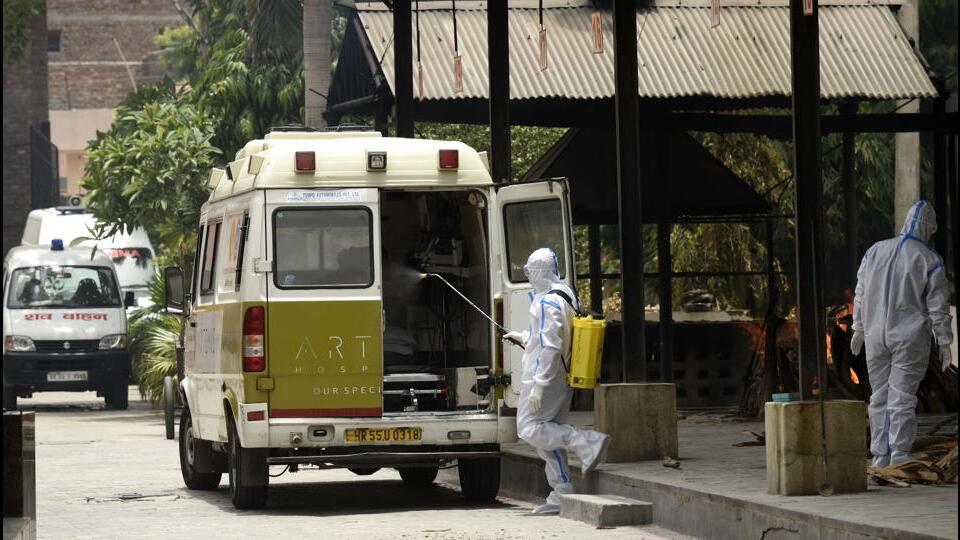
Officials of health departments across the tricity believe that the anti-Covid vaccination helped in lowering the severity of the infection, which further controlled the hospitalisation and fatality rate.
The tricity recorded 59,273 cases and 113 deaths this month, with the case tally peaking at 3,907 on January 16 and the highest death toll recorded at 11 on January 29.
In comparison, 46,245 cases and 790 deaths were recorded in May last year. The second wave had peaked at 2,612 cases on May 10 while 38 people had succumbed on May 5, the record single-day death toll in the tricity. Even as the case tally in January is 28% higher than that in May, fatalities remained much lower.
As far as the three areas that comprise the tricity are concerned, Mohali continued to remain the worst-hit during the third wave as well. As many as 23,971 cases surfaced in Mohali in January, followed by 23,593 in Chandigarh and 11,709 in Panchkula. Mohali also led with 50 fatalities, whereas 43 people died in Chandigarh and 20 in Panchkula.
Low hospitalisation rate
In May last year, the health infrastructure in the tricity was overwhelmed, leaving the patients and their families scrambling for critical care beds. For seven days in a row, there was a scarcity of ICU beds in Chandigarh, and demand for medical oxygen was also managed with utmost difficulty.
But in the third peak, the hospitalisation rate remained below 5% in all the three areas.
“In Mohali, over 85% Covid-reserved beds were occupied in the second wave, but in January, less than 5% beds were occupied. Vaccination is helping to control the severity. Over 60% of the patients who died in January were unvaccinated,” said Mohali civil surgeon Dr Adarsh Pal Kaur.
Vax, variant key factors
Dr Suman Singh, director, health services, Chandigarh, said: “During the second wave, the Delta variant was dominant and the infection was attacking the lungs. Due to this, more people were requiring hospitalisation and medical oxygen, and many had died. But in the third wave, the Omicron variant is dominant, which is attacking only the upper respiratory tract and people are not suffering from acute respiratory distress syndrome.”
Emphasising on the importance of vaccination in controlling the infection severity, she said 14 of the 43 people who died in January were unvaccinated.
Panchkula and Chandigarh have already vaccinated its target adult population with both doses of the vaccine. In Mohali, around 90% of the target adult population is fully vaccinated.
Dr PVM Lakshmi, professor of epidemiology, PGIMER, said: “All positive patients dying these days have one or the other comorbidity where Covid-19 is a coincidental infection. People are not getting respiratory issues this time.”
Dr Mukta Kumar, chief medical officer, Panchkula, said: “There could be multiple reasons for the low fatality rate. Since the majority of the population was vaccinated, we can say it helped in reducing deaths. The second reason could be that the strain was milder this time.”
Daily tally drops below 1,000
Meanwhile, the single-day infection tally dropped below 1,000 for the first time since January 6, with 726 people testing positive for Covid-19 in the Chandigarh tricity area on Monday.
However, the tricity lost seven more people, with Chandigarh accounting for four deaths, followed by two in Mohali and one in Panchkula.
Even in terms of cases, Chandigarh led with 344, followed by 267 in Mohali and 115 in Panchkula. The active caseload stands at 8,548, with 4,380 patients in Mohali, 3,228 in Chandigarh and 940 in Panchkula.
Among those who died in Chandigarh, there were three fully vaccinated people who had comorbid conditions. They have been identified as two women, aged 40 and 71, from Dhanas and Sector 50, respectively, and a 63-year-old man from Sector 20. A 55-year-old comorbid man, who was not vaccinated, was also among those dead. He belonged to Dhanas and suffered from chronic liver disease.
In Mohali, the latest victims include an 85-year-old man from Phase 3B2 and a 78-year-old man from Dhakoli. A 71-year-old woman from Sector 21, Panchkula, also succumbed to the virus. She was not vaccinated and was suffering from diabetes and hypertension as well.


