
 E-Paper



Chandigarh’s fleet of electric buses doubles as 40 additions
On the occasion, 40 new intra-city electric buses and 20 long-route air conditioning (HVAC) buses were flagged off from Chandigarh


With an aim to reduce vehicular pollution, UT administrator Banwarilal Purohit flagged off 60 buses in two lots on Monday — including 40 intra-city electric buses and 20 long-route air conditioning (HVAC) buses.
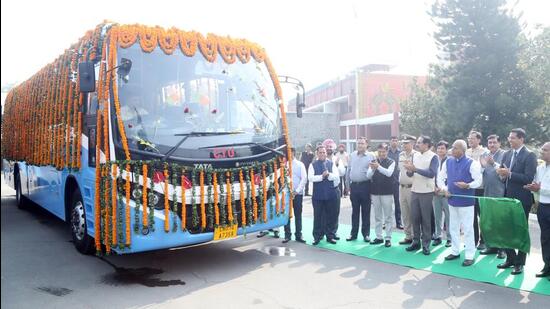
With this, the number of electric buses in the city has come up to 80.
Chandigarh administration said an agreement had earlier been signed in March 2022 with Tata Motors for purchasing 20 buses for interstate routes, which have now been proposed to be ply from Inter-State Bus Terminus-43 (ISBT-43) and ISBT-17 to Pathankot, Batala, Fatehabad, Amritsar, Abohar, Katra, Manali, Ludhiana, Shimla, Jaipur, Jhajjar and Haridwar.
Special attention has been paid to check the emission standards i.e. BS-VI and put in place the latest electronically-controlled diesel engines.
The agreement for the intra-city buses had earlier been signed with Volvo Eicher in February 2022, with the first lot rolling out on July 30 this year and were put on commercial operations.
The second lot of 40 electric buses is planned to cover routes from New Maloya Colony to Ram Darbar and Manimajra, ISBT-43 to Manimajra and Behlana, Maloya to Mansa Devi. The fare in the non-AC will be ₹10 up to five km and ₹20 from 5 to 10 km. For AC buses, ₹15 up to five km and ₹25 from 5 to 10 km.
UT transport department director Pradhuman Singh said the 40 electric buses already running in the city have covered around 23 lakh km and saved 4.62 lakh litres of diesel and reduced 12.18 lakh kg of carbon dioxide emission. “Over 50 lakh passengers have travelled on electric buses that were introduced in Chandigarh last year in September,” he added.
On a daily basis, approximately 15,500 passengers travel in the mini electric buses that were flagged off in September last year.
Box:
Chandigarh Electric Vehicles Policy 2022, which was notified last month, had already announced that, after two years, it would stop registering non-electric two-wheelers and autos.
The policy aims at taking up registration of privately-owned electric cars up to 50% in the next five years — and 100% in the segment of goods vehicles, commercial vehicles and buses. The administration has also put a cap on registration of non-electric vehicles in a bid to dissuade people from buying them.


