
 E-Paper



Double mutant Covid variant found in 22% PGIMER samples
PGI director says vaccine-induced antibodies are less potent in neutralising this variant, and the surge in cases during the second wave of the pandemic has somewhat been attributed to it


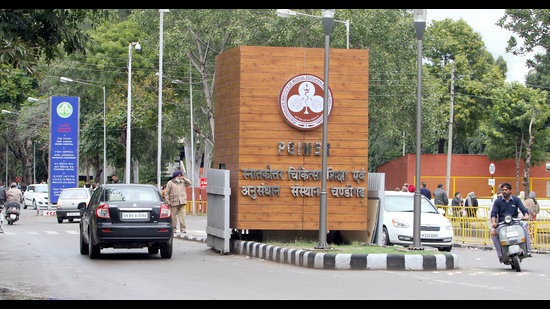
The highly transmissible B.1.617 variant of Covid-19 has been found in five of the 23 samples sent by the Post Graduate Institute of Medical Education and Research (PGIMER) to the National Centre of Disease Control, New Delhi, for genome sequencing recently.
First detected in India last October and described in late March by the misnomer “double mutant”, it was classified as a “variant of concern” globally by WHO last Monday.
“Reports of sequencing of SARS-CoV-2 from 23 nasopharyngeal swab samples of Covid-19 patients sent from PGIMER were received on May 13 from NCDC, New Delhi. The presence of the double mutant B.1.617 variant having the signature mutations L452R and E484Q has been confirmed in 22% (5/23) of the samples after sequencing,” said Dr Jagat Ram.
Vaccine-induced antibodies are less potent in neutralising this variant, and the surge in cases during the second wave of the pandemic has somewhat been attributed to it, he said, adding that it has been found in more than 40 countries.
Of the other samples, the UK variant B.1.1.7, which is also a “variant of concern” and is associated with high transmissibility was found in 39% (9/23) samples. Earlier in April, too, as many as 70% of the 60 samples sent by the PGIMER for genome sequencing turned positive for this variant.
“Considering the high transmission rates of the new variants, citizens should follow Covid-appropriate behaviour by wearing masks, maintaining social distance and frequently using sanitiser or washing hands,” said Dr Jagat Ram.


