
 E-Paper



Guest column | The case for seamless management education in Chandigarh
Young people want management orientation earlier, packaged as a seamless journey rather than fragmented degrees separated by entrance examinations and uncertainty

 Prefer HTon Google


Every August, Chandigarh’s admission halls witness a quiet revolution. The clamour for BBA seats now drowns out almost every other course. Students who once viewed commerce as a stepping stone to chartered accountancy now see management as the direct route to entrepreneurship, consulting, and the modern service economy. Young people want management orientation earlier, packaged as a seamless journey rather than fragmented degrees separated by entrance examinations and uncertainty.
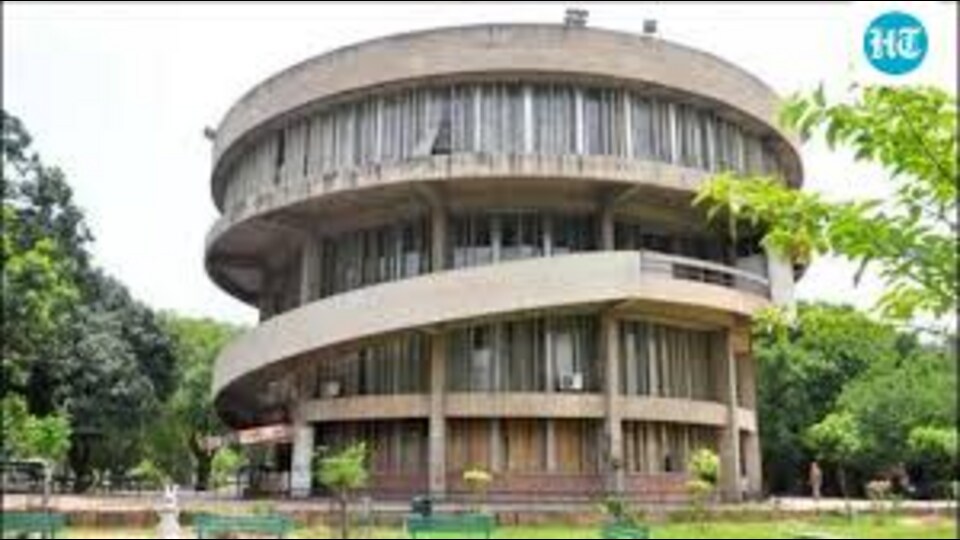
Panjab University’s launch of the five-year Integrated Programme in Management (IPM) for 2025–26 is a structural realignment of the city’s educational ecosystem. The question is whether Chandigarh will treat this as an isolated experiment or as the foundation of a new educational identity.
Regulatory and institutional alignment
The proposed Viksit Bharat Shiksha Adhishthan (VBSA) Bill 2025 promises to merge UGC, AICTE, and NCTE into a single architecture, shifting governance from control-based to trust-based regulation. Expected to be fully operational by 2027–28, this framework will allow high-performing colleges to launch new programmes through regulatory intimation rather than protracted approvals. For Chandigarh’s colleges, the pathway is clear. Institutions with strong quality metrics can upgrade to a five-year IPM while retaining the Panjab University degree seal — the university remains the academic anchor, while the regulatory burden becomes proportionate to the institutional track record. Early movers will capture surging demand; hesitant institutions risk competing for a shrinking pool of students who increasingly prefer integrated pathways.
The national context and design flexibility
Pioneered by IIM Indore in 2011, the IPM is now mainstream, with 30,000 students competing for 1,000 elite seats annually. By engaging students at 18, institutions gain the time needed to cultivate judgment, ethics, and systemic thinking — capabilities that require slow maturation. This aligns well with NEP 2020’s multidisciplinary vision. Different IIMs have interpreted this flexibility distinctly: a B.A. in Liberal Arts at Indore, a B.Sc. in Analytics at Amritsar, and a professional BBA at Rohtak.
Chandigarh can mirror this diversity. Under the Panjab University umbrella, different colleges could offer distinct IPM tracks — one excelling in finance, another in design thinking, and a third in sustainability — giving students genuine choice while maintaining five-year professional rigour.
The economics of accessibility
The IPM model balances institutional growth with student affordability. A five-year programme more than doubles the revenue per student, funding specialised faculty recruitment, industry partnerships, and digital infrastructure.
For families, the value proposition is compelling. While an IIM IPM costs between ₹36 and ₹42 lakh, a Chandigarh-based programme would cost approximately ₹8 to ₹9 lakh — roughly one-fifth of the price. This creates a vital middle pathway for capable students priced out of premium options or barred by hyper-competitive CAT hurdles. For families across Punjab, Haryana, Himachal Pradesh and western Uttar Pradesh, Chandigarh combines proximity, affordability and rigour in a way that distant institutions cannot match.
A defining moment
Cities compete for talent, and Chandigarh wins through its lived reality. Civic order, compact geography, and a culture of learning provide the stable environment that a five-year commitment requires. The IPM opportunity arrives as student preferences, regulatory reform and institutional capacity converge. Chandigarh can choose to treat integrated management as just another course offering, or recognise this as a threshold moment — an opportunity to become North India’s premier destination for early-career management education.
The infrastructure exists. The demand is evident. What remains is the collective will to transform Chandigarh from a city with good colleges into a region that shapes the future of Indian management — the Chandigarh way.
(vaidyasc@gmail.com)
(The writer is ex-chairman of University Business School, Panjab University, Chandigarh)


