
 E-Paper



Hilly terrain, accessible infiltration routes make Rajouri terror hotspot
Security experts attribute the spike in terror attacks to a multitude of factors, such hilly topography of Rajouri and Poonch, their proximity to the Line of Control (LoC), traditional and easier infiltration routes as compared to the Kashmir region and dense jungles with natural caves

 Prefer HTon Google


Jammu The twin border districts of Rajouri and Poonch, south of Pir Panjal, especially the former, have become a hot spot for Pakistan-sponsored terrorism for the past year and a half.
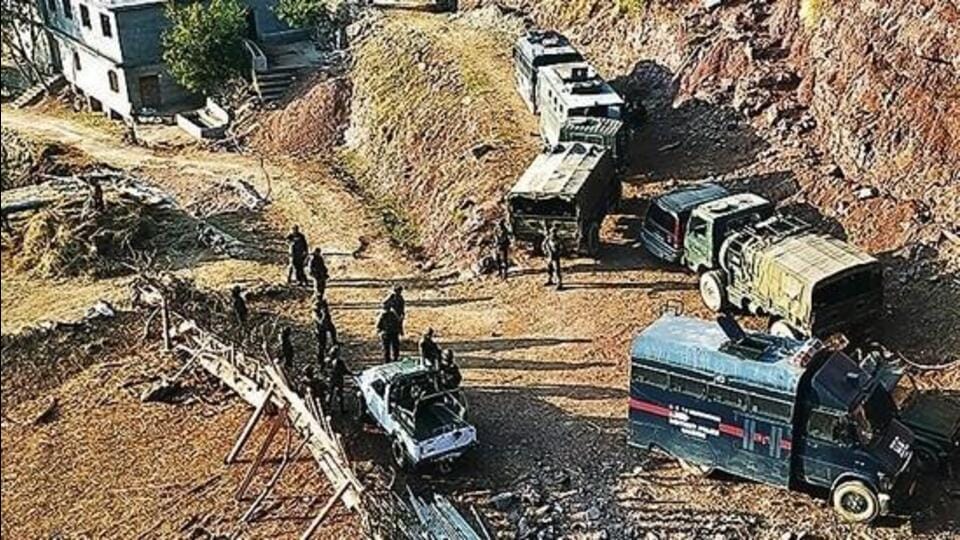
Security experts attribute the spike in terror attacks to a multitude of factors, such hilly topography of Rajouri and Poonch, their proximity to the Line of Control (LoC), traditional and easier infiltration routes as compared to the Kashmir region and dense jungles with natural caves.
Additionally, experts say a “dual and sinister game-plan of Pakistan, to target minorities in the hills of Jammu, akin to what was attempted in 1990s, to trigger their silent migration and compel security forces to thin their presence in Kashmir and move into Jammu, plays a role in aiding terrorism.
Former director general of Jammu and Kashmir Police SP Vaid said, “Rajouri-Poonch have been activated because of their proximity to the LoC”. Vaid was the mind behind the concept of village defence committees.
“Here, LoC is easier to infiltrate as compared to the Kashmir region, where the border gets covered by snow during the winters. Once inside, the terrorists have a lot of places as natural hideouts, such as big boulders in dense forest areas. It becomes easy for the terrorists to camouflage and dodge the security forces,” he added.
The former DGP says that when security forces mount pressure, terrorists either shift to other side of the Pir Panjal into South Kashmir or even cross back the LoC and return to Pakistan.
Vaid said he felt that Pakistan could be targeting minorities to create fear and cause their migration from the hills of Jammu.
“They (Pakistan) tried to do so in 1990 in the hills of the region when selective killings triggered migration in Reasi district to Talwara camp. Fortunately at that time, we came up with the concept of village defence committees and armed the people. We did not let them succeed in their nefarious designs,” said Vaid.
By doing so, they will put pressure back on security forces, which had to be pulled out of Kashmir and moved to Jammu, he added.
Former deputy chief of the Army Staff and former Director General (Infantry), Lieutenant General JS Cheema, who served in J&K during his 38 years of service, said, “they (Pakistan) keep changing their tactics. Rajouri had been inactive for quite some time and that inactivity put the security forces into a bit of complacency.”
“They exploited the situation and that’s exactly what’s happening in Rajouri. The recent terror incidents indicate that they are reactivating in Rajouri now,” he said.
The former general, while drawing the attention to Rajouri being a transit route to Kashmir, said that mountain passes get closed during winters in Kashmir and then focus shifts to easier terrain exit in Rajouri.
The two security experts also felt that without logistical support by some locals, terrorists can never last long in the dense jungles for months together.


