
 E-Paper



Illegal connections, less chlorination led to diarrhoea outbreak in Patiala, say officials
Patiala municipal corporation commissioner Paramvir Singh said these illegal water connections were not clamped, increasing the likelihood of leakage and contamination

 Prefer HTon Google


The diarrhoea outbreak in Alipur Ariyan area of Patiala has claimed four lives, with 137 others falling ill, allegedly due to illegal water connections, the use of hydraulic ram water pumps and inadequate chlorination in the local water supply system, according to officials.
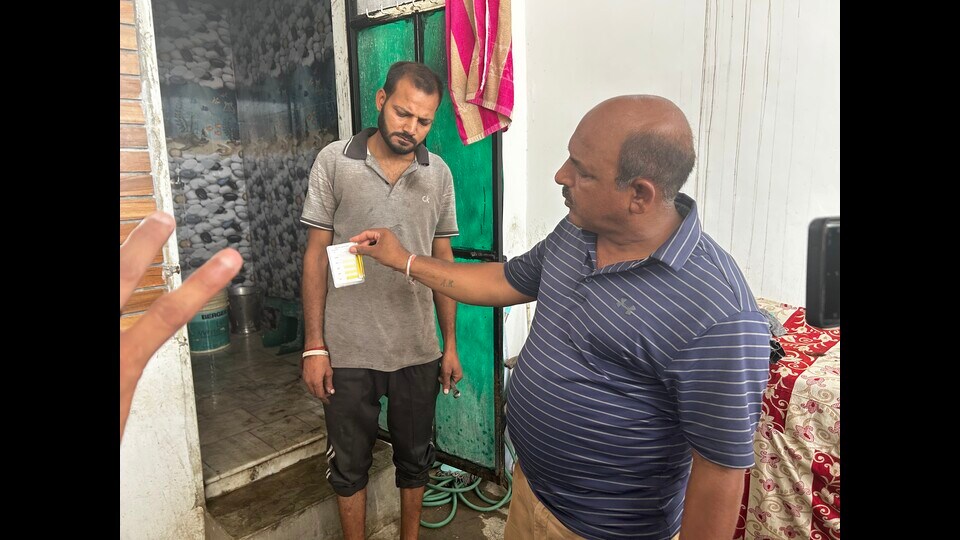
Officials investigating the cause of the outbreak revealed that nearly every second household in the affected area was using open-ended plastic pipes connected to illegal water supplies. These illegal connections were leaking into the main water line, leading to contamination of drinking water.
Furthermore, many households relied on hydraulic ram water pumps to draw water, a practice common in rural areas. These pumps created negative suction, which drew in water from leaking sewage lines, further contaminating the water supply.
Patiala municipal corporation commissioner Paramvir Singh said these illegal water connections were not clamped, increasing the likelihood of leakage and contamination. “People use ‘tullu’ pumps in the absence of a regular water supply. These pumps suck dirty water from nearby sewage lines, especially in narrow lanes where sewage and water pipelines are often placed too close to each other,” said junior engineer Pavitar Singh. He said 90-95% of the water connections in the area were illegal.
A senior district administration official suggested that the rapid conversion of villages into semi-urban areas, without proper infrastructure planning, made outbreaks like this inevitable. The official said the need for comprehensive planning to accommodate population growth and ensure proper sanitation and water management.
Another significant factor contributing to the outbreak was the inadequate chlorination of the water supply. The dosing pump, which is responsible for adding chlorine to the water, had been lying defunct. As a result, water supplied to households initially had no chlorine content, allowing bacteria to grow. “The chlorine levels were nil in the water when they should have been at least 0.2 Parts Per Million (PPM). After the installation of a new dosing pump and hyperchlorination, the chlorine levels have now increased to over 0.5 PPM,” a senior health officer confirmed.
The malfunctioning dosage pump was found to be clogged with plaque, preventing the proper addition of chlorine to the water. Authorities have ordered an inspection of all dosing pumps across the city to prevent similar issues in the future.
Reacting to the installation of a new dosage pump, the MC commissioner said: “The dosage pump was functioning, but the stipulated chlorine levels were not being achieved in households. Therefore, we switched to hyperchlorination. Along with this, we also installed a new dosage pump.”
Patiala deputy commissioner Preeti Yadav said the situation in Alipur Ariyan has improved. Only six new cases with mild symptoms were reported during a door-to-door survey over the past 24 hours. “There have been no new hospitalisations, and the latest sample reports confirm that the water is now safe for consumption,” Yadav said.
Currently, two patients are hospitalised but are in stable condition. Yadav also confirmed that water sampling would continue throughout the district, with a focus on hotspot areas. Chlorination efforts have been ramped up to ensure the safety of the water supply and prevent further cases.


