
 E-Paper



INLD slams move to allow private power distributor
Former state finance minister Sampat Singh, at a press conference, said the proposal is an attempt to transfer public infrastructure and government revenue into private hands.


The Indian National Lok Dal (INLD) on Thursday stepped up its opposition to the proposal of a private company, Eleven Power, for a parallel electricity distribution licence in Gurugram and Nuh, alleging that it would hand over profitable public assets and revenue to a private company at the expense of consumers and state-owned power utilities.
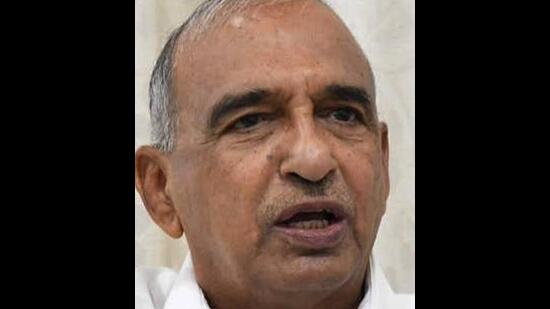
Former state finance minister Sampat Singh, at a press conference, said the proposal is an attempt to transfer public infrastructure and government revenue into private hands.
Singh’s remarks came a day after the Haryana Electricity Regulatory Commission heard arguments on Eleven Power’s petition seeking a parallel electricity distribution licence for Gurugram and Nuh. He said the INLD had raised 112 objections before the HERC during Wednesday’s hearing.
Maintaining that Gurugram is the most profitable distribution area in the state, the INLD leader said around 42% of Dakshin Haryana Bijli Vitran Nigam’s (DHBVN) revenue comes from the district. He said that when Gurugram’s distribution losses stood at 4.7%, compared with the state’s overall line losses of 10.02%, what was the rationale behind introducing a private distributor in a profitable area?
“The government is preparing to hand over business generating around ₹4,717 crore annually to a company incorporated only on June 6, 2025, with a paid-up capital of just ₹1 crore and no experience in electricity distribution,” Singh alleged.
The INLD leader claimed that Gurugram has already received investments of ₹1,608 crore under the Smart City Mission and ₹3,584 crore under the Revamped Distribution Sector Scheme, besides public investment in substations, transformers and distribution infrastructure. He alleged that public assets created with taxpayers’ money were now being opened for private benefit.
Citing judgments of the Supreme Court and the Appellate Tribunal for Electricity in cases involving Sesa Sterlite, Reliance Energy, Tata Power, Reliance Infrastructure and Noida Power Company, he said power regulators must protect consumer interests, safeguard the financial viability of existing utilities and prevent cherry-picking of lucrative areas while considering parallel distribution licences.


