
 E-Paper



Ludhiana breathes easy as winds keep stubble smoke at bay
At 76, the city’s Air Quality Index (AQI) on Monday was ‘satisfactory’, an improvement from the ‘moderate’ air quality on the same date (October 10) over the last two years.

 Prefer HTon Google


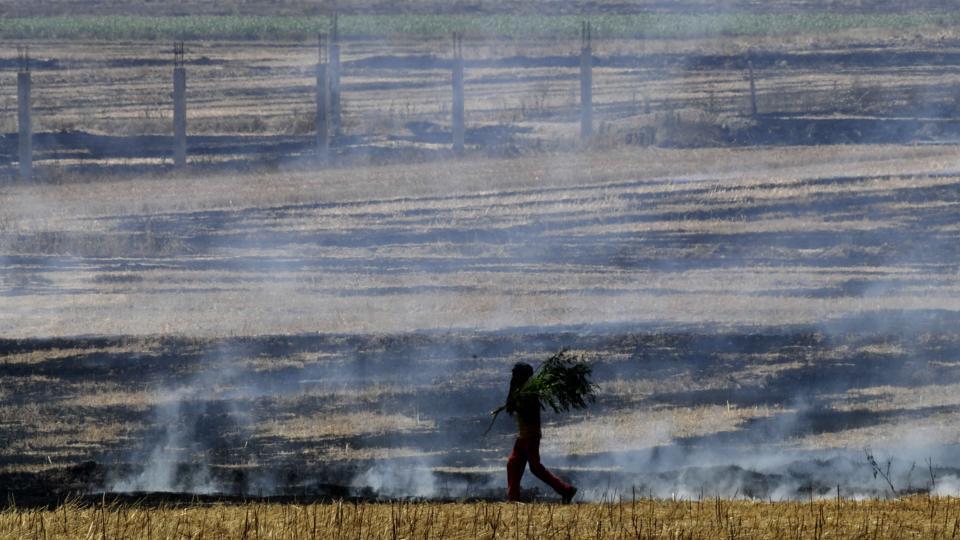
Despite rampant stubble burning in the region, the city is breathing easy thanks to windy weather conditions and rainfall in neighbouring districts, which have acted as bulwarks against air pollution.
At 76, the city’s Air Quality Index (AQI) on Monday was ‘satisfactory’, an improvement from the ‘moderate’ air quality on the same date (October 10) over the last two years.
An AQI reading between zero and 50 is considered “good”, 51 and 100 “satisfactory”, 101 and 200 “moderate”, 201 and 300 “poor”, 301 and 400 “very poor”, and 401 and 500 “severe”. On October 10, 2021 and 2020, the city had registered an AQI of 123 and 152, respectively.
Despite the state government’s efforts to curb stubble burning, as many as 711 farm fires have been recorded in the state so far. Punjab Pollution Control Board (PPCB) chairperson Adarsh Pal Vig said that Ludhiana was among the districts worst-affected due to stubble burning in 2020 and 2021.
Short-lived respite
Meteorological experts at Punjab Agricultural University (PAU) experts say respite from pollution may be short-lived if stubble burning cases continue to rise over the coming days. “The prevailing weather system due to western disturbance will continue till Tuesday, after which still atmospheric conditions may lead to rise in pollution levels.”
Climate change and agricultural meteorology department head Pavneet Kaur Kingra said, “Low wind velocity (less than 5km) and dip in temperature creates closed-room conditions causing suspended particles to keep hanging in the air. At present, winds are blowing at 8km/hr, driving out the smoke.”
Attributing the western disturbance, causing windy conditions, to the late monsoon withdrawal, Kingra said, “For the past few years, monsoon withdrawal is being delayed. Earlier, monsoon withdrawal would end in mid-September, but this year it ended on October 2.”
This year, the city received 190mm of rainfall in September, against an average rainfall of 106.2mm. Except for 2020, when only 13.6mm of rainfall was received in the month of September, the district received 250.6mm (2018), 264.8mm (2019) and 295.8mm (2021) rainfall in the month of September.
A 7-9°C difference between maximum and minimum temperature also helps dispersing smoke.
Mapping air quality
An AQI reading between zero and 50 is considered “good”, 51 and 100 “satisfactory”, 101 and 200 “moderate”, 201 and 300 “poor”, 301 and 400 “very poor”, and 401 and 500 “severe”.
Year AQI*
2022 76
2021 123
2020 152
* As recorded on October 10
September showers
The windy weather conditions have been attributed to late monsoon withdrawal (on October 2). Experts say for the past few years, monsoon withdrawal is being delayed, and is not ending in mid-September.
Year Rainfall in Sept *
2022 190
2021 295.8
2020 13.6
2019 264.8
2018 250.6
*Figures in mm
** Average rainfall for September is 106.2mm


