
 E-Paper



Ludhiana civil hospital expands facilities amid rising patient load
The expansion comes as the hospital grapples with a rising patient load. Its OPD footfall has increased by 25% compared with August last year

 Prefer HTon Google


The civil hospital is undertaking a major infrastructure upgrade across its campus, with work underway to expand the emergency ward, create new waiting and parking facilities and improve patient-care areas. The upgrade also includes air-ducting, washroom repairs, new tiles, streetlights and improvements to electrical, sewerage and plumbing systems.
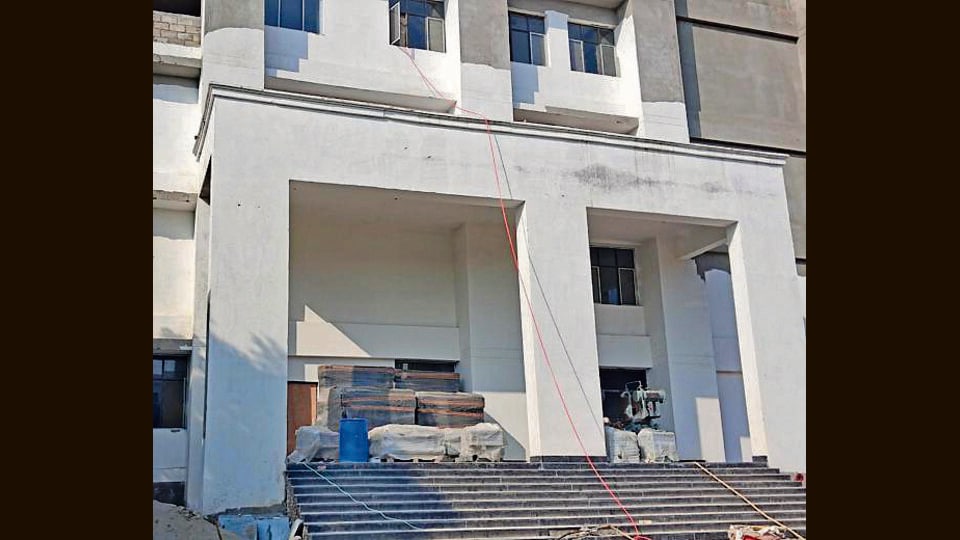
The expansion comes as the hospital grapples with a rising patient load. Its OPD footfall has increased by 25% compared with August last year, with nearly 2,000 patients visiting the OPD on a typical day. The number of delivery cases has also risen by 40%, while around 150 medical emergencies are handled daily.
Five new patient waiting sheds equipped with seating, water coolers and air coolers are being developed with support from the local administration. Four four-wheeler parking areas and three two-wheeler parking areas are also being created, along with around 100 streetlights across the campus.
The hospital is also expanding its emergency ward from eight beds to 16. Air-ducting is being installed in the OPD, trauma, emergency, HDU and male and female wards, while new tile work is underway in these areas. A new manifold area is also being developed in the old wing.
Painting and washroom repairs are being carried out in the old wing, OPD wing and emergency wing in collaboration with the Punjab Health Systems Corporation (PHSC). Other works include improvements to electrical systems, sewerage and plumbing, drinking-water points, patient pathways, waste-management arrangements and security measures.
Senior medical officer (SMO) Dr Akhil Sareen said the works were being executed in phases to ensure that hospital services were not unnecessarily disrupted. “When we start any work, we make sure that the repair can be completed immediately so that the public does not face any inconvenience. We want to provide better facilities and improve the hospital so that patients and attendants are comfortable,” he said.
The local administration is supporting a substantial part of the infrastructure work, while another set of projects is being undertaken in collaboration with the PHSC. Most of the ongoing work is expected to be completed by the end of this year, the SMO said.
The hospital handles around 150 medical emergencies daily and nearly 700 deliveries every month.
Around eight to 10 postmortems are also conducted each day. For patients and attendants, the ongoing work is expected to address some of the everyday problems associated with a crowded hospital, including inadequate waiting space, parking constraints and limited emergency capacity.
Patient attendant Manveer Kaur said the improvements would be useful given the rush at the hospital but stressed that the work should be completed quickly to avoid adding to patients’ inconvenience.
“There is a lot of rush here, so even small problems create inconvenience. If the facilities are improved and maintained properly, it will make things easier for patients,” said another patient, Parampal.


