
 E-Paper



Ludhiana: Primary teachers oppose their inclusion in Centre's literacy drive
The scheme of the ministry of education seeks to promote basic education, digital literacy and financial awareness among those aged 15 years and above who were deprived of formal schooling


The responsibility of enrolling and teaching adult learners under the New India Literacy Programme (NILP) has, for the first time, been transferred to government primary schools as well, drawing criticism from the teachers who say they are already overburdened. Teachers in these schools will now be required to shoulder the task of enrolling learners and conducting classes.
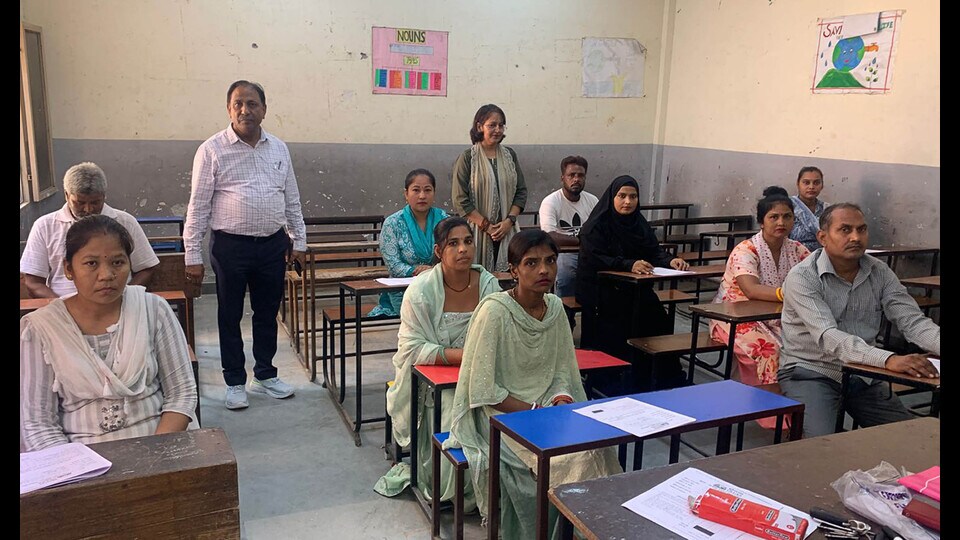
The centrally sponsored scheme of the ministry of education seeks to promote basic education, digital literacy and financial awareness among those aged 15 years and above who were deprived of formal schooling. The ambitious programme is aligned with the National Education Policy 2020 and has set a target of achieving 100% literacy across the country by 2030. It also encourages volunteerism and makes use of digital platforms for its implementation.
While senior secondary schools were earlier involving their students as volunteers to teach adult learners, primary schools do not have this option. Their students, being in the age group of 5 to 11, are too young to contribute, leaving teachers with no choice but to take up the responsibility themselves.
This move has triggered resentment among the primary school staff. “Students in the 5-11 age group are enrolled in primary schools and hence these students cannot teach someone else as they are too young for that, so we are only required to take these classes,” said Jagjit Singh Mann, district president of the Government Teachers’ Union (GTU) and head teacher of Government Primary School, Mangli Uchi.
A meeting with officials concerned was held to inform primary school teachers about the new directive on Monday. However, many teachers voiced their concerns. A teacher, requesting anonymity, said, “Involving primary schools is a bad idea. There is already a staff crunch. Many schools are functioning with a single teacher. Teachers are deputed elsewhere to manage students and when regular teaching itself is a struggle, how can we be expected to teach adults outside our school hours?”
Data released by GTU highlights acute shortage of staff. In Ludhiana district alone, 83 posts of head teachers and 10 posts of block primary education officers are lying vacant.
Under the NILP, examinations are conducted twice a year, in September and March. But the enrolment targets remain far from being met. “In Ludhiana, the target was to enrol 24,000 learners, but only 4,000 have been covered so far. To meet the remaining 20,000, primary schools have also been involved as they are essentially meant to provide elementary education,” said Pardeep Kumar, district coordinator of the project.


