
 E-Paper



Model Moga village devises its own health, pension plans
Ransih Kalan village had received two awards — Nanaji Deshmukh Rashtriya Gaurav Gram Sabha Puraskar and Deen Dayal Upadhyay Panchayat Sashaktikaran Puraskar — last year from the central government for the development works it undertook


From giving pension to widows, elderly and disabled persons to providing health insurance to the underprivileged and needy, Ransih Kalan village in Moga district’s Nihal Singh Wala subdivision has shown the way in building a welfare model for its residents.
The panchayat is providing these facilities by pooling a part of income of residents through ‘daswandh’ (giving 1/10th of earnings) system and with the help of the NRI fraternity. It started the pension and health insurance schemes five months ago.
The village had received two awards — Nanaji Deshmukh Rashtriya Gaurav Gram Sabha Puraskar and Deen Dayal Upadhyay Panchayat Sashaktikaran Puraskar — last year from the central government for the development works it undertook.
Former sarpanch Preet Inder Pal Singh, 31, who is also son of present village head Kuldeep Kaur, says, “Our panchayat has no affiliation to any political party. I had won as an independent candidate and now, my mother is leading the village. There is no interference of any party and we are taking decisions independently.”
The village currently has 70 pension beneficiaries and is offering health insurance to 25 residents. Widows, elderly and disabled persons whose applications for pension were rejected by the government, despite being eligible for the same, are getting ₹750 per month as pension.
“We found that our people were making rounds of government offices to avail the pension and were being harassed. We called a panchayat meeting and started a pension scheme on the pattern of the state government. Also, we are providing health cover up to ₹1 lakh per person at any hospital. Nine people have already availed the benefit,” says Kuldeep Kaur.
The village is also encouraging the locals not to burn paddy stubble by giving ₹500 per acre as compensation to marginal farmers. Nearly 100 farmers had availed the benefit last year, it was claimed.
Kuldeep says, “All these things were done in the past six years by spending ₹5 crore. Whenever we require money for health insurance or other development works, we inform the local residents and the NRIs, who help us immediately. It is just a beginning.”
Treating sewage for irrigation purpose
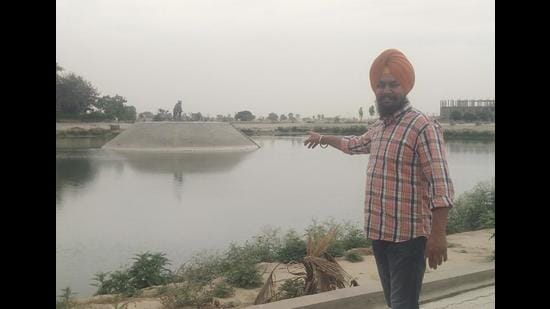
Harjeet Kaur, 35, a panchayat member, says, “The villagers built a sewerage system themselves. We had also set up a sewage treatment plant and have been using treated wastewater for irrigation on 100 acres since 2016. A pond was also constructed to accumulate rainwater for irrigation and other purposes.”
“Besides, we have made arrangements to reuse wastewater from water purifier systems and air-conditioners in the households,” she adds.
Parkash Singh, 70, another panchayat member, says, “We organise a camp every two months to make our village plastic-free. At the camp, we sell ration and other goods and accept payment via plastic only. Now, people have started stocking polythene bags and other plastic items. We send the plastic to a factory in Ludhiana for recycling.”
Jagjit Singh Bal, district development and panchayat officer, says, “We have already started work at other villages on the lines of Ransih Kalan. Some villages of Kot Ise Khan block have adopted this model as well.”
“Though there are several examples of infrastructure developments in villages, I did not see such initiatives of welfare schemes anywhere else. I have worked in many districts but nowhere pension and health cover were being provided to residents by the panchayat, except Ransih Kalan village,” he adds.


