
 E-Paper



Monsoon closing in, but Chandigarh MC only halfway through clearing drains
Chandigarh MC is tasked with cleaning a total of 30,452 road gullies and stormwater drains across the city, a crucial step to ensure smooth drainage during heavy rains; however, only 13,500 gullies have been cleaned so far


With early signs of monsoon looming large, the Chandigarh municipal corporation (MC) has ramped up its preparedness efforts to meet the challenge of waterlogging. As of Monday, only 45% work for cleaning road gullies and stormwater drains across the city has been completed, prompting officials to speed up the process and deploy rapid response teams across all divisions.
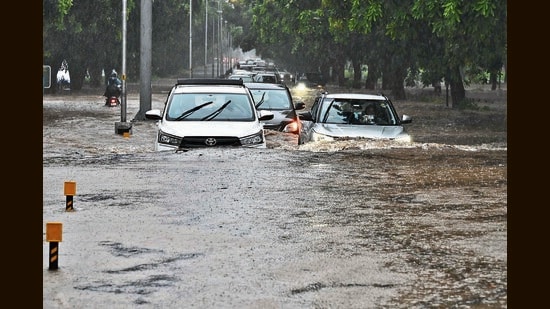
As per India Meteorological Department officials, monsoon usually arrives in the city in the last week of June. However, this time, it is expected to reach the city a week earlier. Some regions of the country have already witnessed the early onset of monsoon, including Kerala, Lakshadweep, and parts of Karnataka, Mizoram and Maharashtra.
The MC is tasked with cleaning a total of 30,452 road gullies and stormwater drains across the city, a crucial step to ensure smooth drainage during heavy rains. However, only 13,500 gullies have been cleaned so far, raising concerns about the city’s readiness to tackle monsoon-related waterlogging.
The situation is particularly worrying in low-lying and vulnerable areas, such as Mauli Jagran Complex, Charan Singh Colony, Vikas Nagar, Shivalik Enclave, Mauli Jagran village, Raipur Kalan, Daria and Sunder Nagar, where only 20% of the gullies have been cleaned.
These areas can potentially witness waterlogging during heavy rains. MC officials cited manpower shortage as the primary reason for the slow pace of work in these areas, adding that the civic body is targeting June 30 as the deadline for achieving 100% cleaning.
On Monday, chief engineer Sanjay Arora reviewed the preparedness and issued stern instructions to officers concerned toexpedite desilting works. “It has been observed with serious concern that the progress achieved so far in desilting road gullies and service pipes is not satisfactory and the pace of work remains below expectations. Since the monsoon season is fast approaching and is likely to arrive earlier than usual this year, it is imperative that preparations are expedited and monitored personally by all officers concerned,” he said.
To strengthen the city’s monsoon response, Arora directed officials to set up control centres in each division which are equipped with adequate manpower, machinery, fuel and essential resources to handle emergencies. He also directed officials to ensure that tenders for monsoon-related works are finalised and awarded in advance to avoid last-minute delays.
The annual sinking feeling
Last monsoon, the city had witnessed widespread flooding and traffic chaos during heavy downpours, with several roads and low-lying sectors, especially southern sectors, being inundated for hours.
In several areas, including Hallomajra, Manimajra, Burail, Dhanas and Daria, residents reported water stagnation lasting up to 12 hours, severely affecting daily life and mobility. At many places, local residents and traffic police volunteers were seen attempting to unclog blocked drains manually.
An ill-equipped drainage system
The city’s drainage system is severely inadequate, leaving roads inundated and low-lying areas flooded whenever rainfall reaches 40 mm to 60 mm per hour.
As per officials, the drainage system of southern sectors above 30 are designed to handle only 15 mm of rain per hour, while in the northern sectors below 30, the drainage system can handle 25 mm of rain per hour. This is why it takes longer for the water to recede during heavy rain.
Worse, even the three natural streams of Chandigarh, Sukhna Choe, N-choe and Patiala Ki Rao, where the city’s stormwater system drains out, remain clogged with silt, reducing their capacity, further impacting the system’s efficiency to battle large amounts of rainwater.


