E-Paper



MP Report Card | Parliament is a forum for debate, restricting it undermines democracy, says Selja
As the 18th Lok Sabha completes its first year, here’s a look at Selja’s performance in the lower House of Parliament and her plans for the constituency.

 Prefer HTon Google


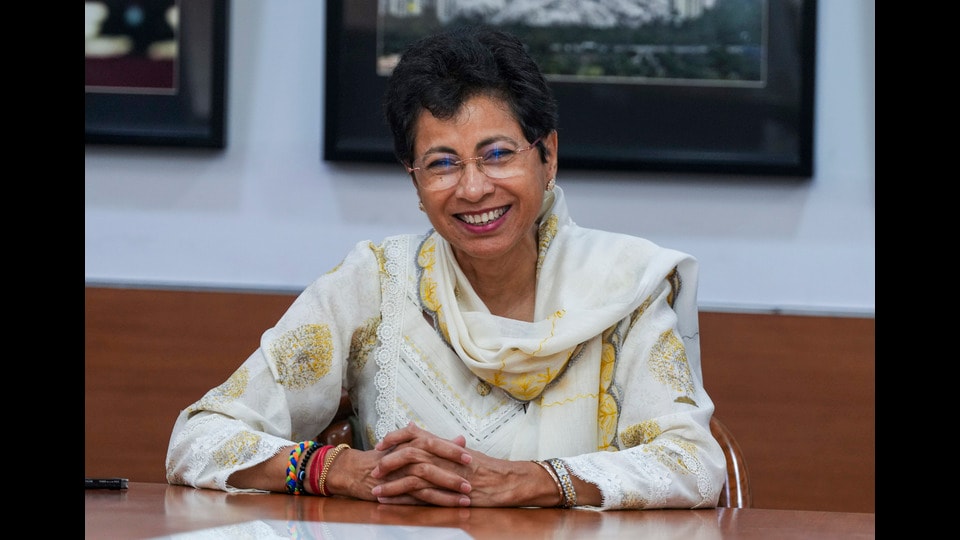
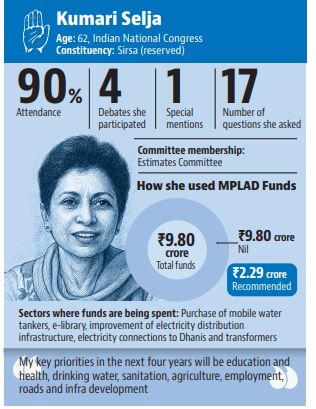
Former Union cabinet minister Kumari Selja, a fifth-term Lok Sabha MP, is a Congress’ veteran leader with a firm grassroots connect. Educated at the Convent of Jesus and Mary, New Delhi, Selja, 62, was first elected to the Lok Sabha in 1991. As the 18th Lok Sabha completes its first year, here’s a look at Selja’s performance in the lower House of Parliament and her plans for the constituency.
How do you look at your experience in the first year of the 18th Lok Sabha?
I am firmly committed to being a strong and resolute voice for the people of my constituency, Sirsa, Haryana, as well as for all citizens of the country. My experience has been defined by a profound sense of constitutional responsibility and sobering clarity about the challenges confronting our parliamentary democracy. As a member of the Opposition and custodian of the people’s mandate, my foremost duty is to uphold accountability, ensure scrutiny of governance, and raise issues of critical public interest—particularly those concerning unemployment, inflation, agrarian distress, social justice, and the erosion of democratic institutions. Regrettably, the government has repeatedly displayed an aversion to debate, transparency, and constructive dissent. Despite these challenges, I have utilised every available platform to voice the concerns of the marginalised—particularly farmers, youth, women, downtrodden, and rural communities.
What was the high point of the year for you personally or your party in the House?
After an encouraging performance by the Indian National Congress in the Lok Sabha elections, the leader of Opposition Rahul Gandhi’s key debates on unemployment, social justice, and the government’s failure to contain divisive forces, powerfully echoed the concerns of the common people and resonated across the nation. My party asked me to initiate the discussion on the first budget of the 18th Lok Sabha. I was able to draw the attention of the House to the poor state of the economy in the country as well as key issues confronting Haryana. We collectively raised our voices to protect our democracy and uphold the independence of Constitutional institutions.
Are you satisfied with the number of sittings of the Lok Sabha?
The decreasing number of sittings is a worrying trend. A functioning democracy requires robust debate and accountability, which can only happen if Parliament meets frequently and for sufficient duration. The truncated sessions severely limit the time available for discussing vital national issues, examining legislative proposals thoroughly, and conducting meaningful oversight of the executive through debates and questions. This reduction in sittings undermines the very essence of our parliamentary democracy and denies the elected representatives their rightful platform to represent the people’s concerns. Parliament is a forum for debate and legislation, and restricting its functioning undermines the spirit of democracy. We need more, not fewer, opportunities for discussion and scrutiny.
What is the most effective way to raise issues of public importance in the House?
The most effective method remains persistent parliamentary interventions through questions, zero hour, starred and unstarred questions, calling attention motions, and debates. However, raising issues outside the House and building public opinion is also crucial when parliamentary tools are curtailed.
What difference have you made to your constituency in the last one year and what do you plan to do in the remaining term as MP?
Over the past year, my efforts were focused on addressing long-standing structural challenges and promoting development while giving voice to the people in parliament and other platforms. As the elected MP of Sirsa, I remain firmly committed to the principle of inclusive development. With full dedication, I will continue to work for the progress and welfare of the public in the times to come. I have consistently raised key issues impacting the people of Sirsa through parliamentary platforms, ministerial and departmental meetings. I have been actively working for the betterment of water security, healthcare equity, transport infrastructure, rural development, and enhancing road networks and rail connectivity to improve mobility. My key priorities in the next four years will be education and health, drinking water and sanitation, agriculture and employment, roads and infrastructure development, cancer control and improving health services.