
 E-Paper



NGT forms 2 panels to check illegal mining in Yamuna River
The applicant alleged illegal mining by showing sale of sand as sale of boulder by misuse of mineral dealer licence and e-rawaana or e-transit pass issued to monitor the movement of mining materials in Yamunanagar

 Prefer HTon Google


: Taking suo moto cognizance of a letter, the National Green Tribunal has ordered formation of two joint committees to check illegal mining and state of sediments in the Yamuna River in Yamunanagar and Saharanpur districts of Haryana and Uttar Pradesh.
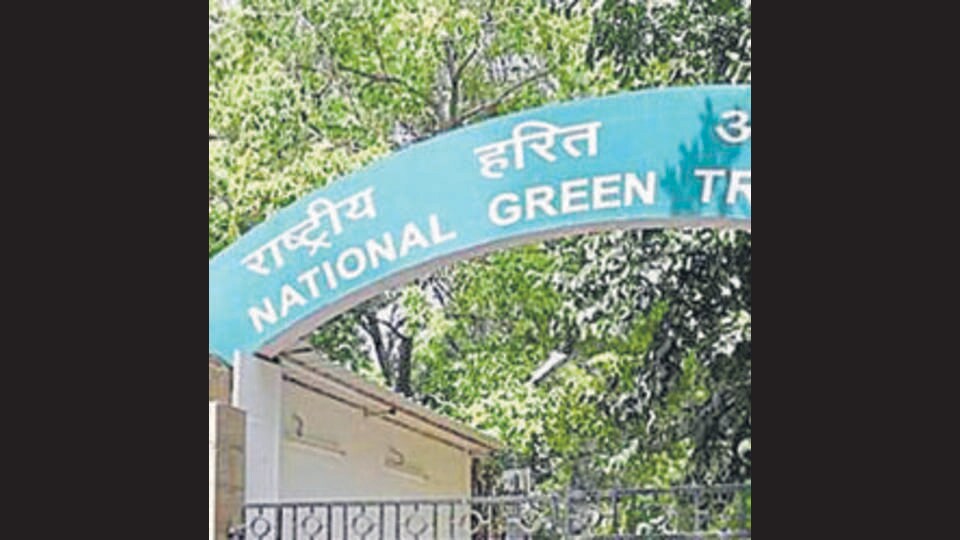
During the hearing on August 4 in “Balbir Sandhu & Ors V/S State of U.P. & Anr”, the coram of justice Arun Kumar Tyagi as judicial member and Dr. A. Senthil Vel as expert member observed that despite the orders and directions of the Supreme Court and the tribunal to curb illegal mining, “….cases making allegations of continuation of illegal mining continue to be filed.”
The tribunal took cognizance of a letter sent to the tribunal.
Cognizance of such cases can also be taken by the tribunal on the basis of letter petitions in accordance with settled principles of law governing Public Interest Litigation, the tribunal said, adding that the application regarding illegal mining in the districts raise questions relating to environment arising out of the implementation of the enactments specified in Schedule I to the National Green Tribunal Act, 2010.
The applicant alleged illegal mining by showing sale of sand as sale of boulder by misuse of mineral dealer licence and e-rawaana or e-transit pass issued to monitor the movement of mining materials in Yamunanagar.
As per the order, the petitioner has also alleged mining of about 1.8 crore cubic meters of sand, murum, boulder in three years without any permissions and misappropriation worth Rs. 350 crores in the name of reclaiming agricultural land for cultivation in Saharanpur district.
He also claimed that there is illegal recovery of “Gunda Tax” by anti-social elements on government check-posts and investment of black money by money laundering in mining leases in both the districts.
The court ordered formation of a joint committee led by chairman, Central Pollution Control Board (CPCB) comprising member secretaries from both states and district magistrates from both the districts, to verify the factual position on various aspects listed and suggest appropriate remedial action.
The court also observed that the sediments in the river consist of boulders, stones, pebbles, sand, gravel, clay, etc that play an important role in maintaining the hydro-geology of river stream and also the aquatic ecosystem, while also preventing flooding and erosion of the banks and also acting as substrata for biological growth such as aquatic plants on which the fish and other animals depend.
The court said that there has been rampant mining of these sediments, particularly sand, pebbles and stone for construction and other development activities, that has been going on indiscriminately along the river at various stretches right from the place of origin till it meets the final destination at sea.
On this, the bench formed another joint committee led by Chairman, CPCB. Other members of this committee include a scientist, senior scientist, a professor each from NIT, Kurukshetra and IIT, Roorkee and a scientist from Space Application Centre, Ahmedabad to study the sediments and suggest erosion control mechanisms, flood control mechanisms and mechanisms for utilisation of environment compensation.
The next hearing is scheduled for November 9.


